High Protein Teriyaki Salmon Bowls – A Simple, Satisfying Weeknight Meal
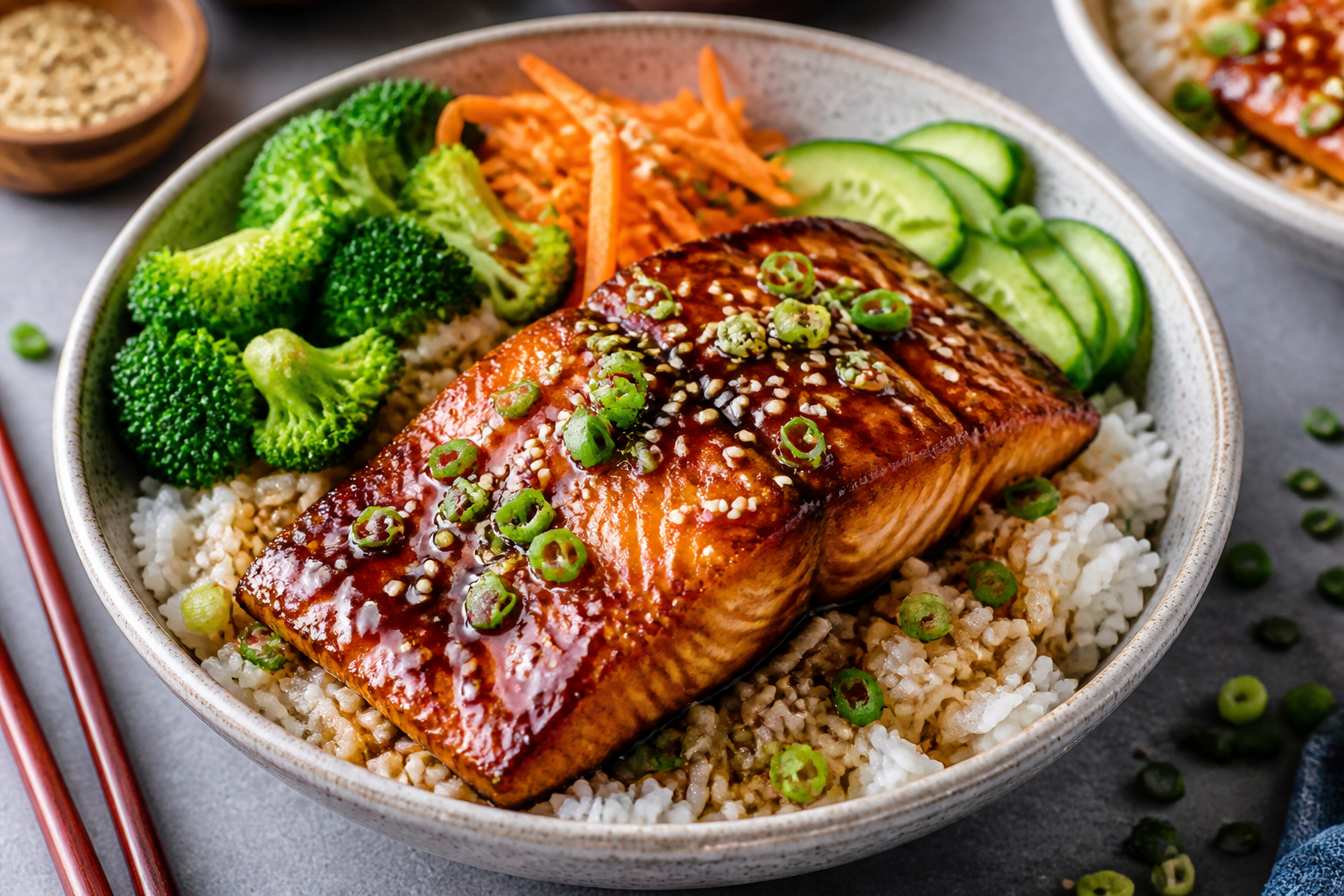
Teriyaki salmon bowls are that rare combo of fast, flavorful, and genuinely good for you. They balance tender salmon, glossy teriyaki sauce, fluffy rice, and crisp veggies in one colorful bowl. The sweet-salty glaze feels like takeout, but you control the ingredients and the portions.
Need More Easy Dinner Ideas?
Get my FREE 7-Day Easy Dinner Reset and enjoy a full week of healthy dinners without the meal-planning stress.
This recipe leans high protein without feeling heavy, so it’s perfect after a workout or on a busy night. You’ll get big flavor in under 30 minutes and a dish that reheats beautifully for lunch the next day.
Ingredients
Method
- Cook your base. Make a pot of rice or quinoa according to package directions. Fluff and keep warm. Brown rice and quinoa pack more fiber, while jasmine rice brings that classic bowl texture.
- Prep the vegetables. Chop broccoli into small florets, slice carrots thin, and thaw edamame if using. Keep pieces bite-sized so they cook quickly and fit nicely in the bowl.
- Whisk the teriyaki sauce. In a bowl, mix 1/3 cup low-sodium soy sauce, 2 tablespoons honey, 1 tablespoon rice vinegar, 1 teaspoon toasted sesame oil, 2 cloves grated garlic, and 1 teaspoon grated fresh ginger. In a separate small cup, stir 1 teaspoon cornstarch with 2 teaspoons water until smooth.
- Pat the salmon dry. Cut salmon into 1- to 2-inch cubes or leave as whole fillets. Season lightly with salt and pepper. Drying helps you get a better sear and prevents sticking.
- Cook the vegetables. Steam or sauté veggies with a splash of water or oil until crisp-tender, 3–5 minutes. Season lightly with salt. Set aside.
- Sear the salmon. Heat 1 tablespoon neutral oil in a nonstick or well-seasoned skillet over medium-high heat. Add salmon, skin side down if using fillets, and sear 2–3 minutes per side until just cooked through and flaky. Avoid overcooking.
- Make the glaze. Reduce heat to medium-low. Pour the teriyaki mixture into the pan. Stir in the cornstarch slurry and simmer 30–60 seconds until thick and glossy. Toss salmon gently to coat without breaking it up.
- Assemble the bowls. Add a scoop of rice to each bowl. Top with glazed salmon and vegetables. Spoon extra sauce over the rice for flavor.
- Finish with toppings. Sprinkle sesame seeds and sliced green onions. Add red pepper flakes or a drizzle of sriracha if you like heat. A squeeze of lime or lemon brightens everything.
- Serve immediately. The fish is best hot, with the sauce still shiny and the veggies crisp.
Why This Recipe Works
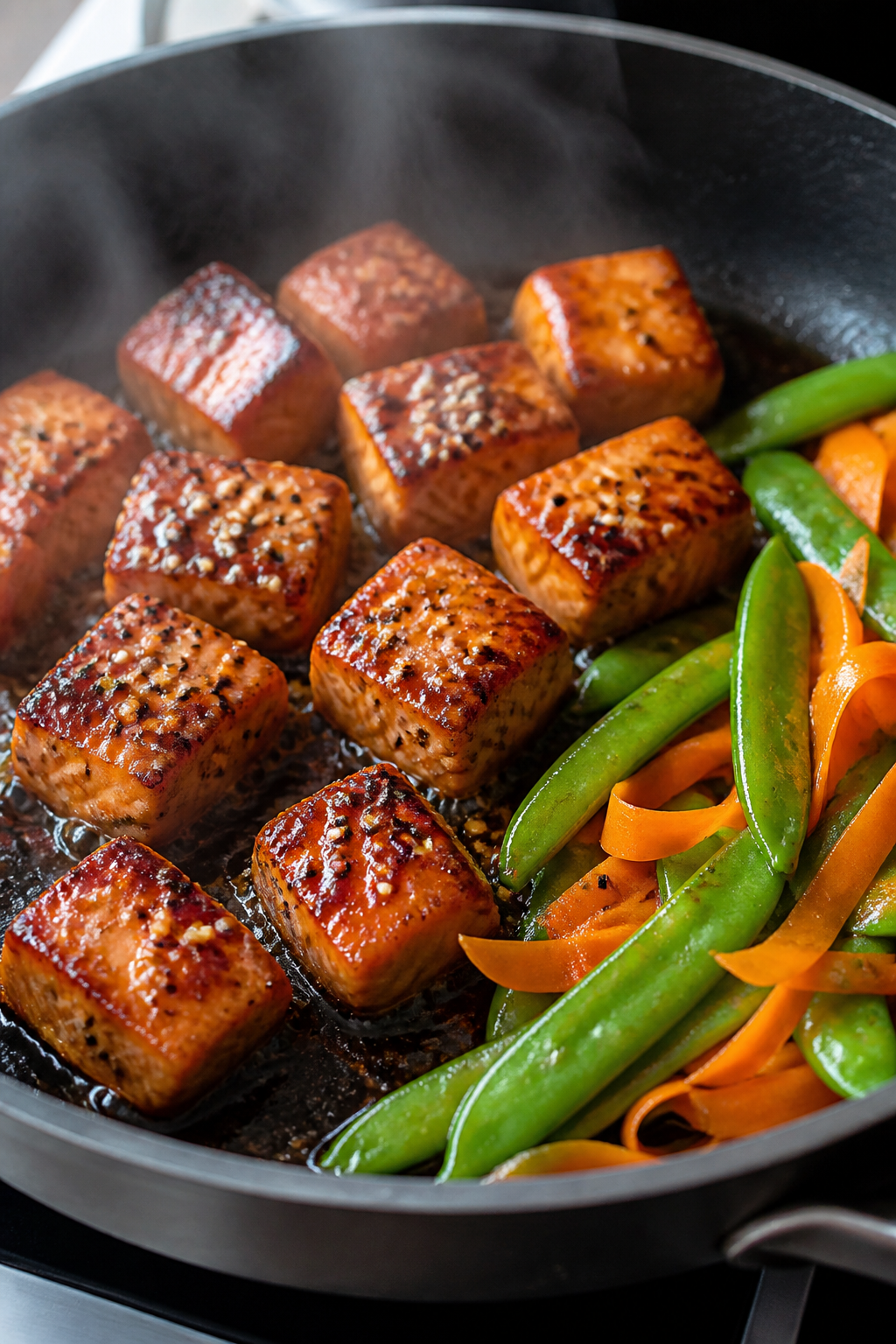
Salmon cooks quickly and stays juicy, making it ideal for weeknight bowls. A simple teriyaki sauce—just soy, a touch of sweetness, garlic, and ginger—adds deep flavor with minimal effort.
Steaming or lightly sautéing vegetables keeps their crunch and color while adding fiber and micronutrients. Building the bowl with rice or quinoa gives you slow, steady energy and rounds out the meal. It’s simple, balanced, and adaptable to what you have in the fridge.
Shopping List
- Salmon fillets (skin-on or skinless; about 4 ounces per serving)
- Low-sodium soy sauce (or tamari for gluten-free)
- Honey or maple syrup
- Rice vinegar (or apple cider vinegar)
- Garlic (fresh cloves)
- Fresh ginger
- Cornstarch (to thicken sauce)
- Toasted sesame oil
- Neutral oil (avocado, canola, or light olive oil)
- Cooked rice (jasmine, brown rice, or quinoa)
- Vegetables (broccoli, edamame, carrots, bell peppers, or snap peas)
- Green onions
- Sesame seeds
- Red pepper flakes or sriracha (optional, for heat)
- Lime or lemon (optional, for brightness)
How to Make It
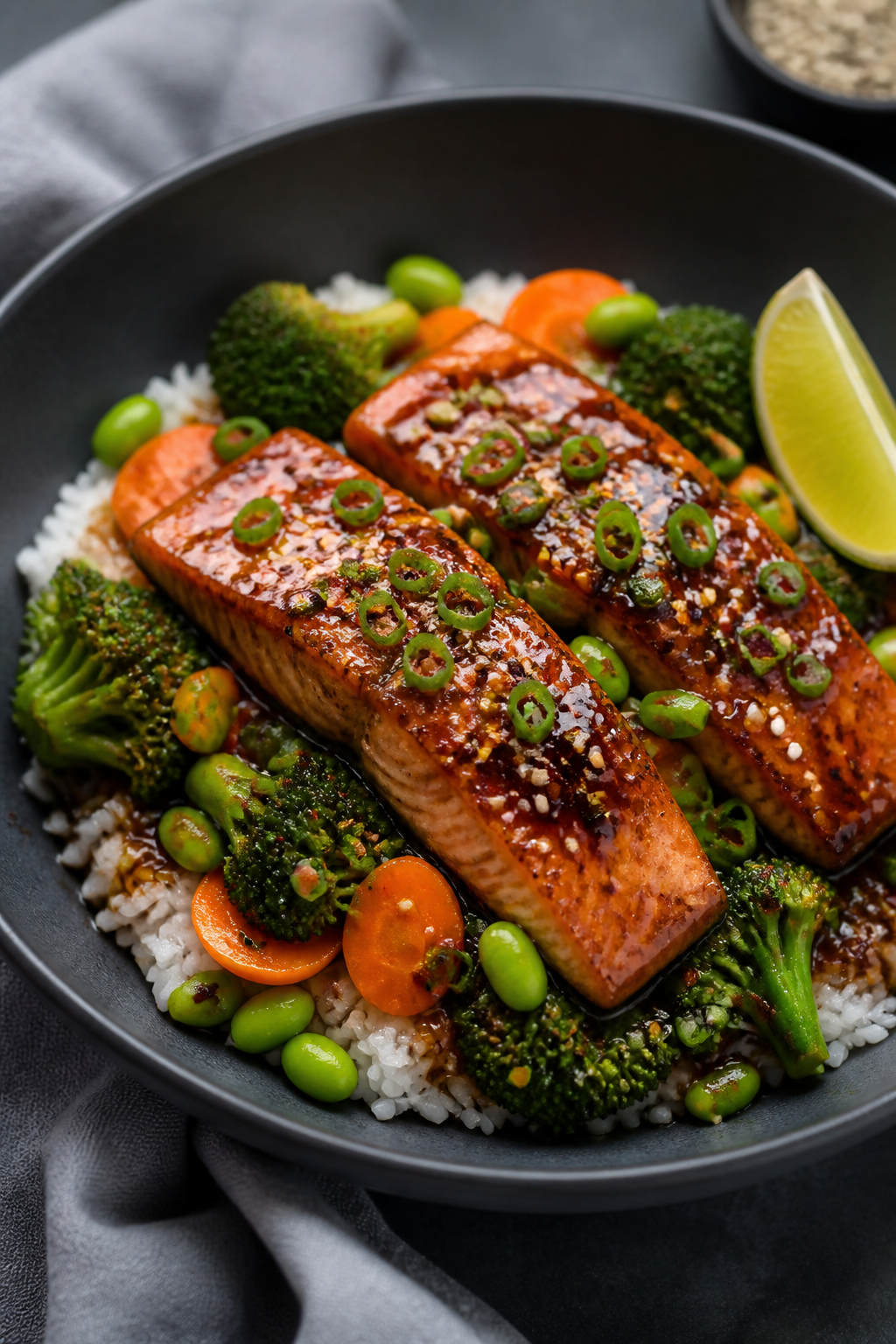
- Cook your base. Make a pot of rice or quinoa according to package directions.
Fluff and keep warm. Brown rice and quinoa pack more fiber, while jasmine rice brings that classic bowl texture.
- Prep the vegetables. Chop broccoli into small florets, slice carrots thin, and thaw edamame if using. Keep pieces bite-sized so they cook quickly and fit nicely in the bowl.
- Whisk the teriyaki sauce. In a bowl, mix 1/3 cup low-sodium soy sauce, 2 tablespoons honey, 1 tablespoon rice vinegar, 1 teaspoon toasted sesame oil, 2 cloves grated garlic, and 1 teaspoon grated fresh ginger.
In a separate small cup, stir 1 teaspoon cornstarch with 2 teaspoons water until smooth.
- Pat the salmon dry. Cut salmon into 1- to 2-inch cubes or leave as whole fillets. Season lightly with salt and pepper. Drying helps you get a better sear and prevents sticking.
- Cook the vegetables. Steam or sauté veggies with a splash of water or oil until crisp-tender, 3–5 minutes.
Season lightly with salt. Set aside.
- Sear the salmon. Heat 1 tablespoon neutral oil in a nonstick or well-seasoned skillet over medium-high heat. Add salmon, skin side down if using fillets, and sear 2–3 minutes per side until just cooked through and flaky.
Avoid overcooking.
- Make the glaze. Reduce heat to medium-low. Pour the teriyaki mixture into the pan. Stir in the cornstarch slurry and simmer 30–60 seconds until thick and glossy.
Toss salmon gently to coat without breaking it up.
- Assemble the bowls. Add a scoop of rice to each bowl. Top with glazed salmon and vegetables. Spoon extra sauce over the rice for flavor.
- Finish with toppings. Sprinkle sesame seeds and sliced green onions.
Add red pepper flakes or a drizzle of sriracha if you like heat. A squeeze of lime or lemon brightens everything.
- Serve immediately. The fish is best hot, with the sauce still shiny and the veggies crisp.
How to Store
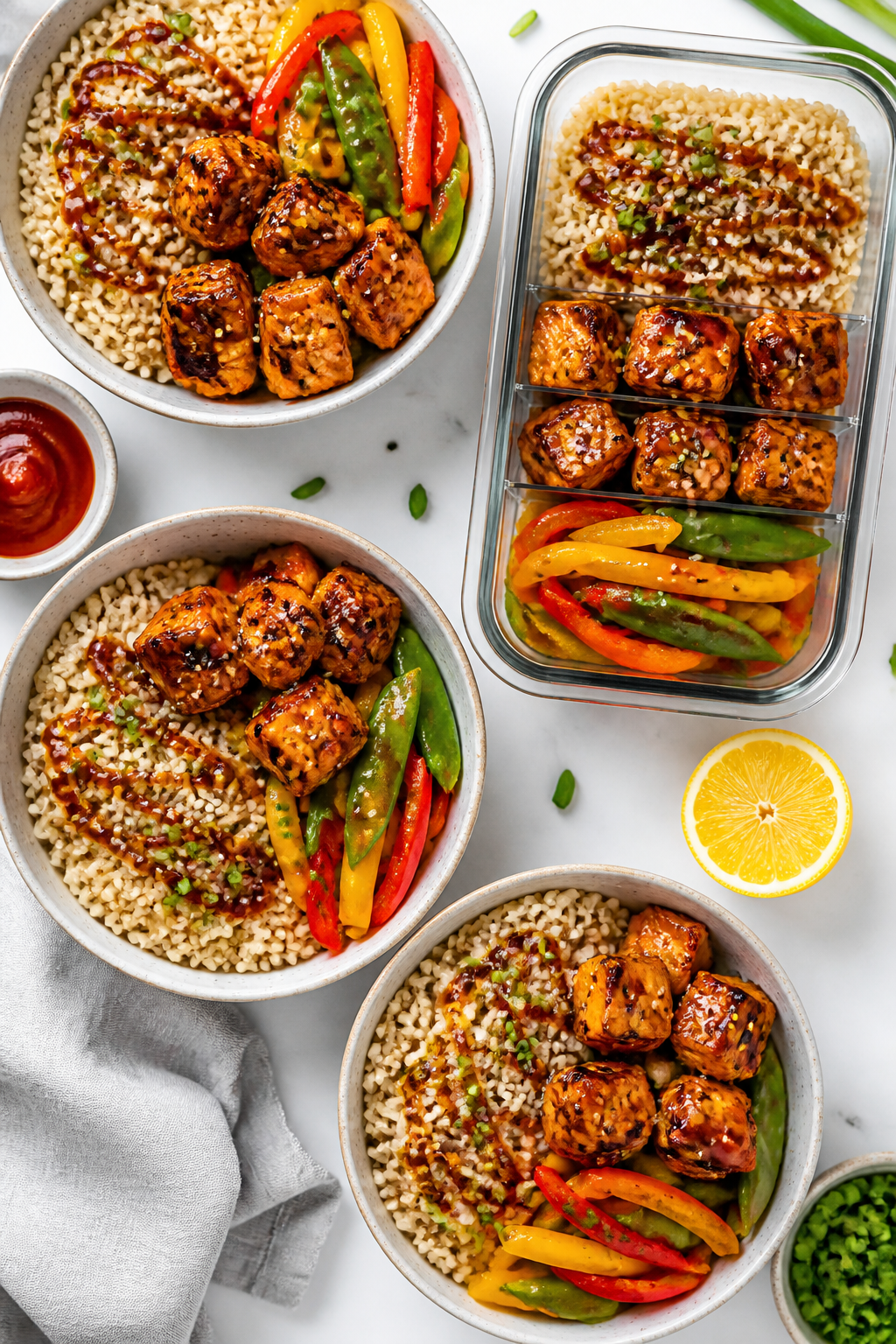
Store leftovers in airtight containers for up to 3 days in the fridge. Keep the salmon, rice, and vegetables in one container and the sauce separate if possible.
Reheat gently in the microwave in 45-second bursts, adding a splash of water to the rice to prevent drying. For meal prep, portion into single-serve containers and add fresh toppings (green onions, sesame seeds) right before eating.
Benefits of This Recipe
- High-quality protein: Salmon delivers complete protein to support muscle repair and keep you full longer.
- Omega-3 fats: Rich in EPA and DHA, salmon supports heart, brain, and joint health.
- Balanced macros: Carbs from rice plus protein and healthy fats from salmon make a steady-energy meal.
- Micronutrient boost: Veggies add fiber, vitamins A and C, and antioxidants.
- Customizable: Easy to adapt for gluten-free, dairy-free, or higher-fiber needs.
- Meal-prep friendly: Cooks fast, stores well, and reheats without losing texture.
Common Mistakes to Avoid
- Overcooking the salmon: Dry salmon happens fast. Pull it when it flakes easily and is still slightly translucent in the center.
It will carryover cook a bit.
- Skipping the cornstarch slurry: Adding dry cornstarch to hot sauce leads to lumps. Always dissolve it in water first.
- Using high heat with the sauce: Boiling can burn the sugars and turn the sauce bitter. Simmer gently until thick.
- Uneven veggie cuts: Large chunks cook slower and end up underdone.
Keep pieces uniform for even, quick cooking.
- Too much salt: Soy sauce is salty. Use low-sodium and taste before adding extra salt.
Variations You Can Try
- High-fiber swap: Use brown rice, quinoa, or cauliflower rice for a lighter base.
- Extra protein: Add a soft-boiled egg or a scoop of shelled edamame to push the protein even higher.
- Spicy teriyaki: Stir sriracha or gochujang into the sauce for a kick.
- Citrus twist: Add orange zest and juice to the glaze for a bright, tangy finish.
- Gluten-free: Use tamari or coconut aminos in place of soy sauce and check labels on other ingredients.
- Sheet pan version: Roast salmon and veggies together at 400°F (205°C) for 10–14 minutes, then toss with warmed teriyaki sauce.
- Grilled: Brush salmon with sauce and grill 3–4 minutes per side. Warm remaining sauce on the stove and glaze before serving.
FAQ
How much protein is in a serving?
Never wonder what's for dinner again.
Get 7 healthy, family-friendly dinners complete with recipes, grocery lists, and simple meal plans delivered straight to your inbox.
A typical 4-ounce cooked salmon fillet has around 23–25 grams of protein.
Add edamame or an egg to boost the total. With rice and veggies, most bowls land in the 25–35 grams range, depending on portions.
Can I use frozen salmon?
Yes. Thaw it overnight in the fridge or under cold running water in its packaging.
Pat very dry before cooking to get a good sear and prevent excess moisture in the pan.
What vegetables work best?
Broccoli, carrots, snap peas, bell peppers, and edamame are classics. Cabbage, zucchini, or baby spinach also work. Aim for crisp-tender textures to balance the soft rice and flaky salmon.
Is there a sugar-free option for the sauce?
You can reduce or swap the honey for a zero-calorie sweetener designed for cooking.
Start with less and adjust to taste, since sweeteners vary in strength. Keep the vinegar and ginger to balance the flavor.
Can I meal prep this for the week?
Absolutely. Portion into containers with rice, veggies, and salmon.
Keep sauce and fresh toppings separate and add just before reheating to keep textures sharp.
What if I don’t have fresh ginger?
Use 1/4 to 1/2 teaspoon ground ginger. Start small and taste, since it’s more concentrated and a bit different in flavor than fresh.
How do I prevent the salmon from sticking?
Use a nonstick pan or a well-heated, lightly oiled skillet. Make sure the fish is dry and don’t move it too soon—let a crust form before flipping.
If using skin-on fillets, start skin-side down.
Can I make it dairy-free?
Yes, the recipe is naturally dairy-free. Just check labels on your soy sauce and other condiments to be sure.
Wrapping Up
High Protein Teriyaki Salmon Bowls are a fast, feel-good meal that checks every box: flavorful, nourishing, and easy to customize. With a handful of pantry staples and fresh produce, you can get dinner on the table in under 30 minutes.
Make it once, and you’ll have a new weeknight favorite that also packs perfectly for lunch. Keep the ingredients on hand and you’ll never be far from a satisfying, balanced bowl.
Printable Recipe Card
Want just the essential recipe details without scrolling through the article? Get our printable recipe card with just the ingredients and instructions.
Loved This Recipe?
If you're looking for more simple, healthy dinners your family will actually eat, grab my FREE 7-Day Easy Dinner Reset. You'll get 7 easy dinner recipes, simple grocery lists, and a done-for-you plan that takes the stress out of mealtime.