Healthy Beef & Veggie Stir Fry – Quick, Colorful, and Satisfying
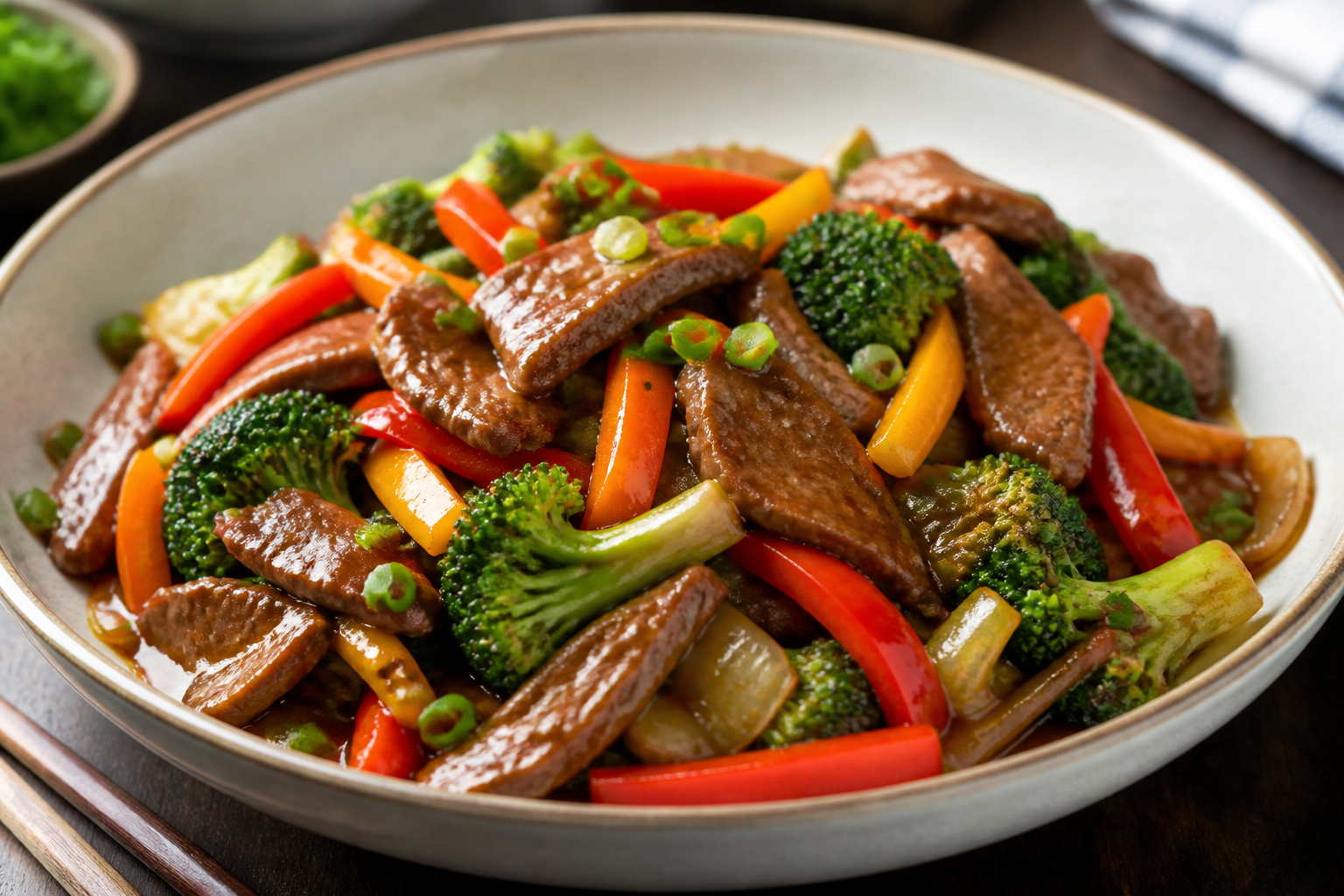
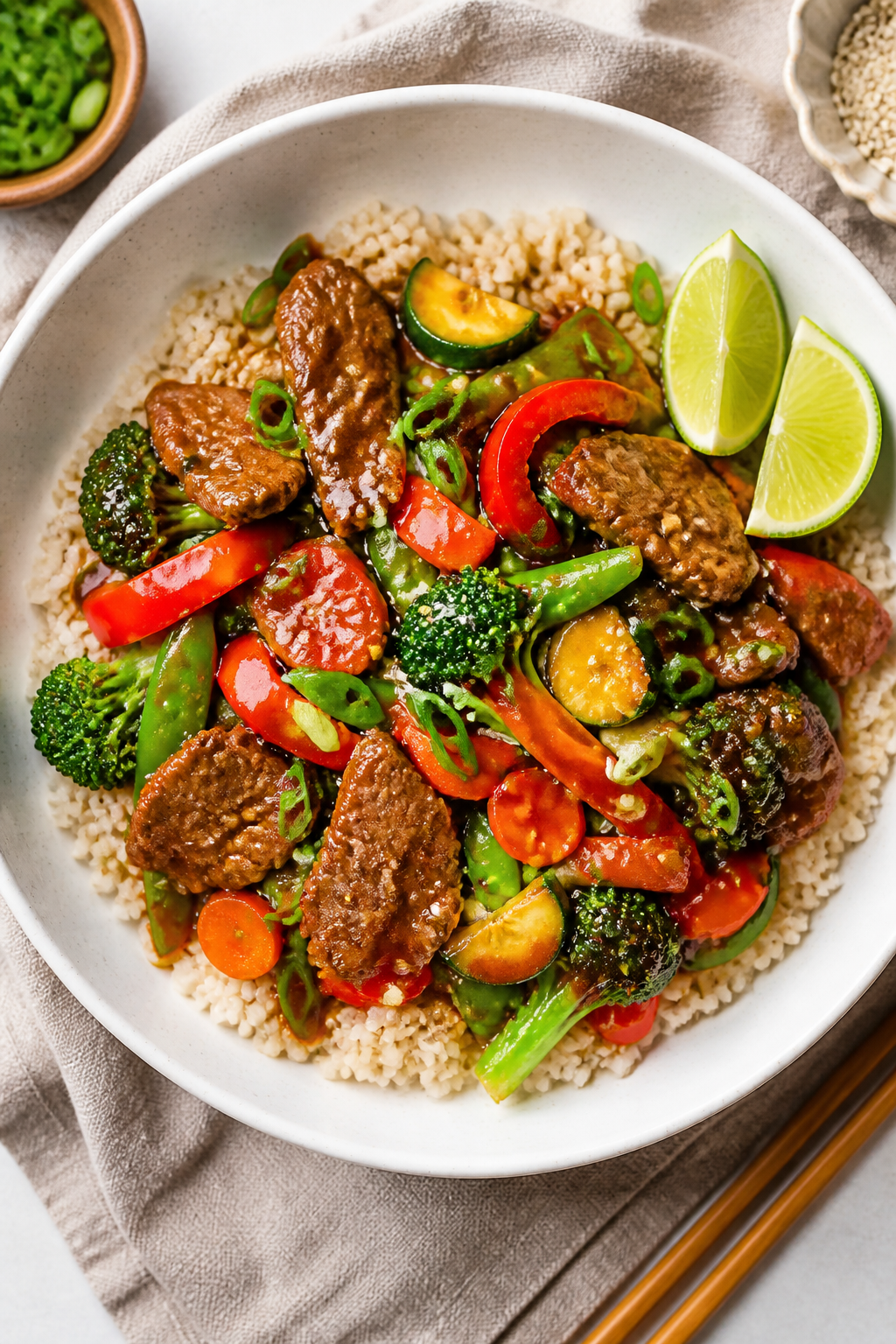
Stir fry nights are a lifesaver when you want something fast, fresh, and genuinely good for you. This Healthy Beef & Veggie Stir Fry brings tender slices of beef, crisp vegetables, and a glossy, savory sauce together in under 30 minutes. It’s balanced, deeply flavorful, and easy to adapt to whatever you have in the fridge.
Need More Easy Dinner Ideas?
Get my FREE 7-Day Easy Dinner Reset and enjoy a full week of healthy dinners without the meal-planning stress.
The textures stay bright and lively, and the portions are perfect for meal prep or a weeknight dinner. If you’re after a reliable dish that tastes like takeout but nourishes like a home-cooked meal, this is it.
Ingredients
Method
- Prep the beef: Pat the beef dry. Toss with 1 tablespoon soy sauce and 1 tablespoon cornstarch until lightly coated. Set aside while you prep the vegetables.
- Mix the sauce: In a small bowl, whisk soy sauce, oyster sauce, rice vinegar, honey, broth, and 1 teaspoon cornstarch. Add chili-garlic sauce if using. Keep it nearby.
- Heat the pan: Set a large wok or heavy skillet over medium-high to high heat. Add 1 tablespoon oil and swirl to coat. You want the pan hot enough that a drop of water sizzles on contact.
- Stir-fry the beef: Add beef in a single layer. Let it sear undisturbed for 30–45 seconds, then stir-fry 1–2 more minutes until mostly cooked with a little pink left. Transfer to a plate.
- Aromatics in: If the pan looks dry, add 1 teaspoon oil. Add garlic, ginger, and the white parts of the green onions. Stir for 20–30 seconds until fragrant. Don’t let them burn.
- Cook the veggies: Add broccoli and carrots first. Stir-fry 2 minutes. Add bell pepper, zucchini, and snap peas. Cook 2–3 minutes more until crisp-tender. Keep them vibrant, not soft.
- Sauce it up: Return the beef and any juices to the pan. Give the sauce a quick stir, then pour it in. Toss for 1–2 minutes until the sauce thickens and coats everything.
- Finish: Turn off the heat. Stir in sesame oil if using and the green parts of the onions. Taste and adjust with a splash more soy for salt, vinegar for brightness, or honey for balance.
- Serve: Spoon over warm rice, quinoa, or cauliflower rice. Garnish with sesame seeds and a squeeze of lime if you like.
Why This Recipe Works
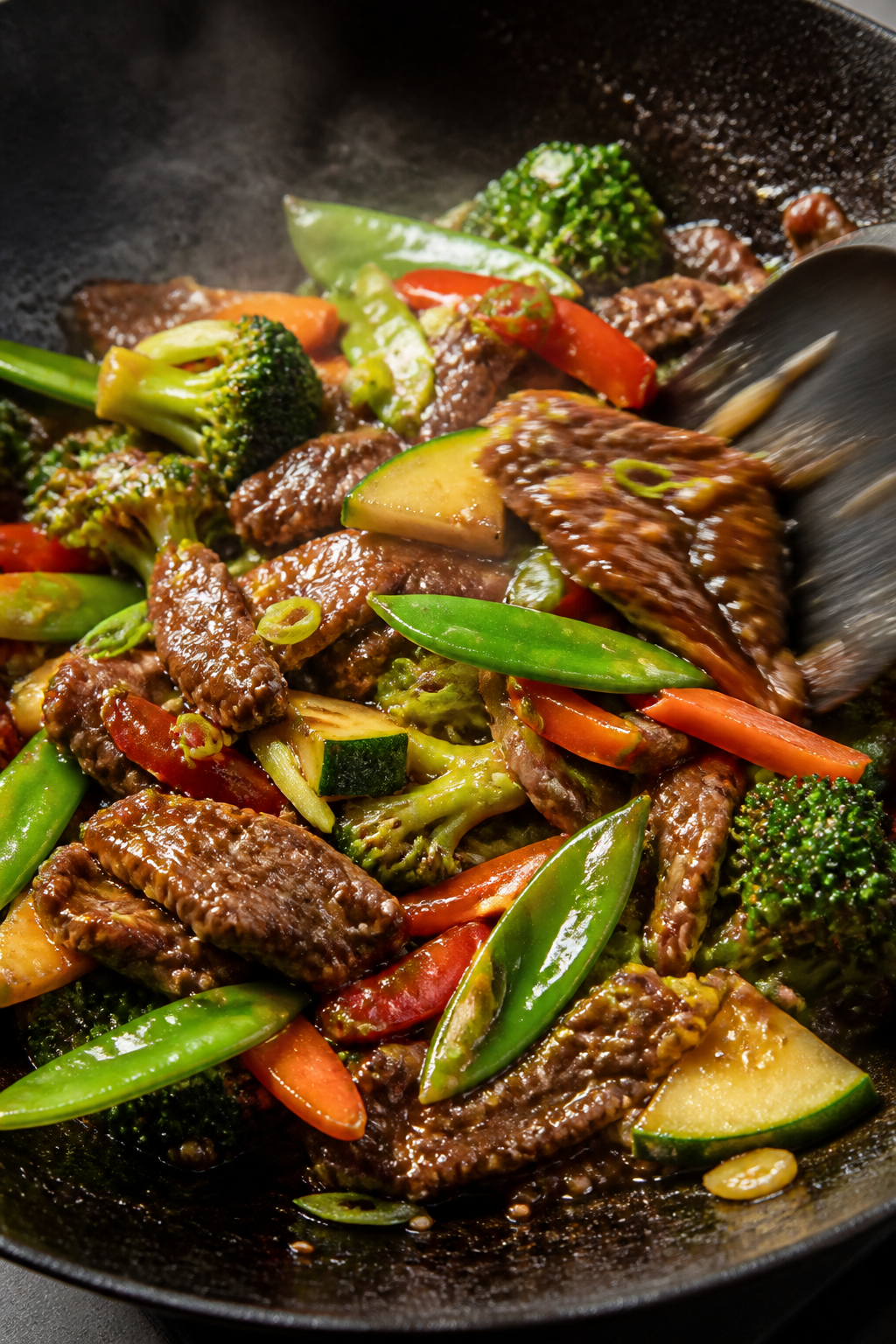
- High heat, quick cook: Flash-cooking the beef and veggies keeps the meat tender and the vegetables crisp-tender, preserving nutrients and flavor.
- Balanced sauce: A mix of low-sodium soy sauce, aromatics, a hint of honey, and rice vinegar creates depth without overpowering the ingredients.
- Lean protein, big veggies: Using sirloin or flank steak keeps the fat lean, while a generous mix of vegetables adds fiber and color.
- Smart slicing: Thin, against-the-grain slices of beef cook evenly and stay tender, even without a long marinade.
- Flexible and forgiving: Swap vegetables, adjust spice, and serve with rice, quinoa, or cauliflower rice to fit your goals.
Ingredients
- 12 oz (340 g) lean beef (sirloin, flank, or top round), thinly sliced against the grain
- 1 tablespoon cornstarch (for velveting the beef)
- 1 tablespoon low-sodium soy sauce (for the beef)
- 1 tablespoon avocado or canola oil (high-heat friendly), plus 1 teaspoon if needed
- 1 red bell pepper, sliced into thin strips
- 1 cup broccoli florets
- 1 medium carrot, peeled and thinly sliced on the bias
- 1 small zucchini, halved lengthwise and sliced
- 1 cup snap peas or snow peas, trimmed
- 3 cloves garlic, minced
- 1 tablespoon fresh ginger, minced or grated
- 2 green onions, sliced (whites and greens separated)
- Optional: 1–2 teaspoons toasted sesame oil for finishing
For the sauce:
- 3 tablespoons low-sodium soy sauce
- 1 tablespoon oyster sauce (or extra soy sauce if you prefer)
- 1 tablespoon rice vinegar
- 1–2 teaspoons honey or maple syrup (to taste)
- 1/3 cup low-sodium beef or chicken broth (or water)
- 1 teaspoon cornstarch
- Optional heat: 1/2–1 teaspoon chili-garlic sauce or red pepper flakes
To serve: Cooked brown rice, jasmine rice, quinoa, or cauliflower rice; lime wedges and sesame seeds if you like.
Step-by-Step Instructions
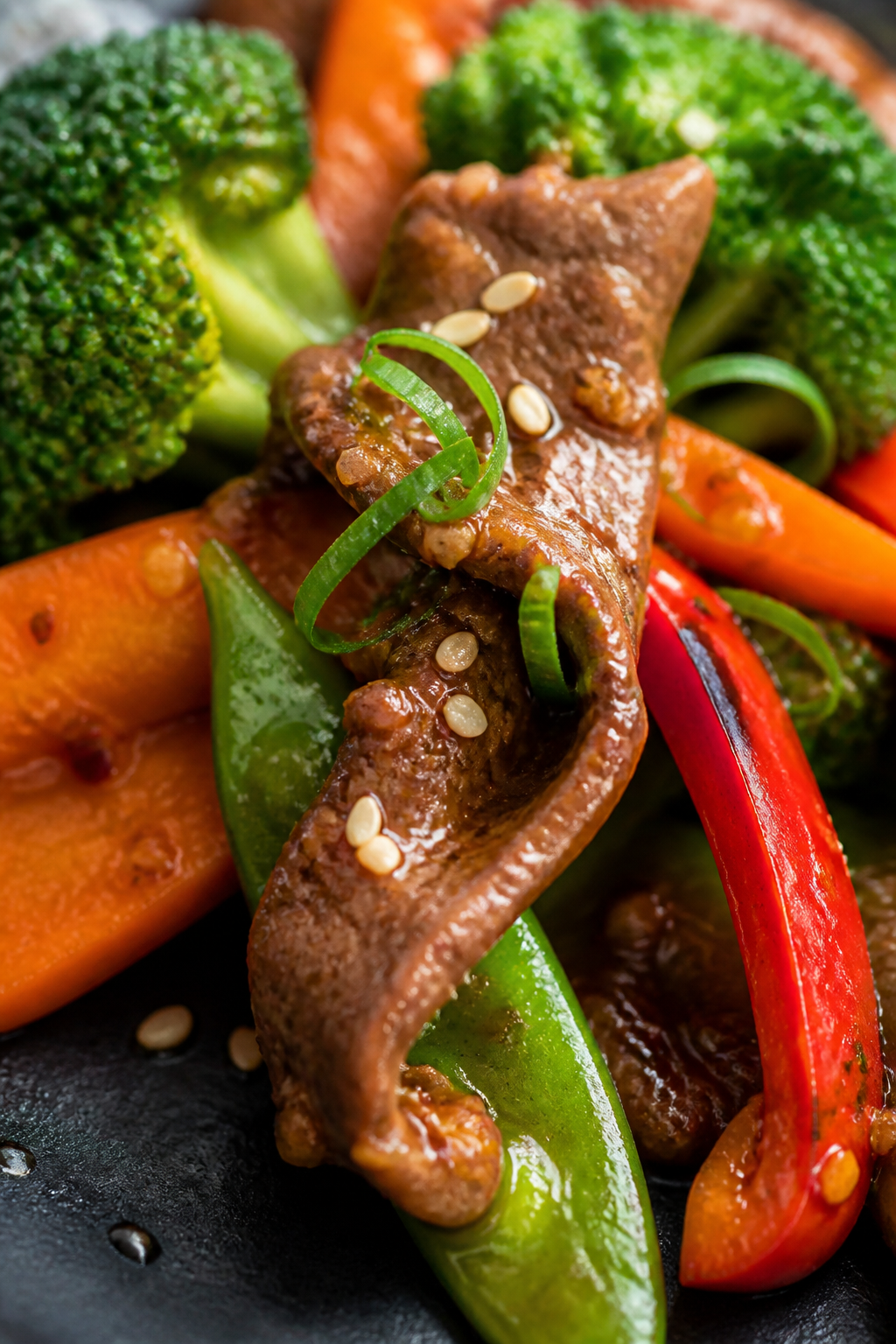
- Prep the beef: Pat the beef dry. Toss with 1 tablespoon soy sauce and 1 tablespoon cornstarch until lightly coated.
Set aside while you prep the vegetables.
- Mix the sauce: In a small bowl, whisk soy sauce, oyster sauce, rice vinegar, honey, broth, and 1 teaspoon cornstarch. Add chili-garlic sauce if using. Keep it nearby.
- Heat the pan: Set a large wok or heavy skillet over medium-high to high heat.
Add 1 tablespoon oil and swirl to coat. You want the pan hot enough that a drop of water sizzles on contact.
- Stir-fry the beef: Add beef in a single layer. Let it sear undisturbed for 30–45 seconds, then stir-fry 1–2 more minutes until mostly cooked with a little pink left.
Transfer to a plate.
- Aromatics in: If the pan looks dry, add 1 teaspoon oil. Add garlic, ginger, and the white parts of the green onions. Stir for 20–30 seconds until fragrant.
Don’t let them burn.
- Cook the veggies: Add broccoli and carrots first. Stir-fry 2 minutes. Add bell pepper, zucchini, and snap peas.
Cook 2–3 minutes more until crisp-tender. Keep them vibrant, not soft.
- Sauce it up: Return the beef and any juices to the pan. Give the sauce a quick stir, then pour it in.
Toss for 1–2 minutes until the sauce thickens and coats everything.
- Finish: Turn off the heat. Stir in sesame oil if using and the green parts of the onions. Taste and adjust with a splash more soy for salt, vinegar for brightness, or honey for balance.
- Serve: Spoon over warm rice, quinoa, or cauliflower rice.
Garnish with sesame seeds and a squeeze of lime if you like.
Keeping It Fresh
- Prep ahead: Slice the beef and vegetables up to 24 hours in advance. Mix the sauce and store it in a jar. Dinner will come together in 10 minutes.
- Storage: Refrigerate leftovers in an airtight container for up to 3 days.
Keep rice and stir fry separate so the veggies stay crisper.
- Reheating: Reheat in a hot skillet with a splash of water or broth to loosen the sauce. Avoid microwaving too long to keep the veggies from going soft.
- Freezing: Freeze cooked stir fry only if needed. Texture will soften, but it’s still tasty.
Thaw overnight and reheat quickly on the stovetop.
Benefits of This Recipe
- High-protein, high-fiber: Lean beef brings protein and iron, while a big veggie mix adds fiber, vitamins A, C, and K.
- Lower sodium by design: Using low-sodium soy and broth keeps the salt in check without sacrificing flavor.
- Meal-prep friendly: The components hold up well for a few days and reheat fast.
- Customizable carbs: Serve with whole grains for staying power or cauliflower rice for a lighter option.
- Budget-smart: A modest amount of beef stretches far when paired with lots of vegetables.
What Not to Do
- Don’t overcrowd the pan: Overloading traps steam and turns searing into stewing. Cook in batches for best browning.
- Don’t skip drying the beef: Moisture prevents a good sear and dilutes the sauce.
- Don’t overcook the vegetables: Soft, dull veggies lose nutrients and crunch. Pull them while they’re still bright.
- Don’t pour in cold, unshaken sauce: Cornstarch settles.
Stir or shake right before adding so it thickens evenly.
- Don’t use low-heat oil: Olive oil can smoke at high temps. Use a neutral, high-heat oil for clean flavor and safety.
Alternatives
Never wonder what's for dinner again.
Get 7 healthy, family-friendly dinners complete with recipes, grocery lists, and simple meal plans delivered straight to your inbox.
- Protein swaps: Use chicken breast or thighs, shrimp, firm tofu, or tempeh. Adjust cook times: shrimp cooks in 2–3 minutes; tofu benefits from a quick pan-sear first.
- Sauce tweaks: Try tamari or coconut aminos for gluten-free, add a spoonful of peanut butter for a nutty spin, or use a squeeze of orange juice instead of honey for subtle sweetness.
- Veggie variations: Mushrooms, baby corn, bok choy, cabbage, or green beans all work.
Use what’s in season or in your crisper.
- Spice levels: Add fresh chili, extra chili-garlic sauce, or a pinch of white pepper for warmth. Keep it mild for family-friendly meals.
- Grain choices: Brown rice for fiber, jasmine for classic takeout vibes, quinoa for extra protein, or cauliflower rice for low-carb.
FAQ
How do I slice the beef so it stays tender?
Cut against the grain into thin slices, about 1/8–1/4 inch thick. Partially freezing the beef for 20–30 minutes firms it up and makes clean, even slices easier.
Can I make this gluten-free?
Yes.
Use tamari or certified gluten-free soy sauce and a gluten-free oyster sauce (or skip oyster sauce and add extra tamari plus a touch of fish sauce if you use it). Check broth labels too.
What if I don’t have a wok?
A large, heavy skillet or sauté pan works great. Preheat it well and avoid crowding.
The key is high heat and steady movement.
How do I keep the veggies crisp when reheating?
Reheat quickly in a hot pan with a tablespoon of water or broth, tossing just until warmed. Avoid long microwave times, which make vegetables soft.
Can I lower the sodium even more?
Use low-sodium soy sauce, skip the oyster sauce, and lean on aromatics, ginger, and a squeeze of lime for brightness. You can also dilute the sauce with extra broth.
Is velveting the beef necessary?
It helps.
A light cornstarch coat and quick marinade with soy sauce protect the meat from drying out and improve browning and texture.
What’s the best oil for stir-frying?
Choose high-smoke-point oils like avocado, canola, peanut, or grapeseed. They stay stable at high heat and won’t add overpowering flavors.
In Conclusion
Healthy Beef & Veggie Stir Fry is the kind of weeknight winner that checks every box: fast, colorful, and satisfying without weighing you down. With a well-balanced sauce, lean protein, and loads of vegetables, it feels fresh and tastes bold.
Keep the heat high, the slices thin, and the veggies crisp, and you’ll get restaurant-level results at home. Make it once, then riff on it with whatever you’ve got—this is a flexible formula you’ll come back to again and again.
Printable Recipe Card
Want just the essential recipe details without scrolling through the article? Get our printable recipe card with just the ingredients and instructions.
Loved This Recipe?
If you're looking for more simple, healthy dinners your family will actually eat, grab my FREE 7-Day Easy Dinner Reset. You'll get 7 easy dinner recipes, simple grocery lists, and a done-for-you plan that takes the stress out of mealtime.