Cook your base. Make a pot of rice or quinoa according to package directions.
Fluff and keep warm. Brown rice and quinoa pack more fiber, while jasmine rice brings that classic bowl texture.
Prep the vegetables. Chop broccoli into small florets, slice carrots thin, and thaw edamame if using. Keep pieces bite-sized so they cook quickly and fit nicely in the bowl.
Whisk the teriyaki sauce. In a bowl, mix 1/3 cup low-sodium soy sauce, 2 tablespoons honey, 1 tablespoon rice vinegar, 1 teaspoon toasted sesame oil, 2 cloves grated garlic, and 1 teaspoon grated fresh ginger.
In a separate small cup, stir 1 teaspoon cornstarch with 2 teaspoons water until smooth.
Pat the salmon dry. Cut salmon into 1- to 2-inch cubes or leave as whole fillets. Season lightly with salt and pepper. Drying helps you get a better sear and prevents sticking.
Cook the vegetables. Steam or sauté veggies with a splash of water or oil until crisp-tender, 3–5 minutes.
Season lightly with salt. Set aside.
Sear the salmon. Heat 1 tablespoon neutral oil in a nonstick or well-seasoned skillet over medium-high heat. Add salmon, skin side down if using fillets, and sear 2–3 minutes per side until just cooked through and flaky.
Avoid overcooking.
Make the glaze. Reduce heat to medium-low. Pour the teriyaki mixture into the pan. Stir in the cornstarch slurry and simmer 30–60 seconds until thick and glossy.
Toss salmon gently to coat without breaking it up.
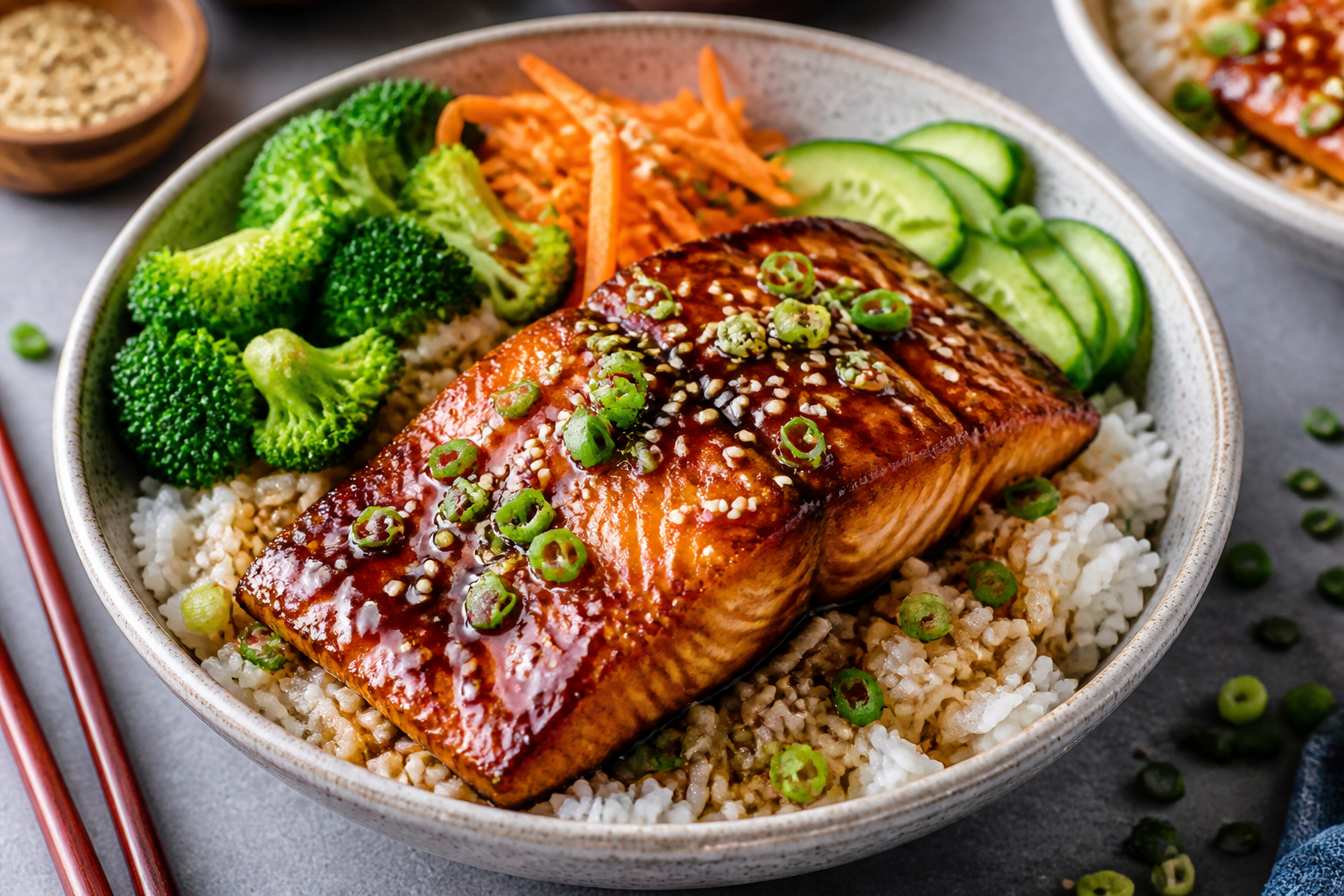
Assemble the bowls. Add a scoop of rice to each bowl. Top with glazed salmon and vegetables. Spoon extra sauce over the rice for flavor.
Finish with toppings. Sprinkle sesame seeds and sliced green onions.
Add red pepper flakes or a drizzle of sriracha if you like heat. A squeeze of lime or lemon brightens everything.
Serve immediately. The fish is best hot, with the sauce still shiny and the veggies crisp.