Preheat and prep: Heat your oven to 425°F (220°C). Line two sheet pans with parchment for easy cleanup.
Rinse the pork and pat it dry with paper towels.
Trim the pork: Use a sharp knife to remove the silver skin (that shiny, tough membrane). This helps keep the meat tender.
Mix the rub: Combine salt, pepper, smoked paprika, garlic powder, onion powder, and dried thyme in a small bowl. Add 1 tablespoon olive oil to form a loose paste.
Season the pork: Rub the spice mixture all over the tenderloins.
Let it sit while you prep the veggies.
Prep the veggies: Cut into even pieces so they roast at the same pace. Toss with 1–2 tablespoons olive oil, a big pinch of salt, and black pepper.
Start the grain: Cook quinoa, rice, or farro according to package directions. Fluff and set aside.
For extra flavor, use low-sodium broth instead of water.
Roast the veggies: Spread them on one sheet pan in a single layer. Roast for 18–22 minutes, tossing once halfway, until caramelized and tender-crisp.
Sear the pork (optional but best): Heat a large oven-safe skillet over medium-high. Add a teaspoon of oil.
Sear the tenderloins 1–2 minutes per side until browned.
Roast the pork: Transfer the skillet to the oven (or place pork on the second sheet pan). Roast 12–18 minutes, depending on thickness, until the center reaches 145°F (63°C). Don’t overcook.
Rest and slice: Let the pork rest 5–10 minutes.
Slice into 1/2-inch medallions, keeping juices for drizzling.
Make the sauce: Stir together yogurt, Dijon, lemon juice, olive oil, and grated garlic. Season with salt and pepper. Thin with a splash of water if needed.
Assemble bowls: Divide grain among containers.
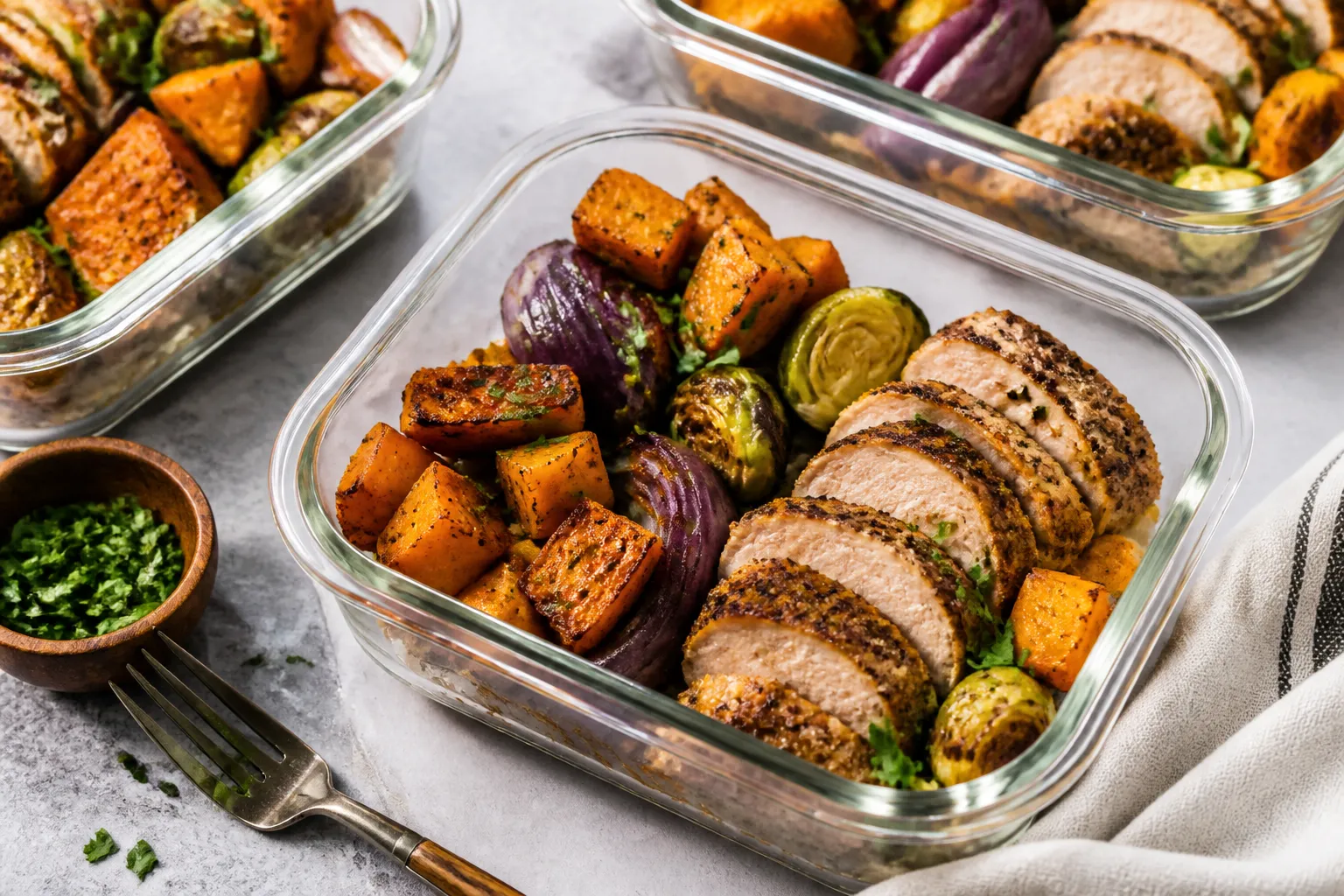
Add roasted veggies and sliced pork. Spoon over some pan juices and a drizzle of sauce. Keep some sauce on the side if you prefer.
Cool and store: Let containers cool uncovered for 20–30 minutes, then seal and refrigerate up to 4 days.