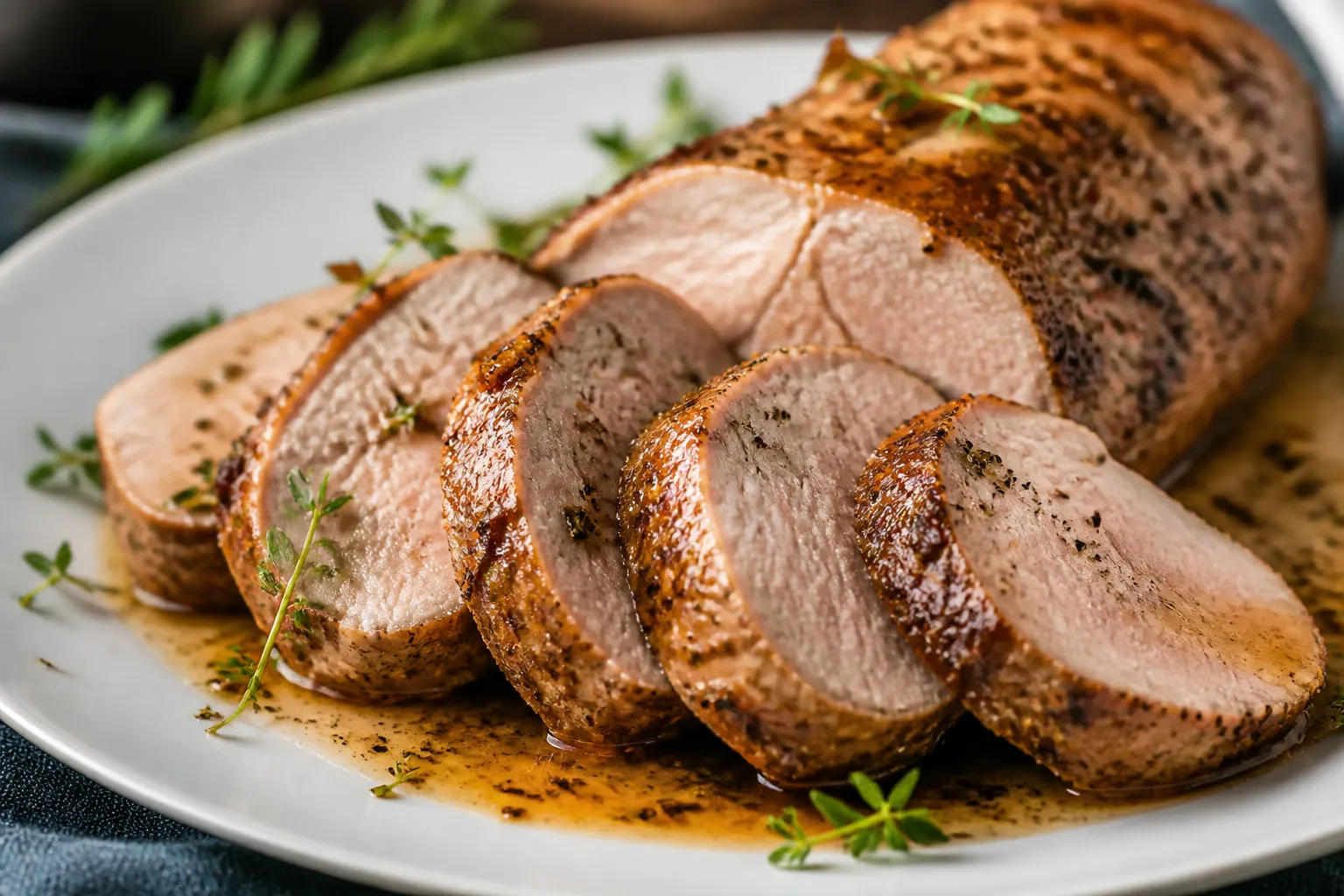
Preheat and prep. Heat your oven to 400°F (200°C).
Pat the pork tenderloin dry with paper towels. Dry meat sears better and helps form that savory crust.
Mix the rub. In a small bowl, combine salt, pepper, garlic powder, onion powder, smoked paprika, and dried thyme. Stir in Dijon and honey until you have a paste.
This helps the seasoning cling and creates gentle caramelization.
Season the pork. Rub the paste all over the tenderloin, coating every side. Let it sit at room temperature for about 10–15 minutes while you heat the pan. This takes the chill off and promotes even cooking.
Get the pan hot. Set a large oven-safe skillet (cast iron works great) over medium-high heat.
Add 1 tablespoon of olive oil and heat until it shimmers.
Sear for flavor. Lay the tenderloin in the hot pan and sear 1–2 minutes per side until nicely browned, turning with tongs to hit all surfaces. Don’t rush this; color equals flavor.
Finish in the oven. Drizzle the remaining tablespoon of olive oil over the pork if the pan looks dry. Transfer the skillet to the oven and roast for 10–15 minutes, depending on thickness, until the center reaches 135–140°F (57–60°C) on an instant-read thermometer for a juicy, slightly pink center.
Rest the meat. Move the pork to a cutting board and tent loosely with foil.
Rest for 10 minutes. The temperature will rise a few degrees to about 145°F (63°C), the sweet spot for tender, safe pork.
Make a quick pan sauce. Return the skillet to the stove over medium heat. Add the chicken broth (or wine) and scrape up the browned bits.
Simmer 2–3 minutes to reduce slightly. Whisk in butter and a quick squeeze of lemon to brighten. Taste and adjust seasoning.
Slice and serve. Slice the pork into 1/2-inch medallions against the grain.
Spoon the pan sauce over the top. Garnish with fresh thyme or parsley if you’d like.