High Protein Korean Beef Bowls – Easy, Flavor-Packed Weeknight Meal
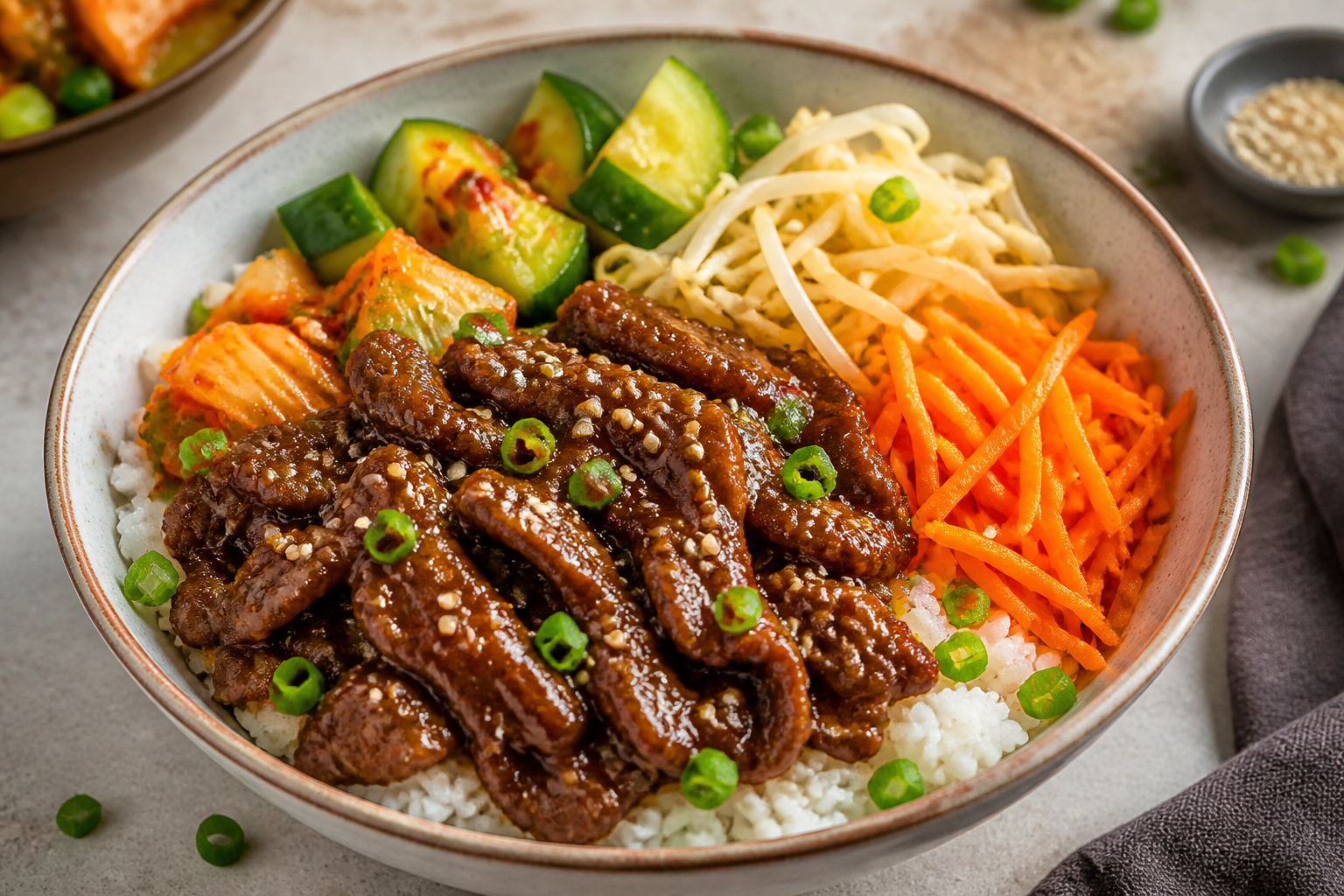
These High Protein Korean Beef Bowls bring big flavor with minimal effort. Ground beef caramelized in a sweet-savory sauce, paired with fluffy rice and crisp veggies, makes a meal that’s satisfying and quick. It’s the kind of dinner you can pull together on a busy night without sacrificing taste.
Need More Easy Dinner Ideas?
Get my FREE 7-Day Easy Dinner Reset and enjoy a full week of healthy dinners without the meal-planning stress.
The best part? You control the protein, carbs, and spice. This bowl hits that perfect balance of comfort and nutrition.
Ingredients
Method
- Cook the rice: Start your rice first so it’s ready when the beef is done. Rinse 1 cup rice, then cook according to package directions. Fluff and keep warm.
- Make the sauce: In a small bowl, whisk 1/4 cup low-sodium soy sauce, 2–3 tablespoons brown sugar, 1 tablespoon rice vinegar, 1 teaspoon toasted sesame oil, and 1–2 teaspoons gochujang (or 1/2 teaspoon red pepper flakes). Taste and adjust sweetness or heat.
- Prep aromatics: Mince 3–4 cloves garlic and grate 1 tablespoon fresh ginger. Slice 3–4 green onions, separating white and green parts.
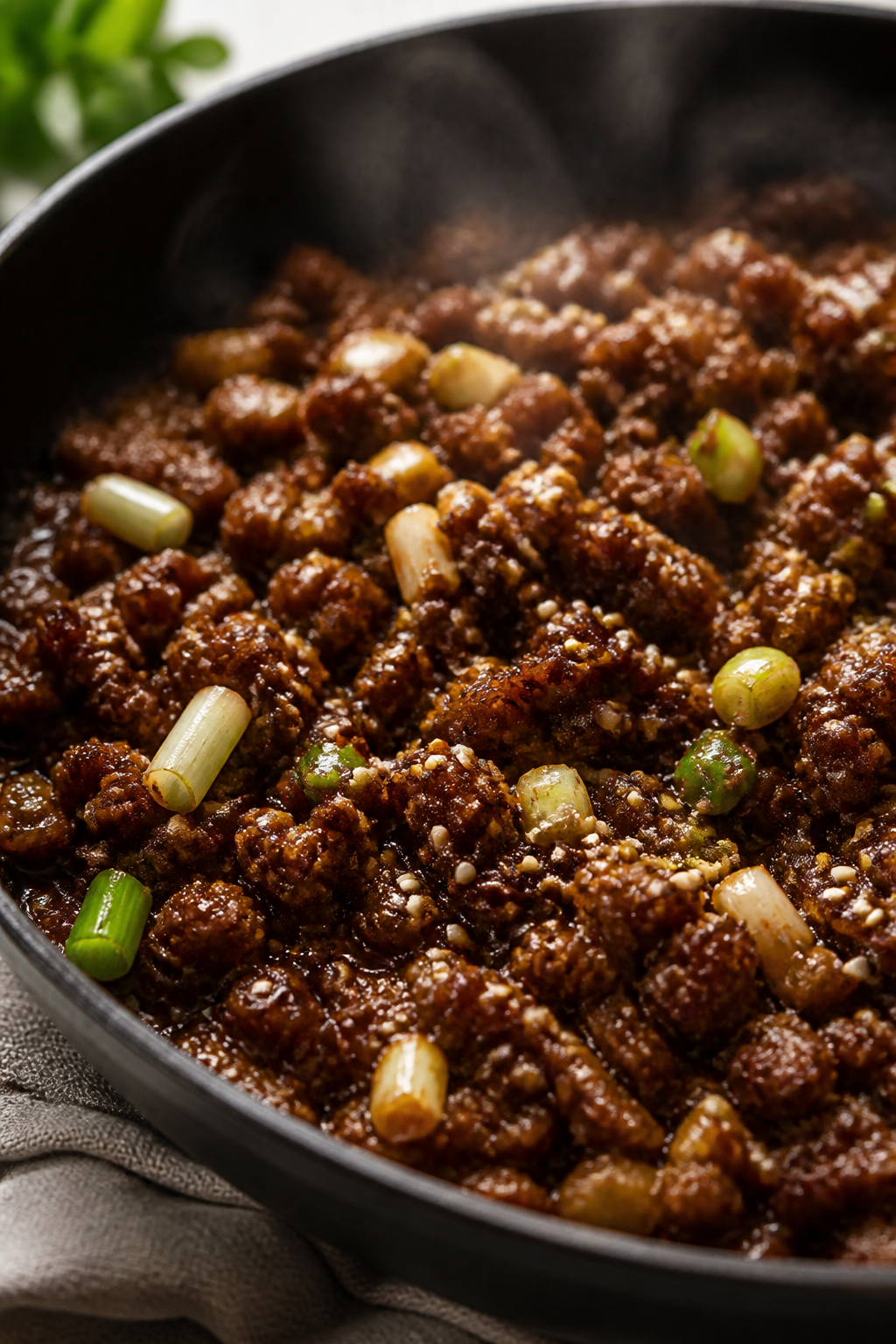
- Brown the beef: Heat 1 teaspoon neutral oil in a large skillet over medium-high. Add the ground beef and the white parts of the green onions. Cook, breaking it up with a spatula, until browned and slightly crisp at the edges, about 5–7 minutes. Drain excess fat if needed.
- Add garlic and ginger: Stir in the garlic and ginger. Cook until fragrant, about 30–45 seconds. Don’t let it burn.
- Glaze with sauce: Pour in the sauce. Stir and let it bubble for 1–2 minutes until it thickens and coats the beef. If it looks dry, add 1–2 tablespoons water to loosen.
- Finish with sesame oil and seeds: Turn off the heat. Add a light drizzle of sesame oil if you want extra aroma, and sprinkle in 1–2 teaspoons sesame seeds.
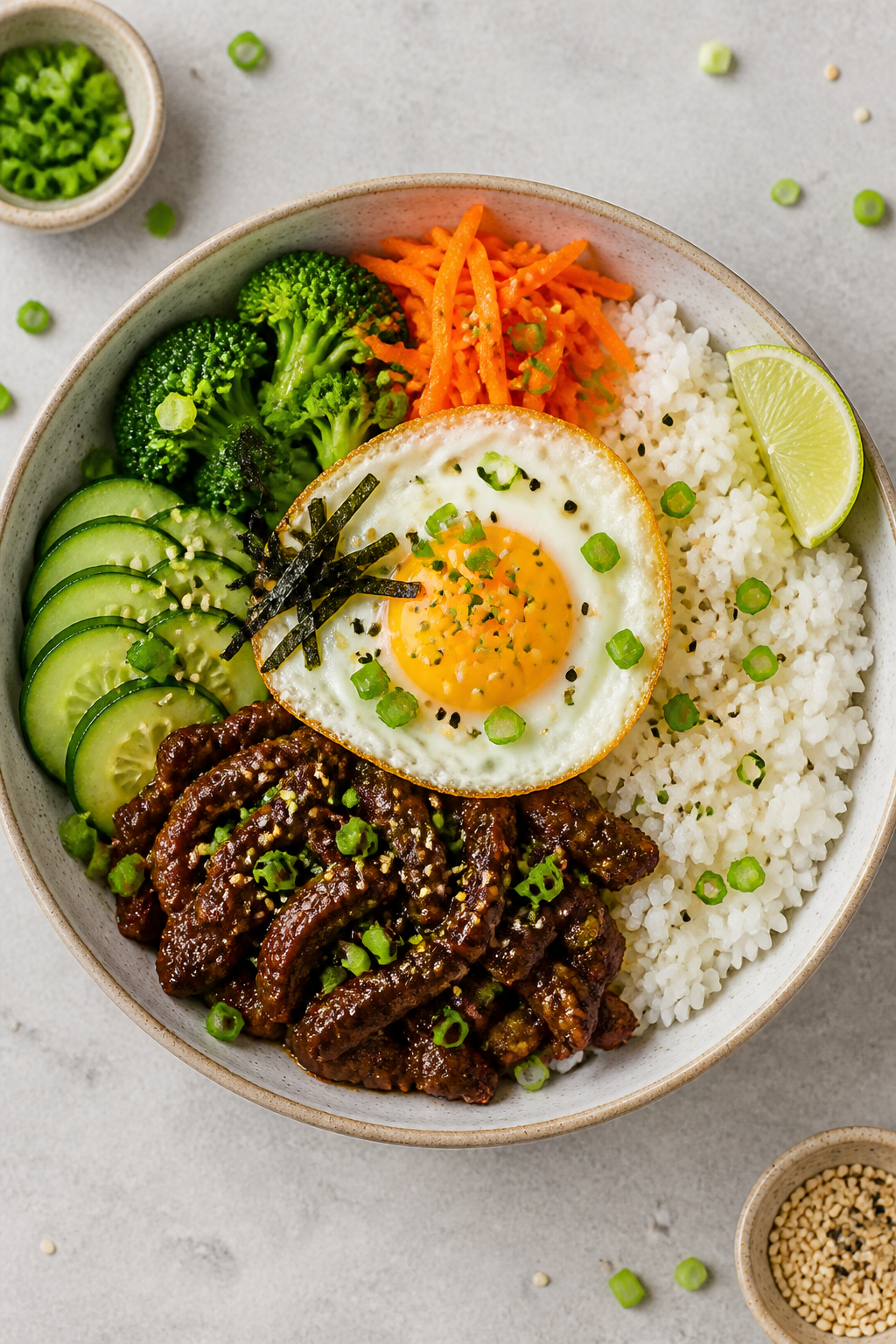
- Build your bowls: Add rice to bowls. Top with the beef. Pile on fresh cucumber, shredded carrots, steamed broccoli, or kimchi. Add a fried egg if you like.
- Garnish: Scatter the green parts of the scallions over the top. A squeeze of lime or a pinch of nori strips is great for brightness and umami.
What Makes This Recipe So Good
- Fast and doable: From pan to bowl in about 25 minutes.
No marinating or fancy steps.
- High in protein: Using lean ground beef (or lean turkey) keeps protein high while trimming excess fat.
- Big flavor, simple sauce: Soy sauce, garlic, ginger, and a touch of brown sugar give that classic Korean-inspired taste.
- Customizable bowl: Serve with rice or cauliflower rice, and load up with veggies for balance.
- Meal prep friendly: The beef reheats well and tastes even better the next day.
Shopping List
- Lean ground beef (90–95% lean), about 1 pound
- Low-sodium soy sauce or tamari
- Dark brown sugar or coconut sugar
- Rice vinegar
- Toasted sesame oil
- Fresh garlic
- Fresh ginger (or ginger paste)
- Gochujang (Korean chili paste) or red pepper flakes
- Green onions (scallions)
- Sesame seeds
- Jasmine or short-grain white rice (or brown rice/cauliflower rice)
- Vegetables for serving: cucumber, shredded carrots, steamed broccoli, or kimchi
- Neutral oil for cooking (avocado or canola)
- Optional: Fried eggs, lime, nori strips
Step-by-Step Instructions
- Cook the rice: Start your rice first so it’s ready when the beef is done. Rinse 1 cup rice, then cook according to package directions. Fluff and keep warm.
- Make the sauce: In a small bowl, whisk 1/4 cup low-sodium soy sauce, 2–3 tablespoons brown sugar, 1 tablespoon rice vinegar, 1 teaspoon toasted sesame oil, and 1–2 teaspoons gochujang (or 1/2 teaspoon red pepper flakes).
Taste and adjust sweetness or heat.
- Prep aromatics: Mince 3–4 cloves garlic and grate 1 tablespoon fresh ginger. Slice 3–4 green onions, separating white and green parts.
- Brown the beef: Heat 1 teaspoon neutral oil in a large skillet over medium-high. Add the ground beef and the white parts of the green onions.
Cook, breaking it up with a spatula, until browned and slightly crisp at the edges, about 5–7 minutes. Drain excess fat if needed.
- Add garlic and ginger: Stir in the garlic and ginger. Cook until fragrant, about 30–45 seconds.
Don’t let it burn.
- Glaze with sauce: Pour in the sauce. Stir and let it bubble for 1–2 minutes until it thickens and coats the beef. If it looks dry, add 1–2 tablespoons water to loosen.
- Finish with sesame oil and seeds: Turn off the heat.
Add a light drizzle of sesame oil if you want extra aroma, and sprinkle in 1–2 teaspoons sesame seeds.
- Build your bowls: Add rice to bowls. Top with the beef. Pile on fresh cucumber, shredded carrots, steamed broccoli, or kimchi.
Add a fried egg if you like.
- Garnish: Scatter the green parts of the scallions over the top. A squeeze of lime or a pinch of nori strips is great for brightness and umami.
Keeping It Fresh
- Storage: Portion cooked beef and rice separately in airtight containers. Refrigerate for up to 4 days.
- Reheating: Warm the beef on the stove over medium with a splash of water to loosen the sauce, or microwave in 30-second bursts, stirring.
Add fresh toppings after reheating for crunch.
- Freezing: The cooked beef freezes well for up to 3 months. Thaw in the fridge overnight and reheat gently.
- Meal prep tip: Store cucumbers and carrots dry with a paper towel to keep them crisp. Keep kimchi and sauces in separate small containers.
Health Benefits
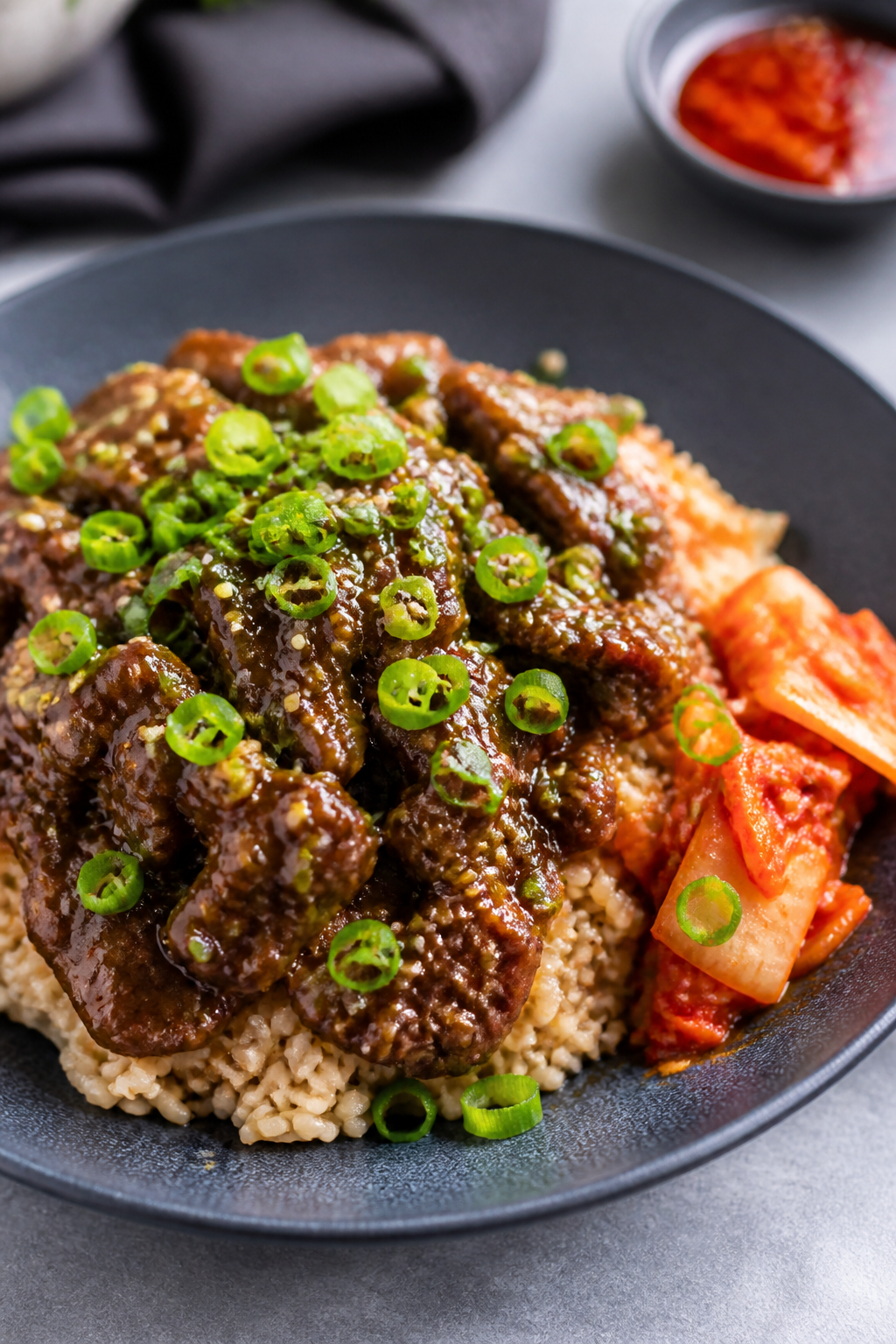
- High-quality protein: Lean beef is rich in complete protein, which supports muscle repair, satiety, and stable energy.
- Iron and B vitamins: Beef provides heme iron and B12, which help with oxygen transport and nervous system health.
- Balanced macros: Pairing beef with rice gives a steady carb base, while sesame oil and egg (optional) add healthy fats.
- Veggie power: Cucumber, carrots, broccoli, and kimchi bring fiber, antioxidants, and gut-friendly probiotics.
- Lower sodium option: Using low-sodium soy sauce and balancing with vinegar keeps flavor high without overdoing salt.
Common Mistakes to Avoid
- Overcrowding the pan: Too much beef in a small skillet steams instead of browns.
Use a large pan or cook in batches.
- Skipping aromatics: Garlic and ginger are non-negotiable for depth. Fresh is best.
- Burning the sauce: The sugar can scorch quickly. Once the sauce goes in, lower the heat and stir.
- Overcooking the veggies: Keep toppings crisp for contrast.
Steam broccoli until just tender; keep cucumber and carrots raw.
- Forgetting balance: Taste the sauce. Adjust sweetness, heat, and acidity so it’s not one-note.
Variations You Can Try
- Turkey or chicken: Swap in lean ground turkey or chicken for a lighter option. Add a touch more sesame oil to enhance richness.
- Extra-lean and extra-saucy: If using 96% lean beef, add 2–3 tablespoons water or broth with the sauce to keep it juicy.
- Low-carb: Serve over cauliflower rice and add extra veggies like sautéed cabbage or zucchini.
- Spicy gochujang glaze: Increase gochujang to 1 tablespoon and finish with a drizzle of chili oil.
- Bulgogi-inspired: Add a grated Asian pear or 1–2 tablespoons pear juice to the sauce for natural sweetness and tenderness.
- High-fiber twist: Use brown rice or quinoa and toss in edamame for more fiber and protein.
- Egg on top: A runny fried egg adds creaminess and more protein.
Soft-boiled eggs also work well.
FAQ
Can I make this gluten-free?
Yes. Use tamari or coconut aminos instead of soy sauce, and check your gochujang label for gluten-free certification. Serve with rice or cauliflower rice as usual.
How spicy is it?
Never wonder what's for dinner again.
Get 7 healthy, family-friendly dinners complete with recipes, grocery lists, and simple meal plans delivered straight to your inbox.
It’s mild to medium by default.
Adjust gochujang or red pepper flakes to taste. You can also set out chili oil for those who want more heat.
What’s the best beef to use?
Choose 90–95% lean ground beef for a high-protein, lower-fat result. If you prefer richer flavor, 85% works—just drain excess fat before adding the sauce.
Can I double the recipe for meal prep?
Absolutely.
Brown the meat in batches for proper searing, then combine with the sauce at the end. Cool completely before storing to prevent condensation.
What can I use instead of brown sugar?
Coconut sugar, maple syrup, or honey all work. Start with a little less than the called-for amount and adjust to taste.
Do I need gochujang?
It adds depth and a signature Korean-style kick, but you can skip it and use red pepper flakes and a touch more soy sauce.
A small dab of chili-garlic sauce also works in a pinch.
How do I keep the beef from drying out?
Don’t overcook once the sauce is in. Add a splash of water or broth if it looks tight, and finish with a tiny drizzle of sesame oil for moisture and aroma.
What veggies pair best?
Cucumber, shredded carrots, steamed broccoli, sautéed mushrooms, scallions, and kimchi are top picks. Aim for a mix of crisp and tender textures.
Is this good for post-workout?
Yes.
It delivers quality protein and carbs for recovery, plus sodium to help replenish electrolytes. Add an egg or extra beef if you need more protein.
Can I make it without added sugar?
You can reduce or skip the sugar, but balance with extra vinegar and a bit more gochujang or soy to keep the flavor rounded. The sauce will be less sticky but still tasty.
Final Thoughts
High Protein Korean Beef Bowls check every box: quick, flavorful, and customizable.
With a simple sauce and lean protein, you get a satisfying meal that fits busy schedules and supports your goals. Keep the pantry staples on hand, and you can have dinner on the table in under half an hour. Make it your own with your favorite veggies and toppings, and enjoy a bowl that feels fresh every time.
Printable Recipe Card
Want just the essential recipe details without scrolling through the article? Get our printable recipe card with just the ingredients and instructions.
Loved This Recipe?
If you're looking for more simple, healthy dinners your family will actually eat, grab my FREE 7-Day Easy Dinner Reset. You'll get 7 easy dinner recipes, simple grocery lists, and a done-for-you plan that takes the stress out of mealtime.