High Protein Chicken Stir Fry – Fast, Flavorful, and Satisfying
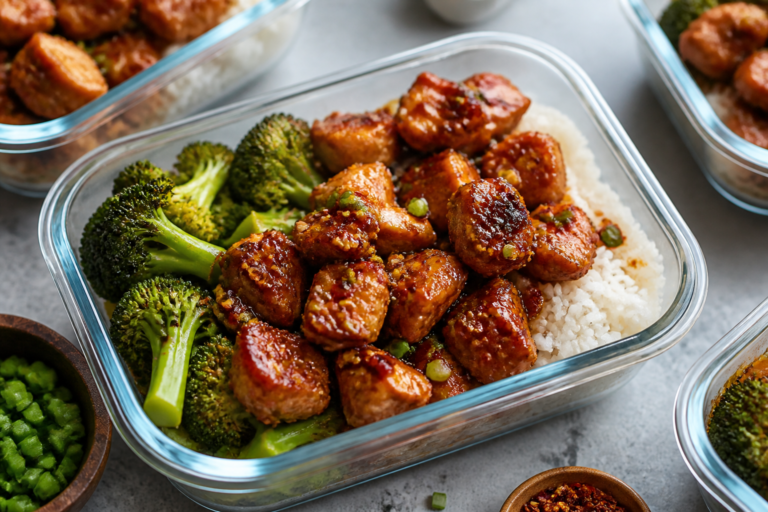
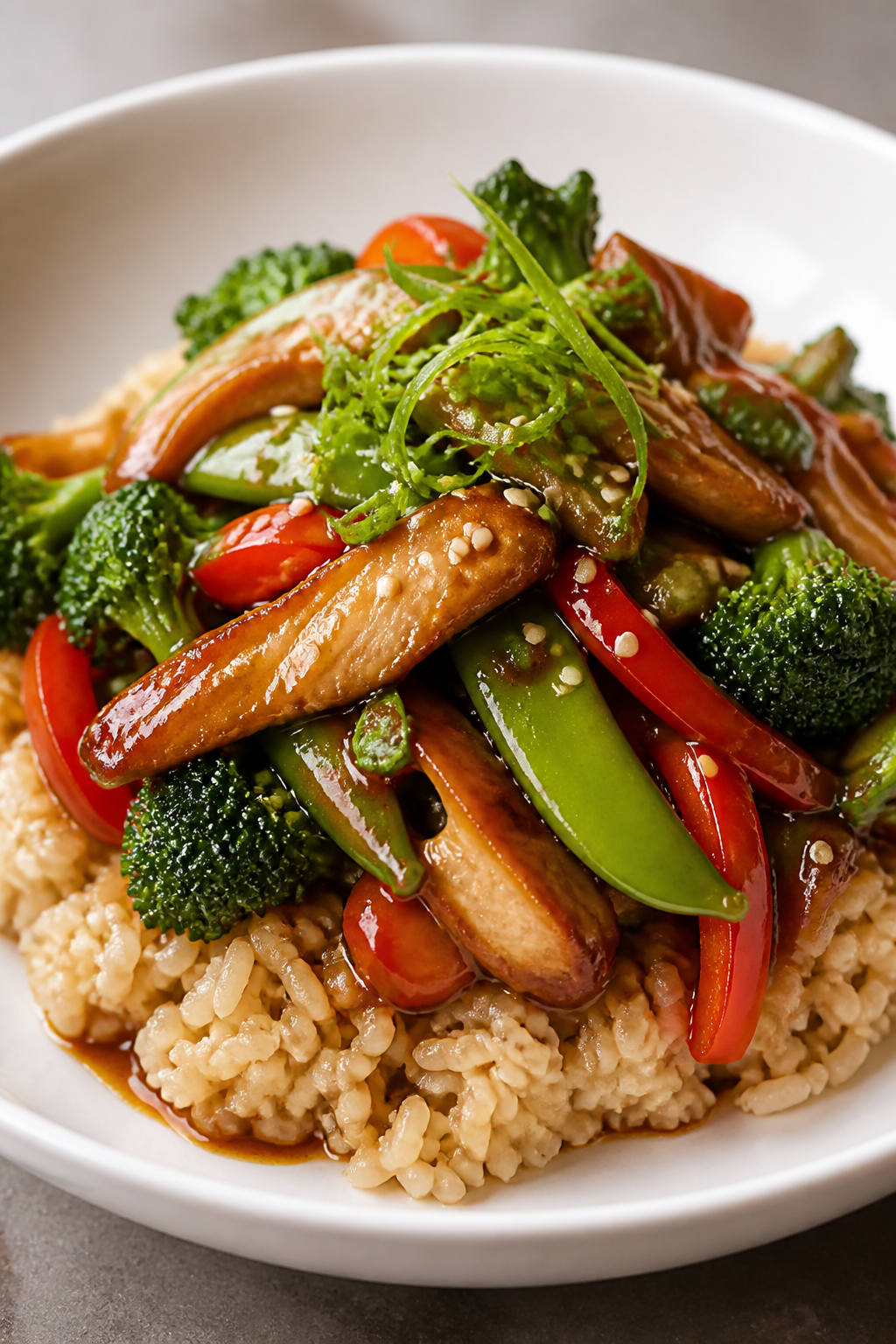
This high protein chicken stir fry is a weeknight hero: quick to make, bold in flavor, and packed with lean protein and colorful veggies. You get tender chicken, crisp-tender vegetables, and a savory, slightly sweet sauce that coats everything just right. It feels like takeout, but you control the ingredients and the nutrition.
Need More Easy Dinner Ideas?
Get my FREE 7-Day Easy Dinner Reset and enjoy a full week of healthy dinners without the meal-planning stress.
Whether you’re fueling a workout or feeding a busy family, this dish hits the spot. You’ll have it on the table in about 25 minutes, with minimal cleanup.

Ingredients
Method
- Prep the chicken: In a bowl, toss sliced chicken with 1 tablespoon soy sauce and 1 tablespoon cornstarch. Let it sit while you prep the veggies, about 10 minutes.
- Whisk the sauce: In a small bowl, mix soy sauce, oyster sauce, honey, rice vinegar, sesame oil, red pepper flakes, chicken broth, and 2 teaspoons cornstarch. Set aside.
- Heat the pan: Place a large skillet or wok over medium-high heat. Add 1 tablespoon oil and let it get hot until shimmering.
- Sear the chicken: Cook chicken in a single layer (work in batches if needed) for 3–4 minutes, stirring once or twice, until lightly browned and just cooked through. Transfer to a plate.
- Stir-fry the veggies: Add remaining 1 tablespoon oil. Toss in onion, carrot, and broccoli. Stir-fry 2–3 minutes until starting to soften.
- Add quick-cook veggies: Add bell pepper and snow peas. Stir-fry another 2 minutes until crisp-tender.
- Add aromatics: Push veggies to the sides. Add garlic and ginger to the center. Stir 20–30 seconds until fragrant.
- Combine and sauce: Return chicken and any juices to the pan. Give the sauce a quick stir, then pour it in. Toss everything for 1–2 minutes until the sauce thickens and coats.
- Finish: Taste and adjust with a splash of soy sauce or a pinch of honey. Sprinkle green onions and sesame seeds.
- Serve: Spoon over rice, quinoa, or cauliflower rice. Enjoy hot.
What Makes This Special
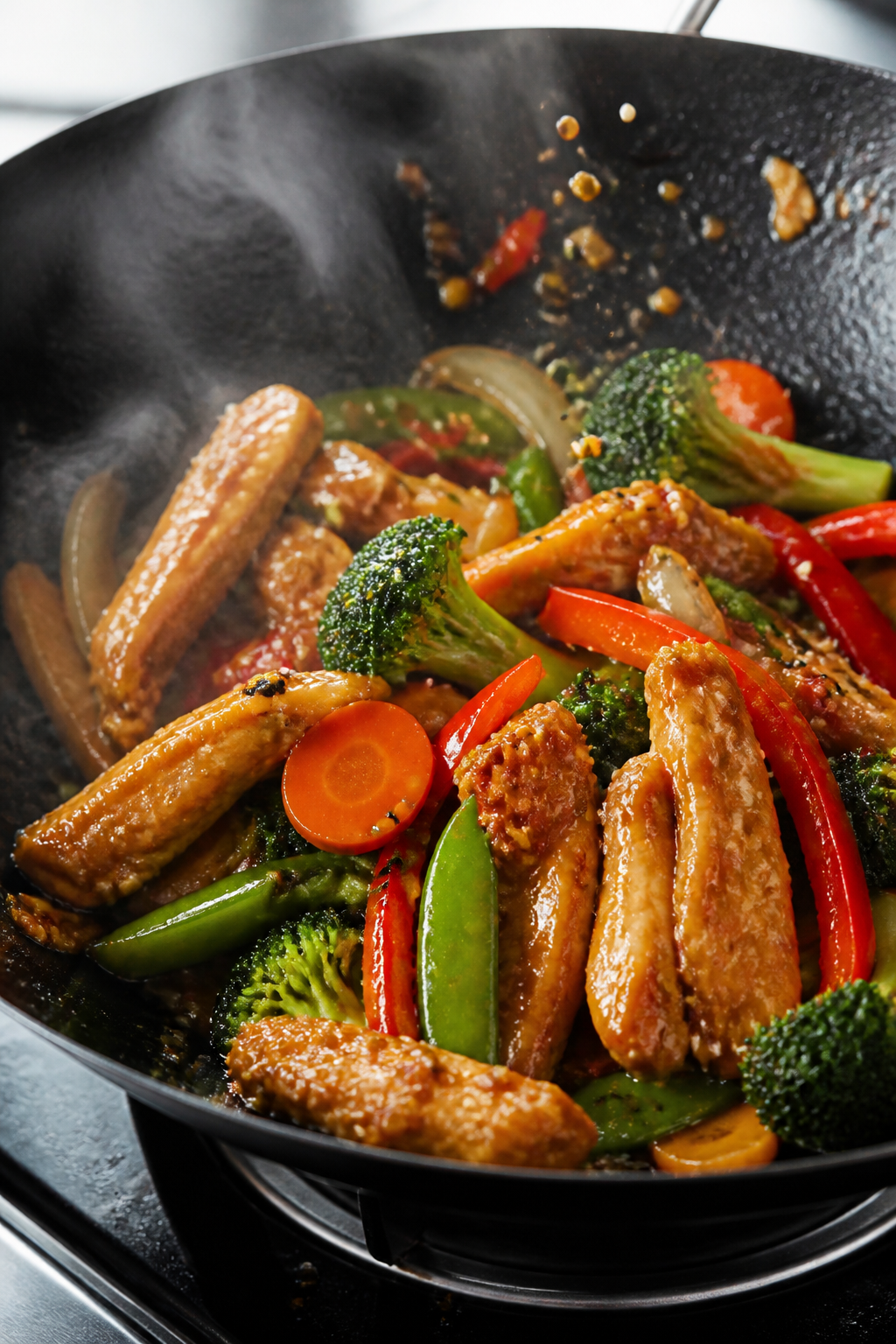
- High protein without the heaviness: Lean chicken breast delivers plenty of protein with very little fat.
- Balanced sauce: A mix of soy sauce, garlic, ginger, and a touch of honey gives depth without overpowering the veggies.
- Meal-prep friendly: Holds up well for a few days and reheats quickly.
- Flexible with what you have: Use almost any vegetable and swap proteins if needed.
- One-pan simplicity: Cook everything in a large skillet or wok for easy cleanup.
Ingredients
- 1.25 pounds (560 g) boneless, skinless chicken breast, thinly sliced against the grain
- 1 tablespoon cornstarch (for coating the chicken)
- 1 tablespoon low-sodium soy sauce (for marinating the chicken)
- 2 tablespoons neutral oil (such as avocado, canola, or peanut), divided
- 1 red bell pepper, thin strips
- 1 small broccoli crown, cut into small florets
- 1 medium carrot, peeled and thinly sliced
- 1 small yellow onion, thin wedges
- 2 cups snow peas or sugar snap peas, trimmed
- 3 cloves garlic, minced
- 1 tablespoon fresh ginger, minced or grated
- 2 green onions, sliced (for garnish)
- 2 teaspoons toasted sesame seeds (optional garnish)
For the Sauce:
- 1/3 cup low-sodium soy sauce
- 2 tablespoons oyster sauce (or extra soy sauce if needed)
- 1 tablespoon honey (or maple syrup)
- 1 tablespoon rice vinegar (or apple cider vinegar in a pinch)
- 1 teaspoon sesame oil
- 1/2 teaspoon red pepper flakes (optional, to taste)
- 1/2 cup low-sodium chicken broth (or water)
- 2 teaspoons cornstarch (to thicken the sauce)
To serve (optional): Cooked brown rice, cauliflower rice, quinoa, or noodles.
How to Make It
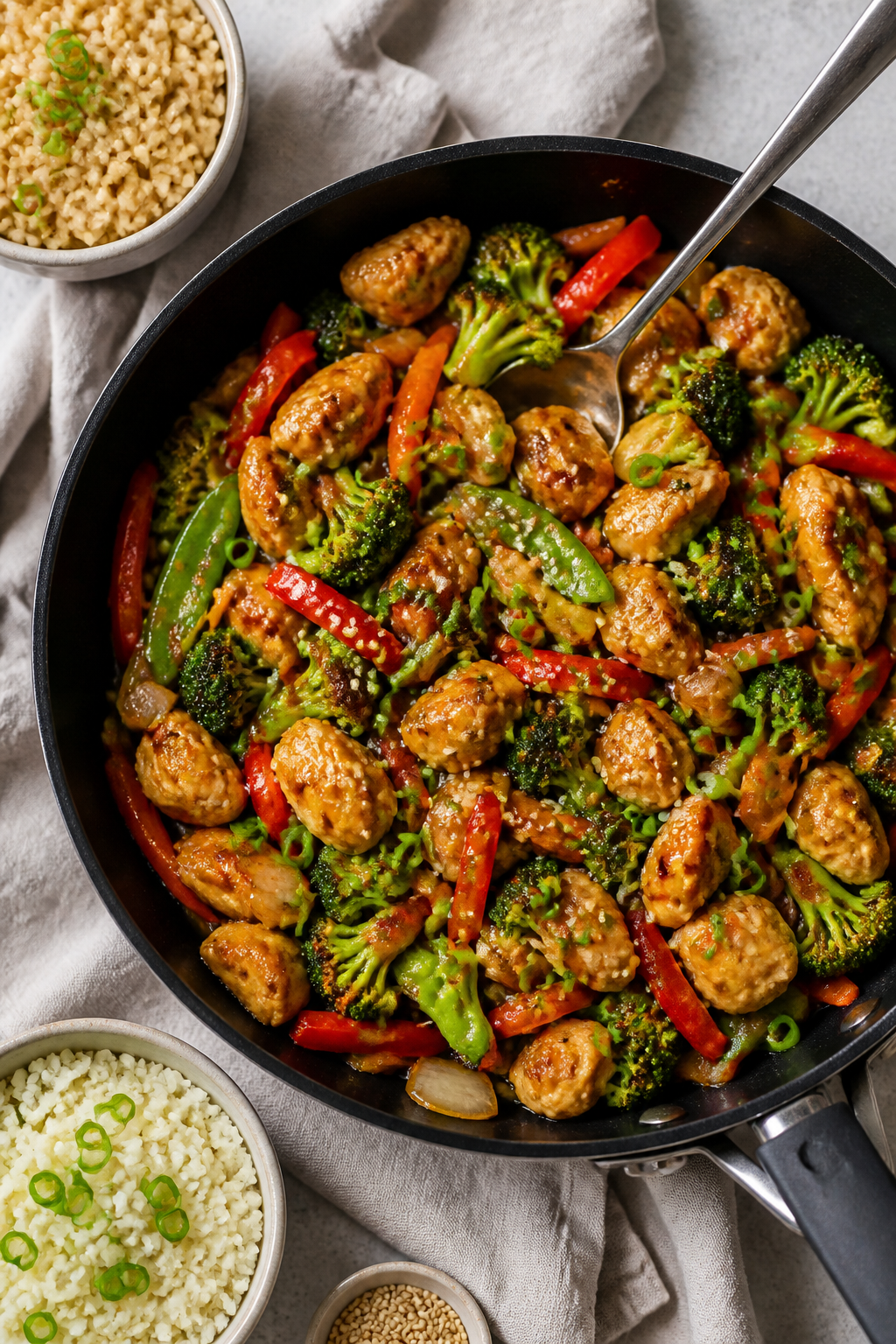
- Prep the chicken: In a bowl, toss sliced chicken with 1 tablespoon soy sauce and 1 tablespoon cornstarch. Let it sit while you prep the veggies, about 10 minutes.
- Whisk the sauce: In a small bowl, mix soy sauce, oyster sauce, honey, rice vinegar, sesame oil, red pepper flakes, chicken broth, and 2 teaspoons cornstarch.
Set aside.
- Heat the pan: Place a large skillet or wok over medium-high heat. Add 1 tablespoon oil and let it get hot until shimmering.
- Sear the chicken: Cook chicken in a single layer (work in batches if needed) for 3–4 minutes, stirring once or twice, until lightly browned and just cooked through. Transfer to a plate.
- Stir-fry the veggies: Add remaining 1 tablespoon oil.
Toss in onion, carrot, and broccoli. Stir-fry 2–3 minutes until starting to soften.
- Add quick-cook veggies: Add bell pepper and snow peas. Stir-fry another 2 minutes until crisp-tender.
- Add aromatics: Push veggies to the sides.
Add garlic and ginger to the center. Stir 20–30 seconds until fragrant.
- Combine and sauce: Return chicken and any juices to the pan. Give the sauce a quick stir, then pour it in.
Toss everything for 1–2 minutes until the sauce thickens and coats.
- Finish: Taste and adjust with a splash of soy sauce or a pinch of honey. Sprinkle green onions and sesame seeds.
- Serve: Spoon over rice, quinoa, or cauliflower rice. Enjoy hot.
Storage Instructions
- Fridge: Cool completely, then store in an airtight container for up to 4 days.
- Freezer: Freeze in portioned containers for up to 2 months.
Thaw overnight in the fridge.
- Reheat: Warm in a skillet over medium heat with a splash of water or broth, 3–4 minutes. Microwave in short bursts, stirring between intervals to avoid overcooking.
- Meal prep tip: Keep the stir fry and grains separate to prevent sogginess.
Benefits of This Recipe
- High protein: Chicken breast delivers a strong protein hit to support muscle recovery and satiety.
- Nutrient-dense: A mix of vegetables brings fiber, vitamins A and C, and antioxidants.
- Lower sugar than takeout: Just a touch of honey balances the sauce without going heavy on sweetness.
- Customizable macros: Serve with whole grains for more carbs, or use cauliflower rice for lower carbs.
- Time-saving: From cutting board to table in around 25 minutes.
Pitfalls to Watch Out For
- Overcrowding the pan: This steams the chicken and veggies. Cook chicken in batches if needed.
- Overcooking vegetables: Aim for crisp-tender.
Pull the pan off the heat once the sauce thickens.
- Skipping the cornstarch on the chicken: That light coating helps with browning and keeps the meat juicy.
- Forgetting to stir the sauce before adding: Cornstarch settles. Give it a quick stir to prevent lumps.
- Too much salt: Use low-sodium soy sauce and taste before adding more.
Recipe Variations
- Extra-lean protein swap: Use boneless, skinless chicken thighs for more juiciness, or turkey breast for similar macros.
- High-protein add-ins: Toss in cubed firm tofu, edamame, or a scrambled egg at the end for extra protein.
- Spicy version: Add chili-garlic sauce or sambal oelek to the sauce. Finish with a drizzle of chili oil.
- Low-carb: Serve over cauliflower rice and reduce the honey to 1–2 teaspoons.
- Gluten-free: Use tamari or coconut aminos instead of soy sauce, and check that your oyster sauce and cornstarch are certified gluten-free.
- Citrus twist: Add 1 teaspoon orange zest and replace half the broth with orange juice for a bright, tangy finish.
- Nutty crunch: Sprinkle with roasted cashews or peanuts right before serving.
FAQ
Never wonder what's for dinner again.
Get 7 healthy, family-friendly dinners complete with recipes, grocery lists, and simple meal plans delivered straight to your inbox.
Can I use frozen vegetables?
Yes.
Keep them frozen until they hit the pan, cook over high heat, and expect 1–2 extra minutes. They may release more moisture, so let excess steam cook off before adding the sauce.
How do I keep the chicken tender?
Slice thinly against the grain, lightly coat with cornstarch, and cook over high heat just until done. Avoid simmering the chicken in sauce for too long.
What can I use instead of oyster sauce?
Use more soy sauce plus 1 teaspoon fish sauce for depth, or add 1 teaspoon miso paste whisked into the sauce.
If you prefer vegetarian, skip fish sauce and add a touch more soy and a pinch of sugar.
Is there a good low-sodium option?
Use low-sodium soy sauce or tamari, reduce or skip oyster sauce, and rely on garlic, ginger, and a squeeze of lime for brightness. Taste and adjust at the end.
Can I make it ahead?
Absolutely. Prep and slice chicken and vegetables up to 24 hours ahead.
Mix the sauce and refrigerate. Cook fresh when ready, which keeps the veggies crisp.
What’s the best oil for stir-frying?
Choose a high smoke point oil like avocado, canola, peanut, or grapeseed. Save sesame oil for flavor in the sauce, not for high-heat cooking.
How do I thicken the sauce without cornstarch?
Use arrowroot starch in the same amount.
Mix it with the liquid while cold, then add to the pan and cook until glossy.
How much protein is in a serving?
Exact numbers vary, but with 1.25 pounds of chicken split into four servings, you’ll get roughly 30–35 grams of protein per serving, not including sides.
In Conclusion
This high protein chicken stir fry is fast, colorful, and satisfying without feeling heavy. It’s easy to adjust to your taste and what’s in your fridge, and it works for both busy weeknights and make-ahead lunches. Keep the heat high, don’t crowd the pan, and you’ll get juicy chicken and perfectly crisp-tender veggies every time.
Simple ingredients, big flavor, and reliable results—that’s a win.
Printable Recipe Card
Want just the essential recipe details without scrolling through the article? Get our printable recipe card with just the ingredients and instructions.
Loved This Recipe?
If you're looking for more simple, healthy dinners your family will actually eat, grab my FREE 7-Day Easy Dinner Reset. You'll get 7 easy dinner recipes, simple grocery lists, and a done-for-you plan that takes the stress out of mealtime.