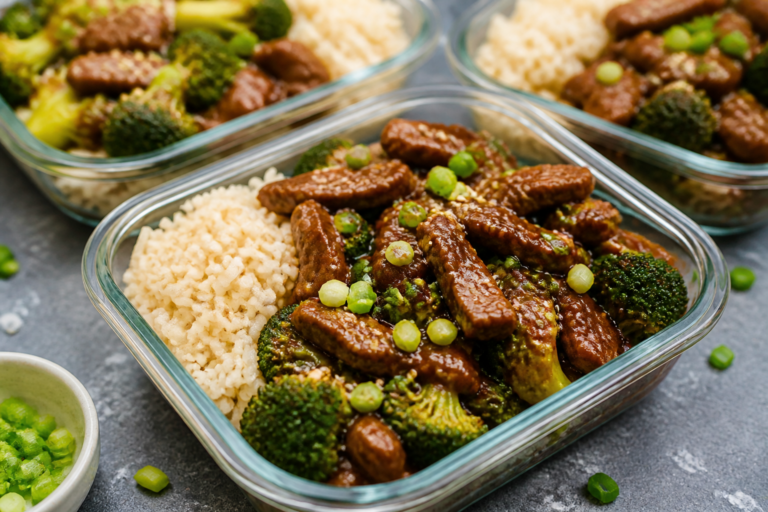
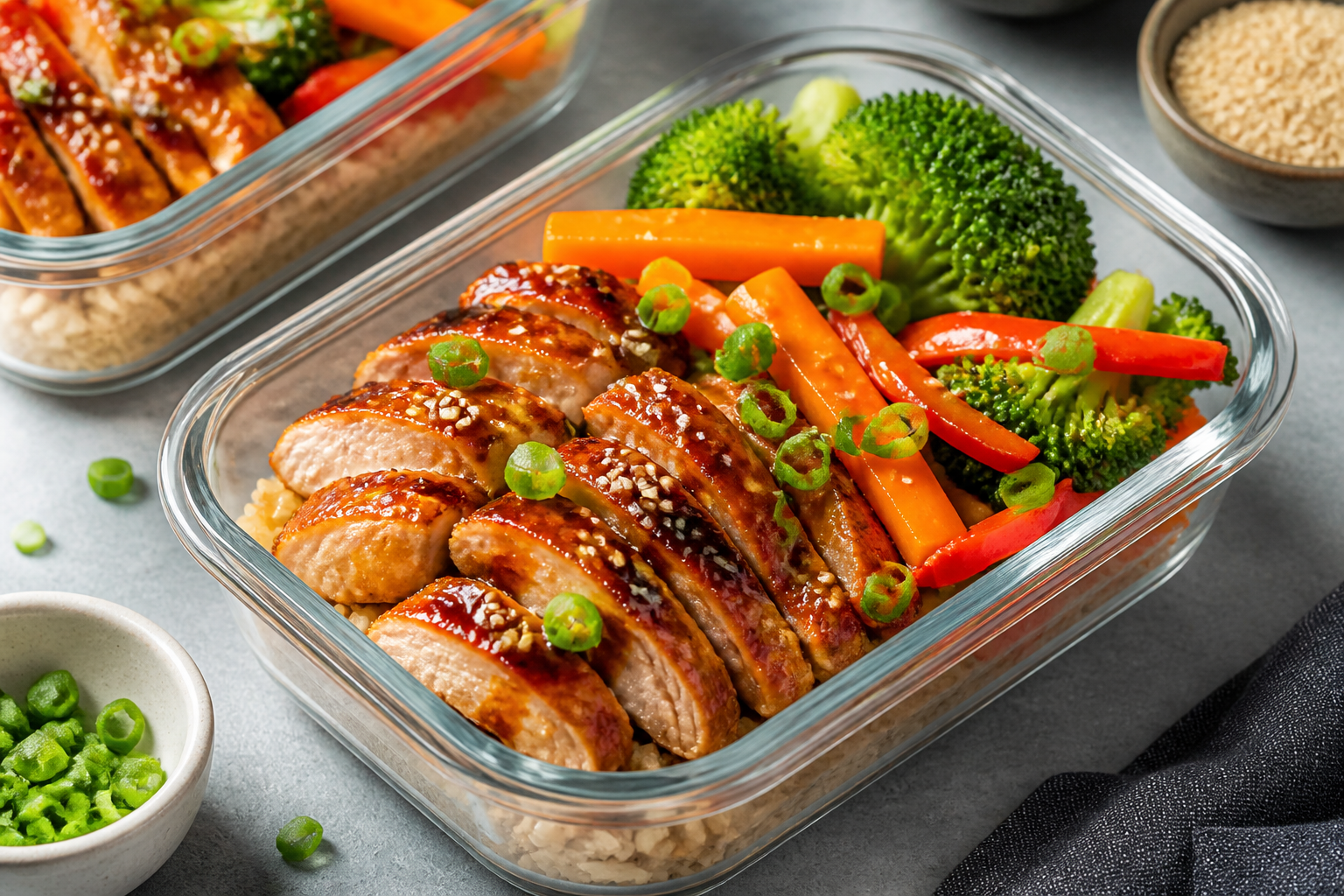
Healthy Teriyaki Chicken Meal Prep Bowls – Simple, Flavorful, and Make-Ahead Friendly
If you love a weeknight dinner that’s fast, tasty, and ready to go when you are, these Healthy Teriyaki Chicken Meal Prep Bowls are for you. They’re salty-sweet, packed with lean protein and veggies, and easy to portion for the week. The homemade teriyaki sauce keeps sugar in check without skimping on flavor.
Need More Easy Dinner Ideas?
Get my FREE 7-Day Easy Dinner Reset and enjoy a full week of healthy dinners without the meal-planning stress.
You’ll get balanced meals that reheat well and feel satisfying. It’s the kind of prep that actually makes you excited to open your lunch container.
Healthy Teriyaki Chicken Meal Prep Bowls - Simple, Flavorful, and Make-Ahead Friendly
Ingredients
Method
- Cook the grain: Rinse brown rice or quinoa. Cook according to package directions. Fluff and let it cool slightly so it doesn’t steam your containers later.
- Prep the sauce: In a small bowl, whisk soy sauce, water, honey, rice vinegar, sesame oil, and red pepper flakes. In a separate cup, stir the cornstarch with cold water to make a slurry. Set both aside.
- Chop smart: Cut chicken into bite-size pieces. Slice carrots and bell pepper, break broccoli into small florets, and mince garlic and ginger. Smaller, uniform pieces cook faster and more evenly.
- Sauté aromatics: Heat oil in a large skillet over medium-high. Add garlic and ginger. Cook 30–45 seconds until fragrant, stirring constantly so they don’t burn.
- Cook the chicken: Add chicken to the skillet in a single layer. Season lightly with pepper. Cook 5–7 minutes, stirring occasionally, until browned and cooked through. Remove chicken to a plate.
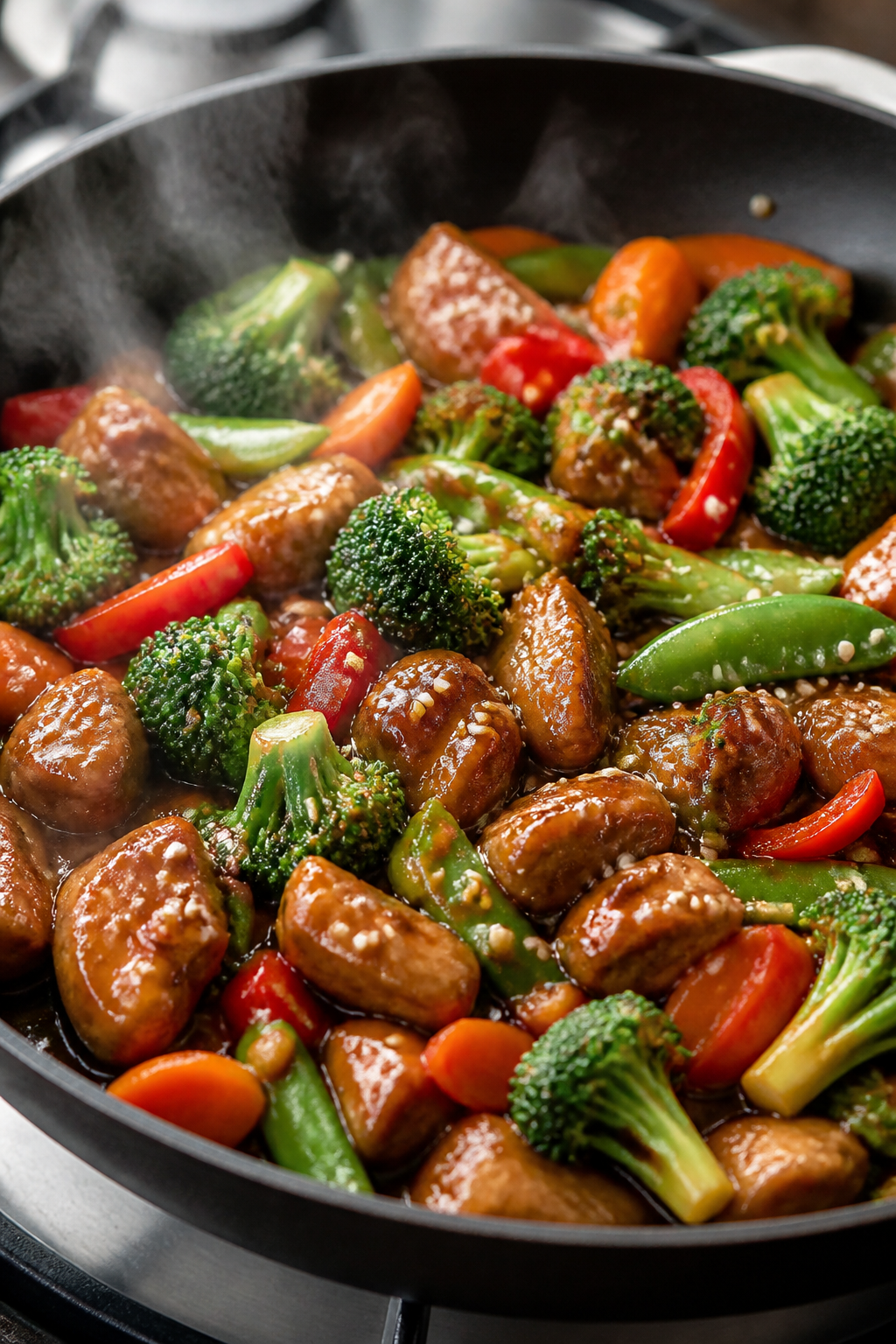
- Quick-cook the veggies: In the same pan, add carrots and broccoli with a splash of water. Cover for 2–3 minutes to steam. Uncover, add bell pepper and snap peas, and stir-fry 2–3 minutes until crisp-tender.
- Combine and sauce: Return chicken to the pan. Pour in the teriyaki sauce. Bring to a simmer. Stir in the cornstarch slurry and cook 1–2 minutes until the sauce thickens and lightly coats everything.
- Taste and adjust: Add a squeeze of lime or a touch more honey if you want. If it’s too salty, add a tablespoon of water to mellow it out.
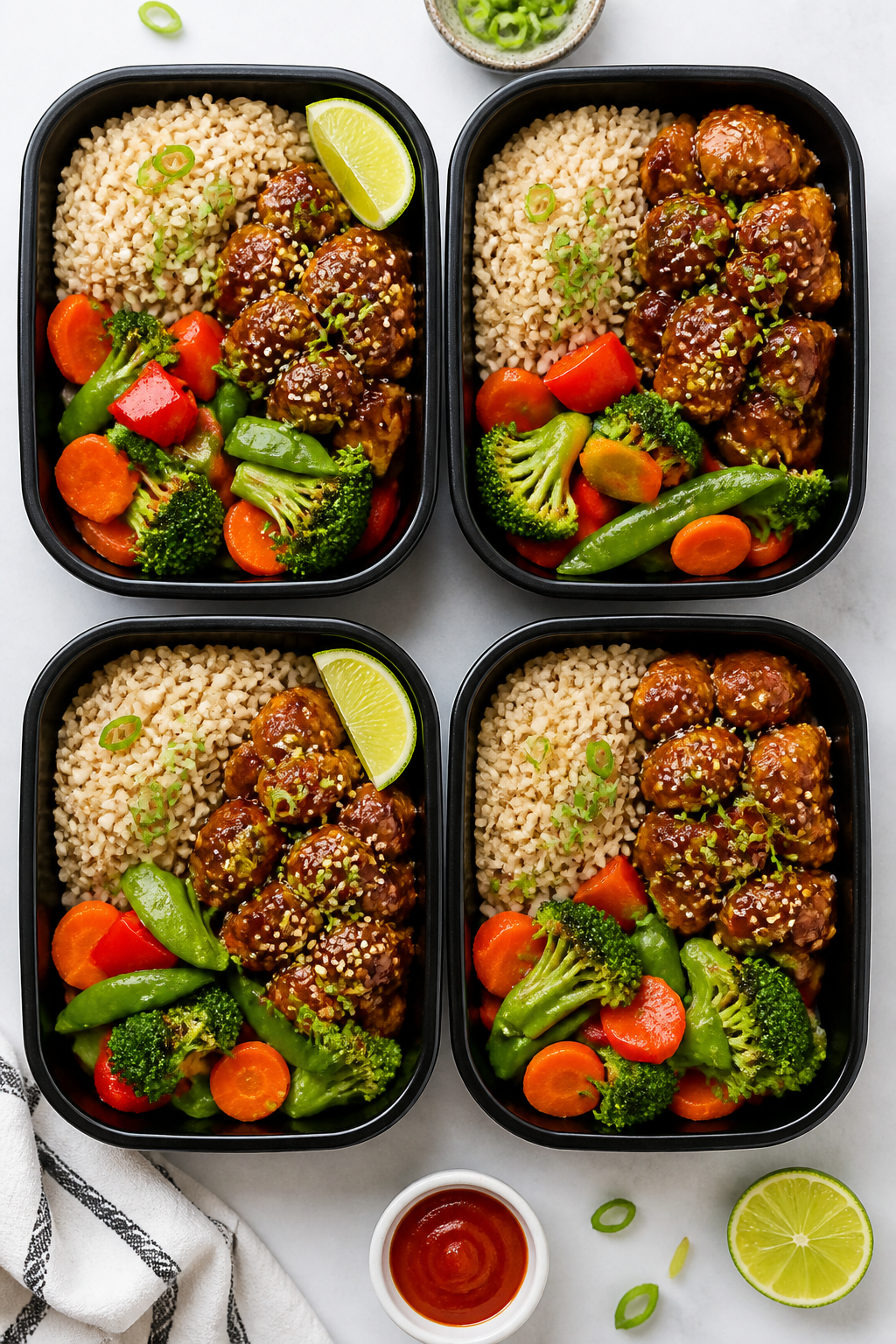
- Assemble bowls: Divide rice or quinoa among 4 containers. Top with the teriyaki chicken and veggies. Sprinkle green onions and sesame seeds. Let cool 10–15 minutes before sealing.
- Store: Seal tightly and refrigerate up to 4 days. Add hot sauce or a lime wedge when serving if you like a kick.
Why This Recipe Works
- Balanced flavors: A lighter teriyaki sauce brings the classic sweet-savory taste without the heavy, sticky glaze you might find in takeout.
- Meal-prep friendly: The chicken, rice, and veggies all reheat beautifully, so your bowls taste just as good on day four.
- Flexible ingredients: Swap in your favorite grains or vegetables with minimal effort. The sauce ties everything together.
- Quick to cook: Boneless chicken and quick-steam veggies keep total cook time low.
- Nutritious and filling: High protein, fiber from veggies and whole grains, and a controlled amount of sauce make it both satisfying and smart.
What You’ll Need
- Chicken: 1.5–2 pounds boneless, skinless chicken breasts or thighs, cut into bite-size pieces
- Vegetables: 3 cups broccoli florets, 2 medium carrots (thinly sliced), 1 red bell pepper (sliced), 1 cup snap peas (optional)
- Grain base: 3 cups cooked brown rice or quinoa (about 1 cup dry rice or 3/4 cup dry quinoa)
- Healthy fats: 1 tablespoon avocado or olive oil for cooking
- Aromatics: 3 cloves garlic (minced), 1 tablespoon fresh ginger (grated)
- Teriyaki sauce (lighter version):
- 1/3 cup low-sodium soy sauce or tamari
- 3 tablespoons water
- 1–2 tablespoons honey or maple syrup (to taste)
- 1 tablespoon rice vinegar
- 1 teaspoon sesame oil
- 1 tablespoon cornstarch mixed with 2 tablespoons cold water (slurry)
- Red pepper flakes, to taste (optional)
- Toppings (optional but great): Sliced green onions, toasted sesame seeds, lime wedges, or a little sriracha
- Equipment: Large skillet or wok, medium saucepan, cutting board, knife, and 4 meal prep containers with tight lids
How to Make It
- Cook the grain: Rinse brown rice or quinoa.
Cook according to package directions. Fluff and let it cool slightly so it doesn’t steam your containers later.
- Prep the sauce: In a small bowl, whisk soy sauce, water, honey, rice vinegar, sesame oil, and red pepper flakes. In a separate cup, stir the cornstarch with cold water to make a slurry.
Set both aside.
- Chop smart: Cut chicken into bite-size pieces. Slice carrots and bell pepper, break broccoli into small florets, and mince garlic and ginger. Smaller, uniform pieces cook faster and more evenly.
- Sauté aromatics: Heat oil in a large skillet over medium-high.
Add garlic and ginger. Cook 30–45 seconds until fragrant, stirring constantly so they don’t burn.
- Cook the chicken: Add chicken to the skillet in a single layer. Season lightly with pepper.
Cook 5–7 minutes, stirring occasionally, until browned and cooked through. Remove chicken to a plate.
- Quick-cook the veggies: In the same pan, add carrots and broccoli with a splash of water. Cover for 2–3 minutes to steam.
Uncover, add bell pepper and snap peas, and stir-fry 2–3 minutes until crisp-tender.
- Combine and sauce: Return chicken to the pan. Pour in the teriyaki sauce. Bring to a simmer.
Stir in the cornstarch slurry and cook 1–2 minutes until the sauce thickens and lightly coats everything.
- Taste and adjust: Add a squeeze of lime or a touch more honey if you want. If it’s too salty, add a tablespoon of water to mellow it out.
- Assemble bowls: Divide rice or quinoa among 4 containers. Top with the teriyaki chicken and veggies.
Sprinkle green onions and sesame seeds. Let cool 10–15 minutes before sealing.
- Store: Seal tightly and refrigerate up to 4 days. Add hot sauce or a lime wedge when serving if you like a kick.
Keeping It Fresh
- Cool before sealing: Let bowls cool slightly so condensation doesn’t make them soggy.
- Use shallow containers: They chill faster and keep textures better.
- Sauce strategy: If you like super crisp veggies, keep a little sauce separate and add after reheating.
- Reheat gently: Microwave 60–90 seconds, stir, then another 30–60 seconds until hot.
Add a splash of water if rice seems dry.
- Freeze tips: These freeze well without the bell pepper. Freeze up to 2 months. Thaw overnight in the fridge and reheat with a splash of water.
Health Benefits
- Lean protein: Chicken breast is low in saturated fat and supports muscle repair and fullness.
- Fiber-rich sides: Brown rice or quinoa add fiber for steady energy and better digestion.
- Vitamins and minerals: Broccoli, carrots, and peppers bring vitamin C, vitamin A, potassium, and antioxidants.
- Lower sodium than takeout: Using low-sodium soy sauce and balancing with vinegar and ginger keeps the flavor big and the salt reasonable.
- Controlled sweetness: A modest amount of honey or maple syrup prevents the blood sugar spikes you might get from heavy bottled sauces.
Pitfalls to Watch Out For
- Overcooking chicken: It turns dry fast.
Pull it as soon as it’s no longer pink in the center.
- Mushy veggies: Steam-stir-fry just until bright and crisp-tender. They’ll soften more when reheated.
- Too-salty sauce: Taste the soy sauce you’re using. If it’s very salty, add more water or vinegar and a little extra honey to balance.
- Sticky rice clumps: Fluff after cooking and cool slightly before packing.
A teaspoon of oil stirred in can help.
- Soggy containers: Don’t seal while piping hot. Trapped steam ruins texture.
Recipe Variations
- Lower carb: Swap rice for cauliflower rice. Sauté it quickly with garlic and a pinch of salt.
- High-protein: Mix in edamame or serve over quinoa.
Add a soft-boiled egg if you want extra protein.
- Gluten-free: Use tamari or coconut aminos. Check labels on vinegar and cornstarch to be safe.
- Vegetarian: Replace chicken with extra-firm tofu or tempeh. Press tofu for 20 minutes, then pan-sear until golden before saucing.
- Spicy: Whisk sriracha or gochujang into the sauce.
Top with chili crisp.
- Citrus twist: Add orange zest and 2–3 tablespoons fresh orange juice to the sauce for a bright note.
FAQ
Never wonder what's for dinner again.
Get 7 healthy, family-friendly dinners complete with recipes, grocery lists, and simple meal plans delivered straight to your inbox.
Can I use frozen vegetables?
Yes. Use a hot pan and cook off excess moisture so they don’t turn watery. Stir-fry just until heated through and still bright.
What’s the best cut of chicken for this?
Boneless thighs are the most forgiving and juicy.
Breasts are leaner and work great if you don’t overcook them.
Can I make the sauce without cornstarch?
You can simmer longer to reduce, but it won’t coat as well. Arrowroot starch works as a 1:1 swap and keeps the sauce glossy.
How long do these bowls last in the fridge?
Up to 4 days when stored in airtight containers. If anything smells off or looks slimy, toss it.
How do I keep the rice from drying out when reheating?
Splash in 1–2 teaspoons of water and cover loosely before microwaving.
The steam will refresh the grains.
Can I bake the chicken instead?
Yes. Toss with a little oil, spread on a sheet pan, and bake at 425°F (220°C) for 12–16 minutes, then toss in sauce on the stovetop.
Is there a way to reduce sugar even more?
Use half the honey and add more ginger and a bit of orange zest. Coconut aminos also add natural sweetness, so you can cut added sweetener further.
What containers work best?
Shallow, glass containers with tight lids.
They chill quickly, reheat evenly, and don’t stain from the sauce.
In Conclusion
Healthy Teriyaki Chicken Meal Prep Bowls check all the boxes: simple to make, full of flavor, and easy to pack for busy days. With a lighter homemade sauce and a rainbow of veggies, you get a wholesome meal that doesn’t feel like a compromise. Tweak the grains, spice, and toppings to fit your preferences.
A little prep time now saves you stress later—and gives you something delicious to look forward to all week.
Printable Recipe Card
Want just the essential recipe details without scrolling through the article? Get our printable recipe card with just the ingredients and instructions.
Loved This Recipe?
If you're looking for more simple, healthy dinners your family will actually eat, grab my FREE 7-Day Easy Dinner Reset. You'll get 7 easy dinner recipes, simple grocery lists, and a done-for-you plan that takes the stress out of mealtime.