Healthy Mongolian Ground Beef Bowls – A Fast, Flavor-Packed Weeknight Dinner
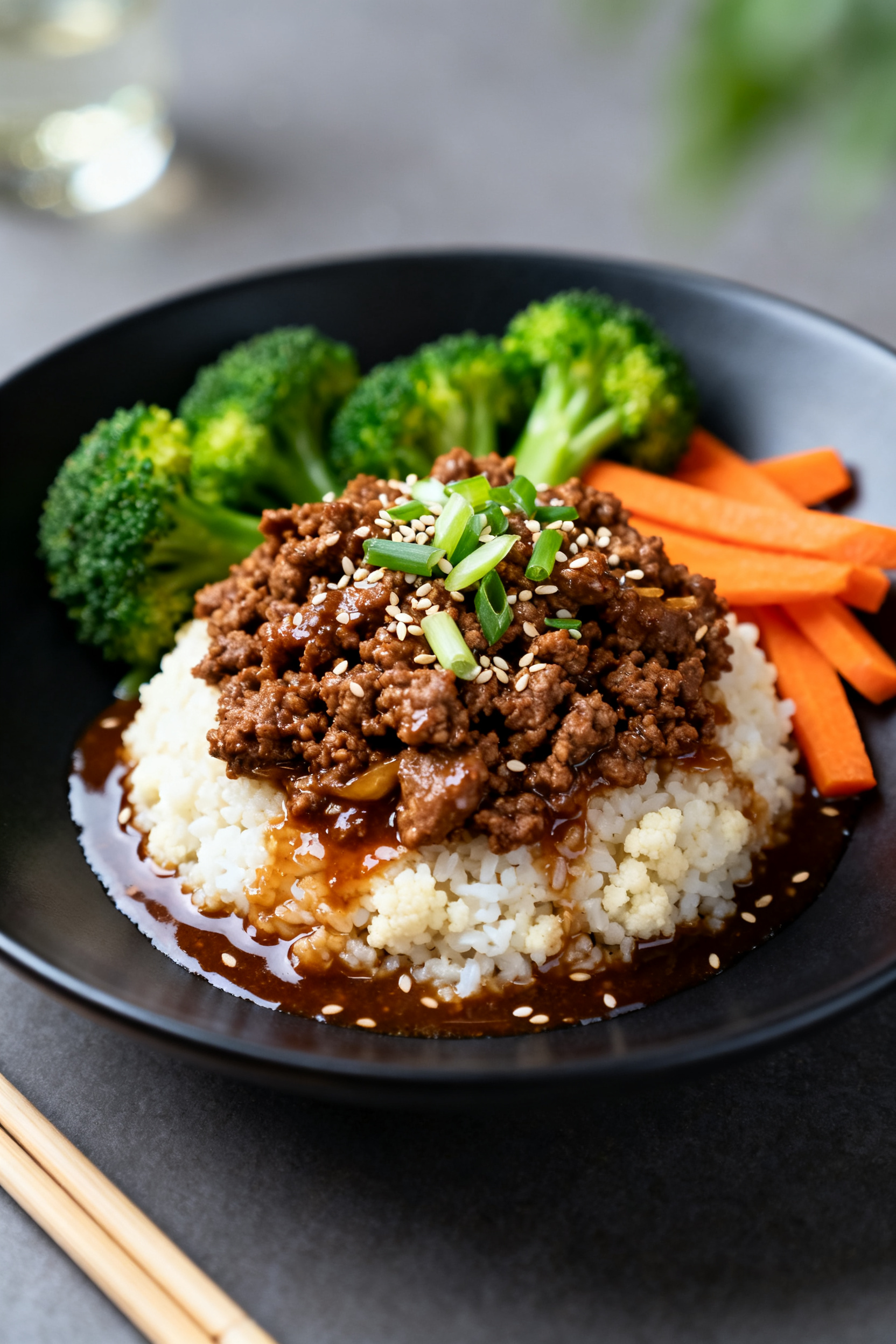
If you love takeout flavors but want something lighter and faster, these Healthy Mongolian Ground Beef Bowls hit the spot. They’re sweet, savory, and a little garlicky, with a gentle kick of heat. Everything cooks in one pan, and you can serve it over fluffy rice, cauliflower rice, or a crunchy veggie base.
Need More Easy Dinner Ideas?
Get my FREE 7-Day Easy Dinner Reset and enjoy a full week of healthy dinners without the meal-planning stress.
It’s the kind of recipe that tastes like comfort food but still fits your goals. Plus, it’s affordable, meal-prep friendly, and customizable for different diets.
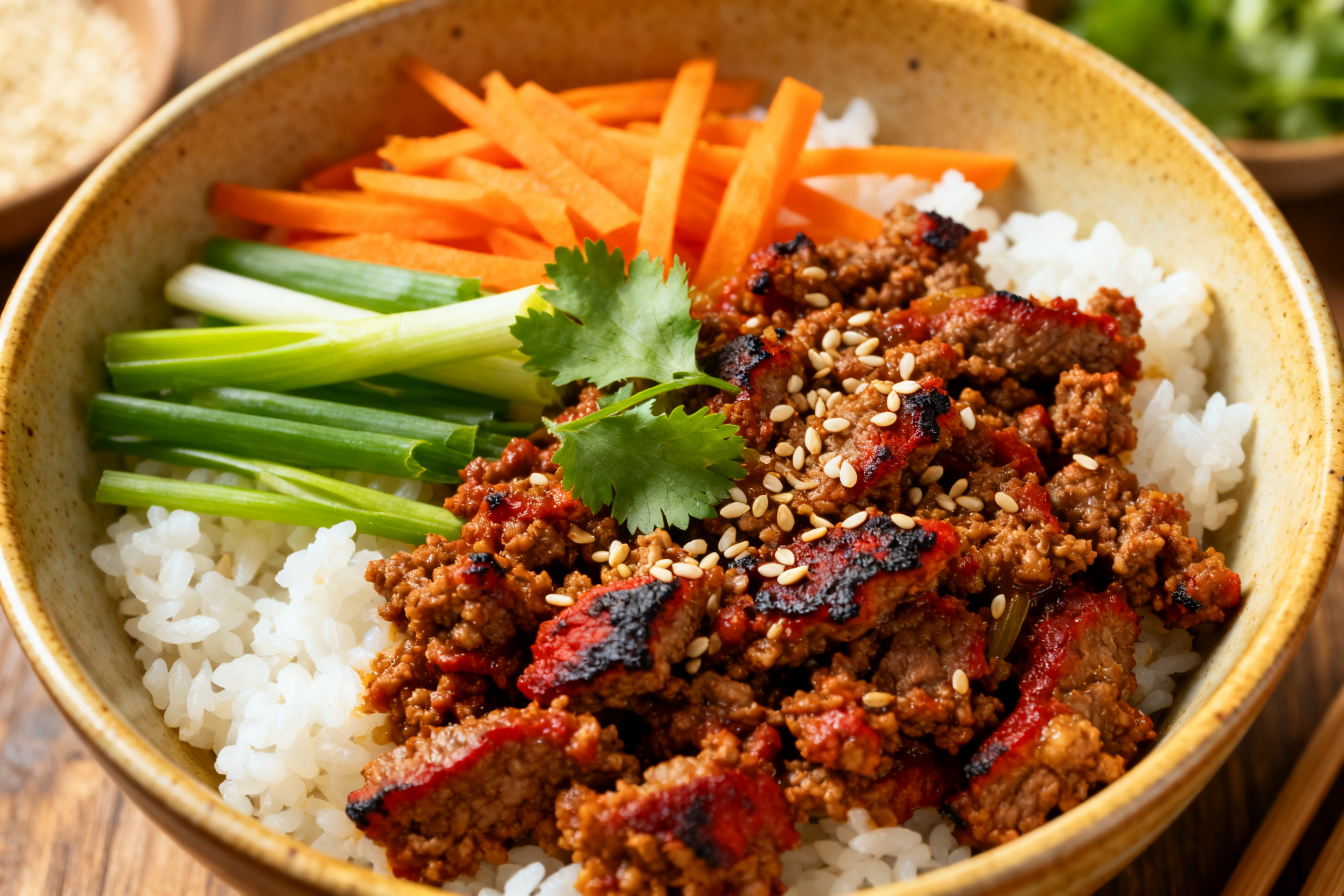
Healthy Mongolian Ground Beef Bowls - A Fast, Flavor-Packed Weeknight Dinner
Ingredients
Method
- Prep your base: Cook rice or warm cauliflower rice. Keep it fluffy and ready so the beef goes straight on top.
- Make the sauce: In a bowl, whisk 1/3 cup low-sodium soy sauce, 2–3 tablespoons brown sugar, 2 teaspoons rice vinegar, 1/2 cup beef broth, 1 tablespoon cornstarch, 3–4 minced garlic cloves, 1 tablespoon grated ginger, and a pinch of red pepper flakes. Set aside.
- Brown the beef: Heat 1 teaspoon avocado oil in a large skillet over medium-high. Add 1 pound lean ground beef. Break it up and cook until browned with crisp edges, about 6–8 minutes. Drain excess fat if needed.
- Add veggies: Stir in 1–2 cups chopped broccoli and 1 cup shredded carrots. Sauté 3–4 minutes until tender-crisp. If using quick-cook veggies like snap peas, add them last for 2 minutes.
- Pour in the sauce: Give the sauce a quick stir, then add it to the skillet. Toss to coat the beef and vegetables. Simmer 2–3 minutes until glossy and slightly thickened.
- Finish with aromatics: Turn off the heat. Stir in 1 teaspoon sesame oil and 3 sliced green onions. Taste and adjust with more soy for salt, vinegar for brightness, or red pepper for heat.
- Assemble the bowls: Scoop rice into bowls, top with the Mongolian beef mixture, and sprinkle with sesame seeds. Add extra scallions or a squeeze of lime if you like.
Why This Recipe Works
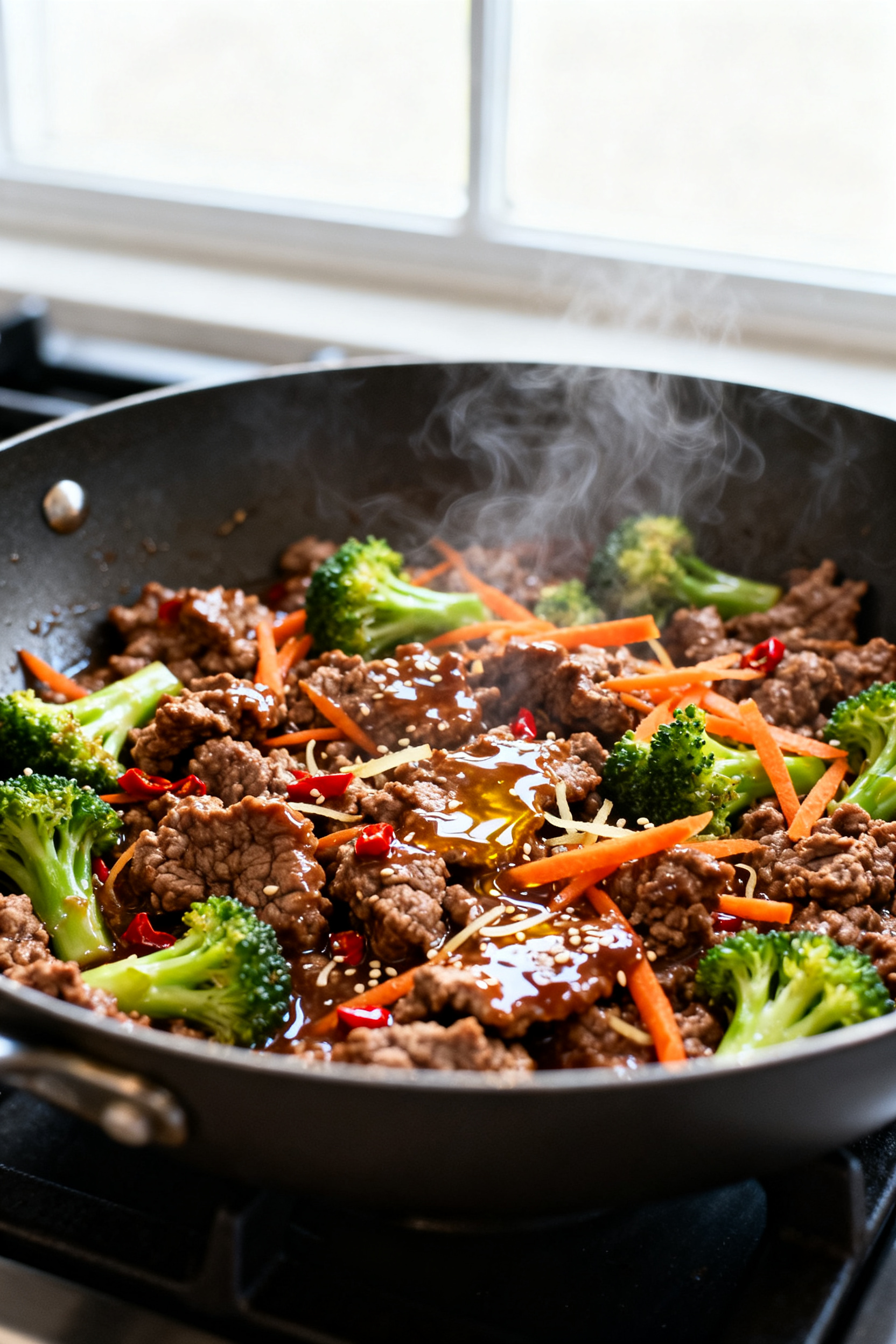
This recipe swaps traditional sliced beef for lean ground beef, which cooks quickly and evenly. The sauce is a lighter take on classic Mongolian flavors—think soy, ginger, garlic, and a touch of sweetness—balanced with vinegar and scallions.
Using less oil and controlling the sweetness keeps it satisfying without feeling heavy. You’ll build layers of flavor in minutes, then finish with fresh herbs and sesame for crunch and aroma. It’s simple enough for a Tuesday, but bold enough to crave again tomorrow.
Shopping List
- Ground beef: 90–95% lean
- Low-sodium soy sauce or tamari (gluten-free)
- Dark brown sugar or coconut sugar
- Rice vinegar (or apple cider vinegar)
- Fresh garlic (4–5 cloves)
- Fresh ginger (1–2 inches) or ginger paste
- Red pepper flakes or sambal oelek
- Cornstarch or arrowroot
- Low-sodium beef broth or water
- Green onions (scallions)
- Carrots (matchstick or shredded)
- Broccoli florets or snap peas
- Sesame oil
- Avocado or olive oil (for cooking)
- Sesame seeds (optional, for garnish)
- Cooked brown rice, jasmine rice, or cauliflower rice
- Optional add-ins: bell pepper, zucchini, mushrooms, cabbage
Step-by-Step Instructions
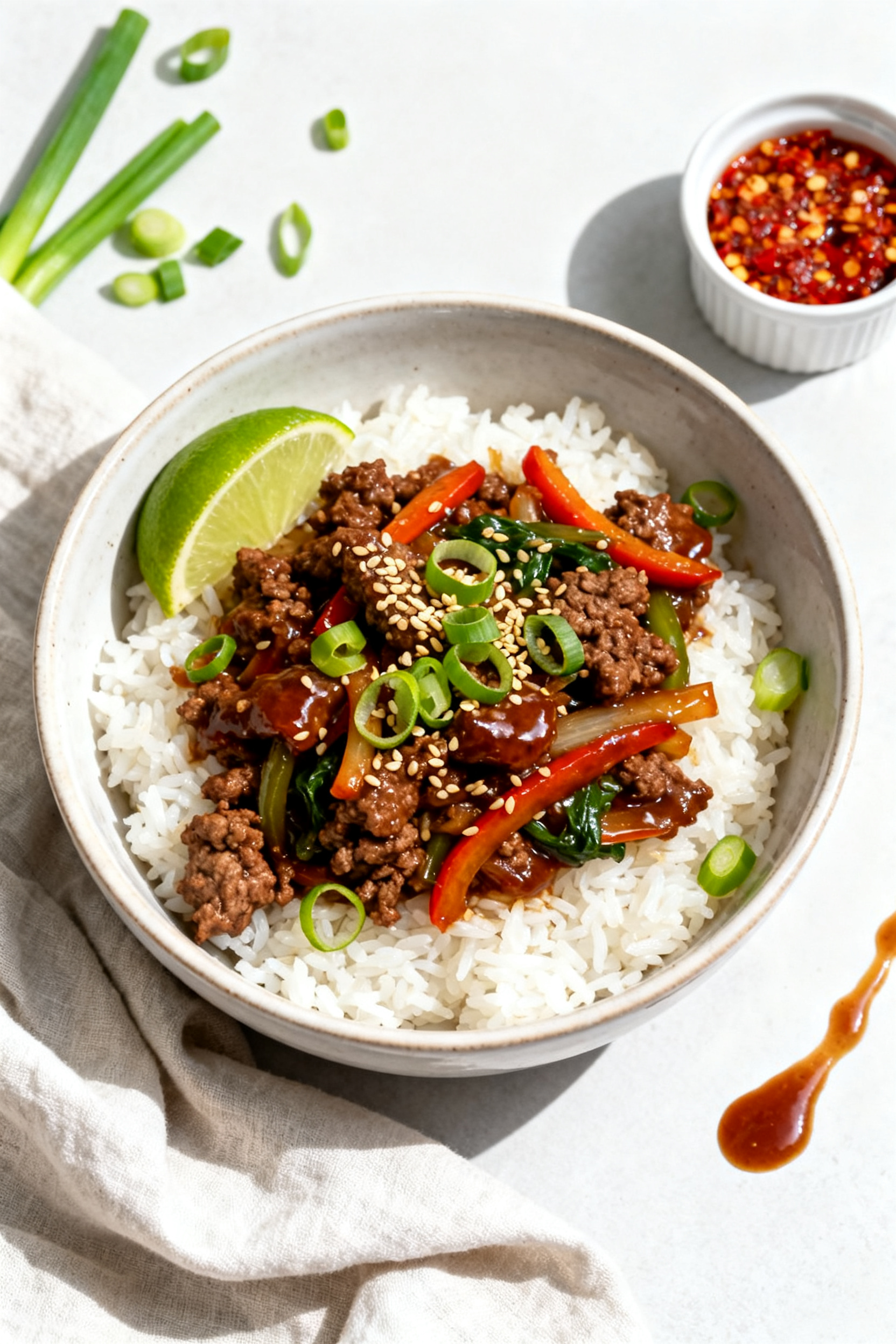
- Prep your base: Cook rice or warm cauliflower rice.
Keep it fluffy and ready so the beef goes straight on top.
- Make the sauce: In a bowl, whisk 1/3 cup low-sodium soy sauce, 2–3 tablespoons brown sugar, 2 teaspoons rice vinegar, 1/2 cup beef broth, 1 tablespoon cornstarch, 3–4 minced garlic cloves, 1 tablespoon grated ginger, and a pinch of red pepper flakes. Set aside.
- Brown the beef: Heat 1 teaspoon avocado oil in a large skillet over medium-high. Add 1 pound lean ground beef.
Break it up and cook until browned with crisp edges, about 6–8 minutes. Drain excess fat if needed.
- Add veggies: Stir in 1–2 cups chopped broccoli and 1 cup shredded carrots. Sauté 3–4 minutes until tender-crisp.
If using quick-cook veggies like snap peas, add them last for 2 minutes.
- Pour in the sauce: Give the sauce a quick stir, then add it to the skillet. Toss to coat the beef and vegetables. Simmer 2–3 minutes until glossy and slightly thickened.
- Finish with aromatics: Turn off the heat.
Stir in 1 teaspoon sesame oil and 3 sliced green onions. Taste and adjust with more soy for salt, vinegar for brightness, or red pepper for heat.
- Assemble the bowls: Scoop rice into bowls, top with the Mongolian beef mixture, and sprinkle with sesame seeds. Add extra scallions or a squeeze of lime if you like.
Keeping It Fresh
For meal prep, portion the beef mixture and rice into airtight containers.
Store in the fridge for up to 4 days. Keep garnishes like scallions and sesame seeds separate so they stay crisp. Reheat gently in the microwave or on the stovetop with a splash of water to loosen the sauce.
If freezing, skip the broccoli and add fresh after reheating to keep the texture bright.
Health Benefits
- Lean protein: Using 90–95% lean ground beef helps meet protein needs while limiting saturated fat.
- Lower sodium: Low-sodium soy sauce and broth keep salt in check without losing umami.
- Balanced carbs: Pairing with brown rice or cauliflower rice supports steady energy and fiber intake.
- Micronutrient boost: Broccoli, carrots, and scallions deliver fiber, vitamin C, vitamin A, and antioxidants.
- Controlled sweetness: A modest amount of sugar balances the sauce without pushing calories too high.
What Not to Do
- Don’t skip the cornstarch: It’s key for a silky, clingy sauce. Without it, the flavors won’t coat the beef evenly.
- Don’t overcrowd the pan: Too much beef at once steams instead of browns. Work in batches if your skillet is small.
- Don’t overcook the veggies: You want tender-crisp, not mushy.
Add delicate veggies later.
- Don’t rely on salt alone: Brightness comes from vinegar and ginger. If it tastes flat, add acidity, not just more soy.
- Don’t drown it in sugar: Mongolian-style sauce is sweet-savory, but balance is the goal. Start with less and adjust.
Alternatives
- Protein swaps: Ground turkey, chicken, or plant-based crumbles work well.
For a pescatarian take, try crumbled firm tofu or tempeh.
- Gluten-free: Use tamari instead of soy sauce and confirm your broth and cornstarch are certified gluten-free.
- Low-carb: Serve over cauliflower rice or shredded cabbage. Reduce sugar to 1–2 teaspoons and add extra ginger.
- Vegetable variations: Bell peppers, zucchini, mushrooms, or shredded cabbage are great additions. Keep total veggie volume to 3–4 cups so the sauce still shines.
- Heat level: Adjust with red pepper flakes, sambal, or gochujang.
Start small and build up.
- Sugar swaps: Coconut sugar, maple syrup, or date syrup all work. Each adds slightly different flavor notes.
FAQ
Never wonder what's for dinner again.
Get 7 healthy, family-friendly dinners complete with recipes, grocery lists, and simple meal plans delivered straight to your inbox.
Can I make this ahead for meal prep?
Yes. Portion into containers with rice on the bottom and beef on top so the rice absorbs extra sauce.
Store 3–4 days in the fridge. Add fresh scallions and sesame after reheating for the best texture.
How do I keep the sauce from getting too salty?
Use low-sodium soy sauce, taste before adding extra, and balance with a little vinegar. If it’s already salty, stir in a splash of water or broth and a pinch more brown sugar to even things out.
What if I don’t have fresh ginger?
Use 1 teaspoon ground ginger in a pinch, but fresh gives cleaner flavor.
Ginger paste is a great fridge shortcut and works one-to-one with grated ginger.
Can I use frozen vegetables?
Absolutely. Thaw slightly and pat dry so they don’t water down the sauce. Add them after the beef browns and cook just until hot and tender-crisp.
How spicy is this?
It’s mild by default.
Add more red pepper flakes or sambal for heat, or leave it out entirely for a kid-friendly version.
What’s the best rice to serve with it?
Brown rice for fiber, jasmine for classic takeout vibes, or cauliflower rice for a lighter bowl. Quinoa or farro also work if you want a heartier base.
Can I double the recipe?
Yes, but brown the beef in two batches for good color and flavor. Then combine everything in the pan before adding the sauce so it thickens evenly.
How do I prevent a greasy sauce?
Choose lean beef and drain any excess fat after browning.
If needed, blot the pan with a paper towel before adding the sauce, leaving the browned bits for flavor.
Final Thoughts
These Healthy Mongolian Ground Beef Bowls give you restaurant-style flavor with weeknight speed and a lighter touch. The sauce is bold, the veggies are bright, and the whole thing comes together in one pan. Keep the base simple, adjust the heat and sweetness to your taste, and make it your own with whatever produce you have on hand.
Once you try it, you’ll have a new staple for easy, satisfying meals all week long.
Printable Recipe Card
Want just the essential recipe details without scrolling through the article? Get our printable recipe card with just the ingredients and instructions.
Loved This Recipe?
If you're looking for more simple, healthy dinners your family will actually eat, grab my FREE 7-Day Easy Dinner Reset. You'll get 7 easy dinner recipes, simple grocery lists, and a done-for-you plan that takes the stress out of mealtime.