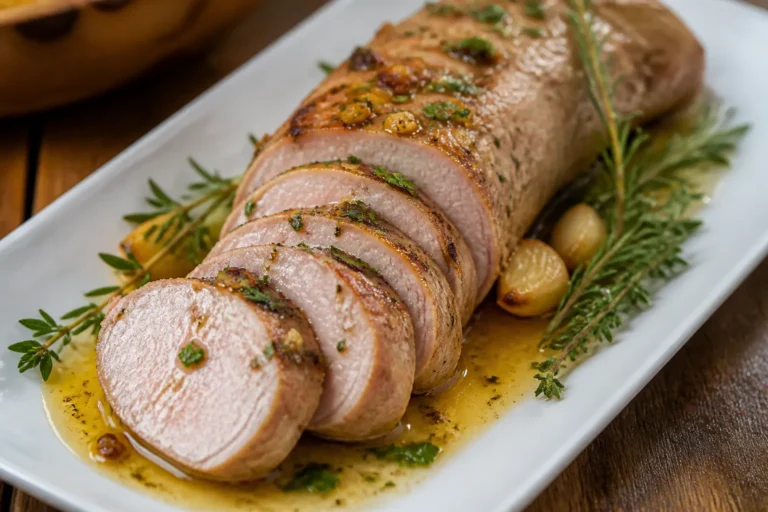
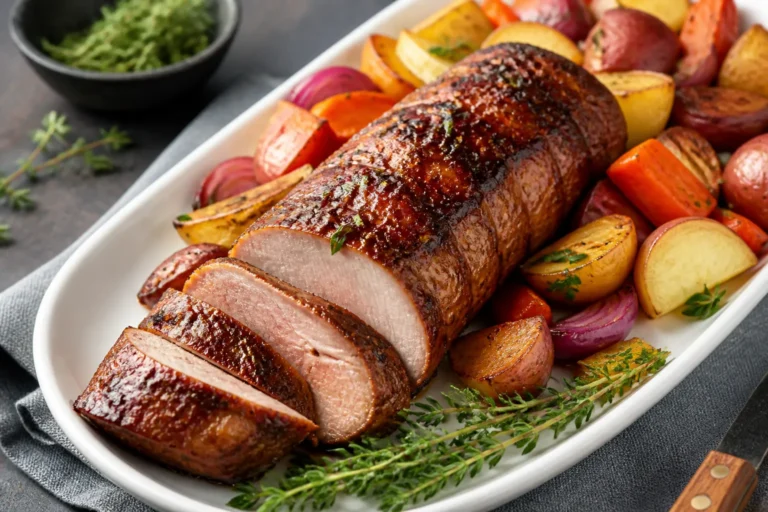
Melt-In-Your-Mouth Pork Tenderloin – Simple, Juicy, and Incredibly Tender
Pork tenderloin has a way of turning a regular weeknight into something special. When it’s cooked right, it’s buttery-soft, juicy, and full of flavor without much fuss. This version keeps things simple but gives you restaurant-level results using everyday ingredients.
Need More Easy Dinner Ideas?
Get my FREE 7-Day Easy Dinner Reset and enjoy a full week of healthy dinners without the meal-planning stress.
With a quick sear and an easy oven finish, you get that perfect blush-pink center and a savory crust that locks in moisture. It’s the kind of meal that makes people ask for seconds—and the recipe.
Ingredients
Method
- Preheat and prep. Heat your oven to 400°F (200°C). Pat the pork tenderloin dry with paper towels. Dry meat sears better and helps form that savory crust.
- Mix the rub. In a small bowl, combine salt, pepper, garlic powder, onion powder, smoked paprika, and dried thyme. Stir in Dijon and honey until you have a paste. This helps the seasoning cling and creates gentle caramelization.
- Season the pork. Rub the paste all over the tenderloin, coating every side. Let it sit at room temperature for about 10–15 minutes while you heat the pan. This takes the chill off and promotes even cooking.
- Get the pan hot. Set a large oven-safe skillet (cast iron works great) over medium-high heat. Add 1 tablespoon of olive oil and heat until it shimmers.
- Sear for flavor. Lay the tenderloin in the hot pan and sear 1–2 minutes per side until nicely browned, turning with tongs to hit all surfaces. Don’t rush this; color equals flavor.
- Finish in the oven. Drizzle the remaining tablespoon of olive oil over the pork if the pan looks dry. Transfer the skillet to the oven and roast for 10–15 minutes, depending on thickness, until the center reaches 135–140°F (57–60°C) on an instant-read thermometer for a juicy, slightly pink center.
- Rest the meat. Move the pork to a cutting board and tent loosely with foil. Rest for 10 minutes. The temperature will rise a few degrees to about 145°F (63°C), the sweet spot for tender, safe pork.
- Make a quick pan sauce. Return the skillet to the stove over medium heat. Add the chicken broth (or wine) and scrape up the browned bits. Simmer 2–3 minutes to reduce slightly. Whisk in butter and a quick squeeze of lemon to brighten. Taste and adjust seasoning.
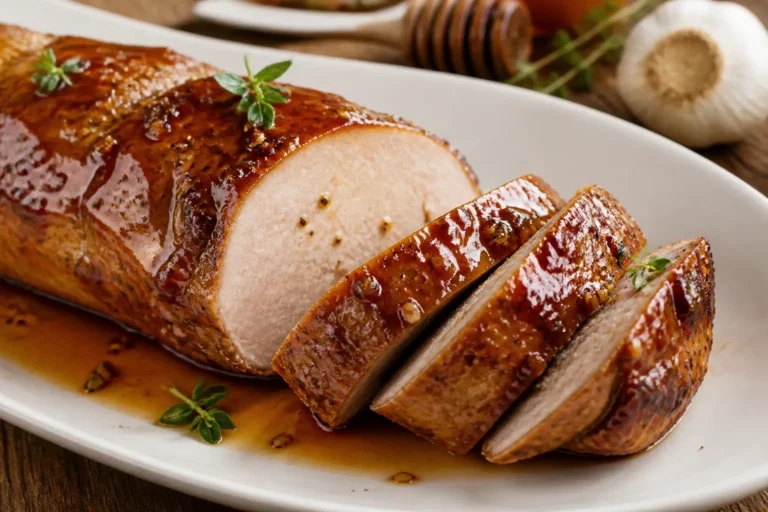
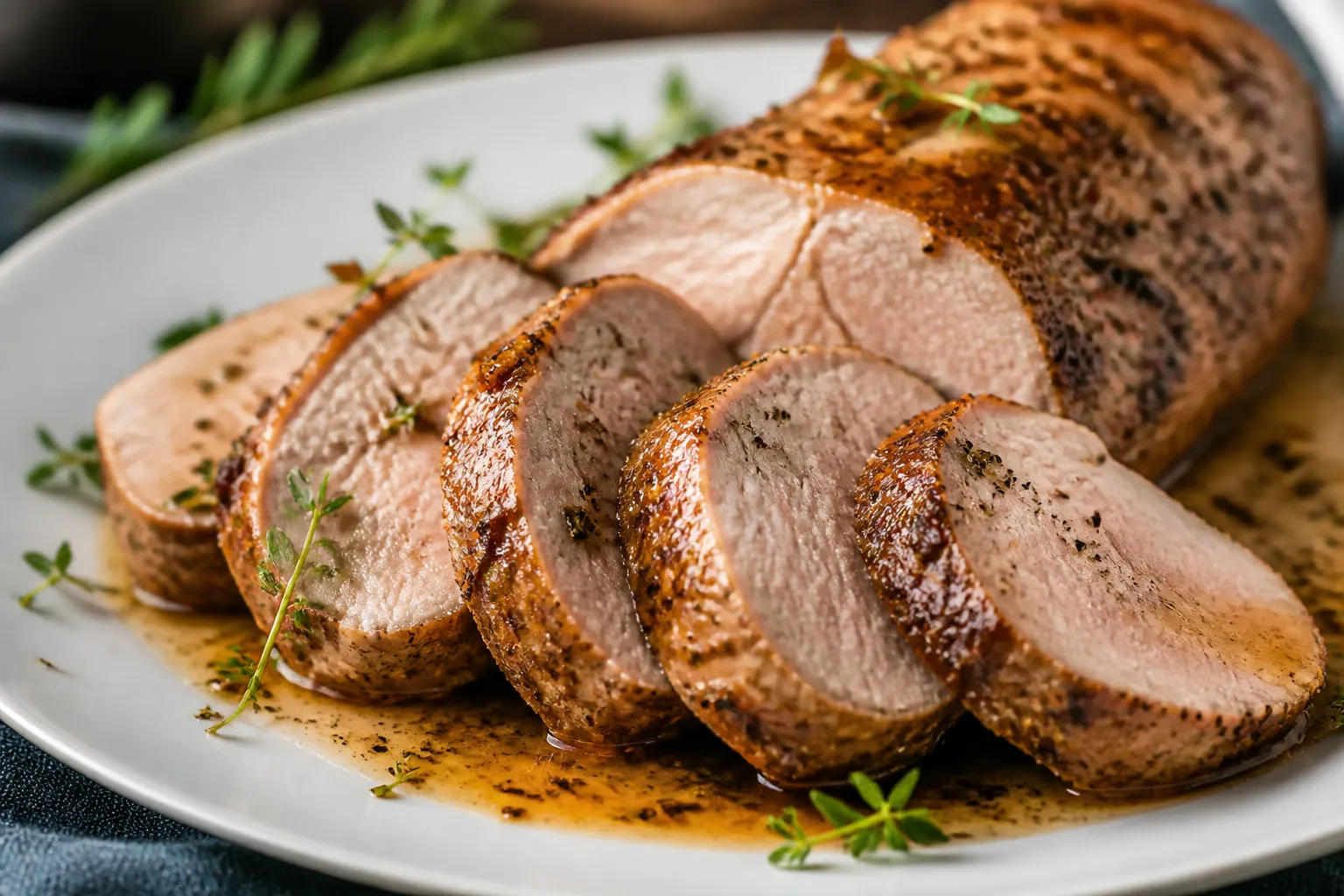
- Slice and serve. Slice the pork into 1/2-inch medallions against the grain. Spoon the pan sauce over the top. Garnish with fresh thyme or parsley if you’d like.
What Makes This Special
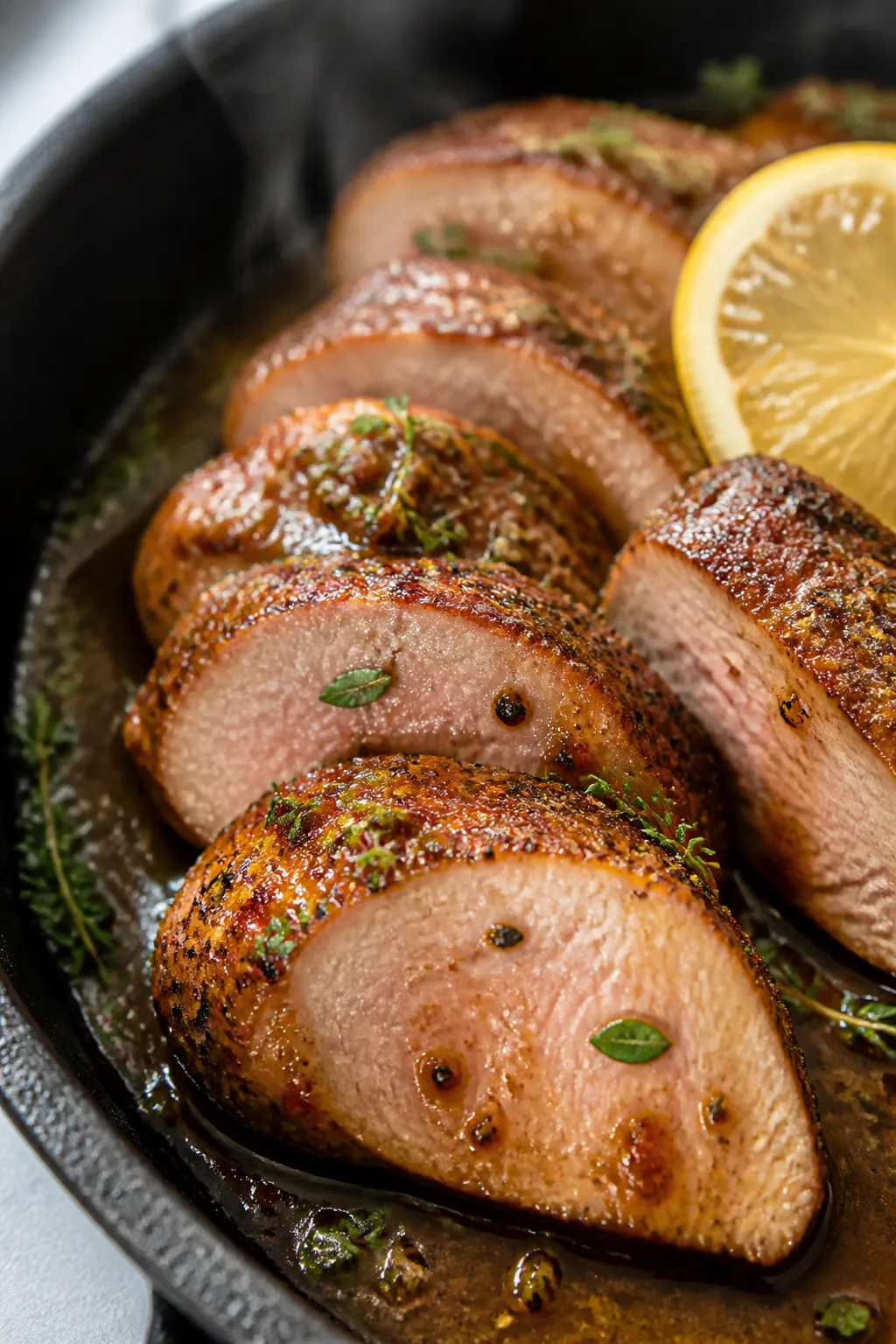
This pork tenderloin is all about balance and technique. A light, flavorful rub brings out the natural sweetness of the pork without overwhelming it.
A hot pan sear builds a deep, caramelized crust, while the oven gently finishes the cooking, so the inside stays tender. A quick pan sauce from the drippings adds richness without complicating the process. You’ll end up with a main dish that’s impressive yet totally doable on a busy night.
What You’ll Need
- 1–2 pork tenderloins (about 1 to 1.5 pounds each), silver skin trimmed
- 2 tablespoons olive oil (divided)
- 1 teaspoon kosher salt
- 1/2 teaspoon black pepper
- 1 teaspoon garlic powder
- 1 teaspoon onion powder
- 1 teaspoon smoked paprika (or sweet paprika)
- 1/2 teaspoon dried thyme (or rosemary)
- 1 tablespoon Dijon mustard
- 1 tablespoon honey or maple syrup
- 1/2 cup chicken broth (or dry white wine)
- 1 tablespoon butter
- Optional: a squeeze of lemon, fresh herbs for garnish
Step-by-Step Instructions
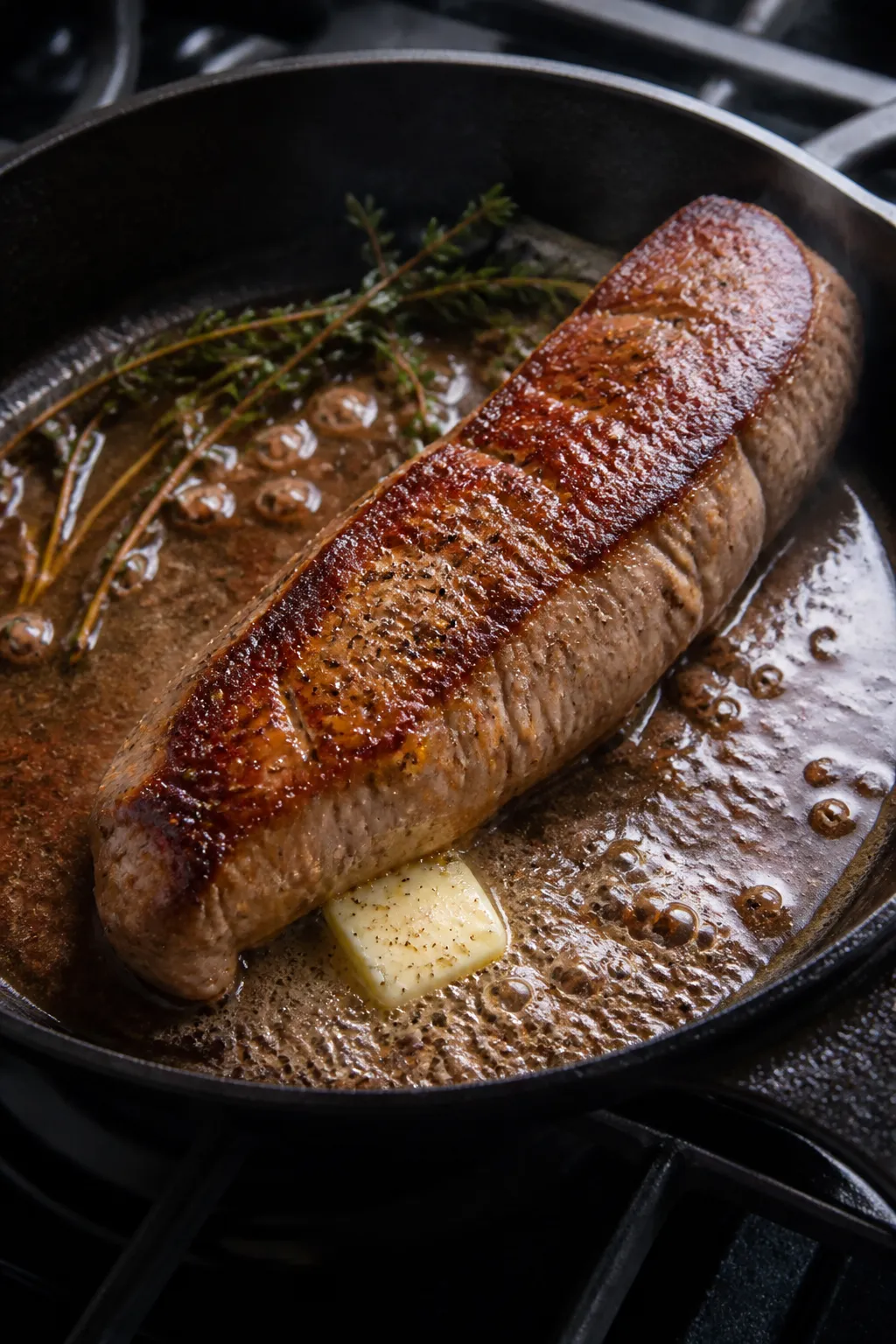
- Preheat and prep. Heat your oven to 400°F (200°C).
Pat the pork tenderloin dry with paper towels. Dry meat sears better and helps form that savory crust.
- Mix the rub. In a small bowl, combine salt, pepper, garlic powder, onion powder, smoked paprika, and dried thyme. Stir in Dijon and honey until you have a paste.
This helps the seasoning cling and creates gentle caramelization.
- Season the pork. Rub the paste all over the tenderloin, coating every side. Let it sit at room temperature for about 10–15 minutes while you heat the pan. This takes the chill off and promotes even cooking.
- Get the pan hot. Set a large oven-safe skillet (cast iron works great) over medium-high heat.
Add 1 tablespoon of olive oil and heat until it shimmers.
- Sear for flavor. Lay the tenderloin in the hot pan and sear 1–2 minutes per side until nicely browned, turning with tongs to hit all surfaces. Don’t rush this; color equals flavor.
- Finish in the oven. Drizzle the remaining tablespoon of olive oil over the pork if the pan looks dry. Transfer the skillet to the oven and roast for 10–15 minutes, depending on thickness, until the center reaches 135–140°F (57–60°C) on an instant-read thermometer for a juicy, slightly pink center.
- Rest the meat. Move the pork to a cutting board and tent loosely with foil.
Rest for 10 minutes. The temperature will rise a few degrees to about 145°F (63°C), the sweet spot for tender, safe pork.
- Make a quick pan sauce. Return the skillet to the stove over medium heat. Add the chicken broth (or wine) and scrape up the browned bits.
Simmer 2–3 minutes to reduce slightly. Whisk in butter and a quick squeeze of lemon to brighten. Taste and adjust seasoning.
- Slice and serve. Slice the pork into 1/2-inch medallions against the grain.
Spoon the pan sauce over the top. Garnish with fresh thyme or parsley if you’d like.
Keeping It Fresh
Leftovers keep well when stored properly. Let the pork cool until just warm, then refrigerate in an airtight container for up to 3–4 days.
Reheat gently in a covered skillet with a splash of broth over low heat to avoid drying it out. For freezing, slice the pork, lay pieces in a single layer, and freeze with some sauce to protect moisture for up to 2 months. Thaw overnight in the fridge and reheat slowly.
Benefits of This Recipe
- Quick and reliable: From stove to table in about 30–40 minutes, with repeatable results.
- Lean and tender: Pork tenderloin is naturally lean but stays juicy when cooked to the right temperature.
- Everyday ingredients: No specialty items required, yet the flavors taste elevated.
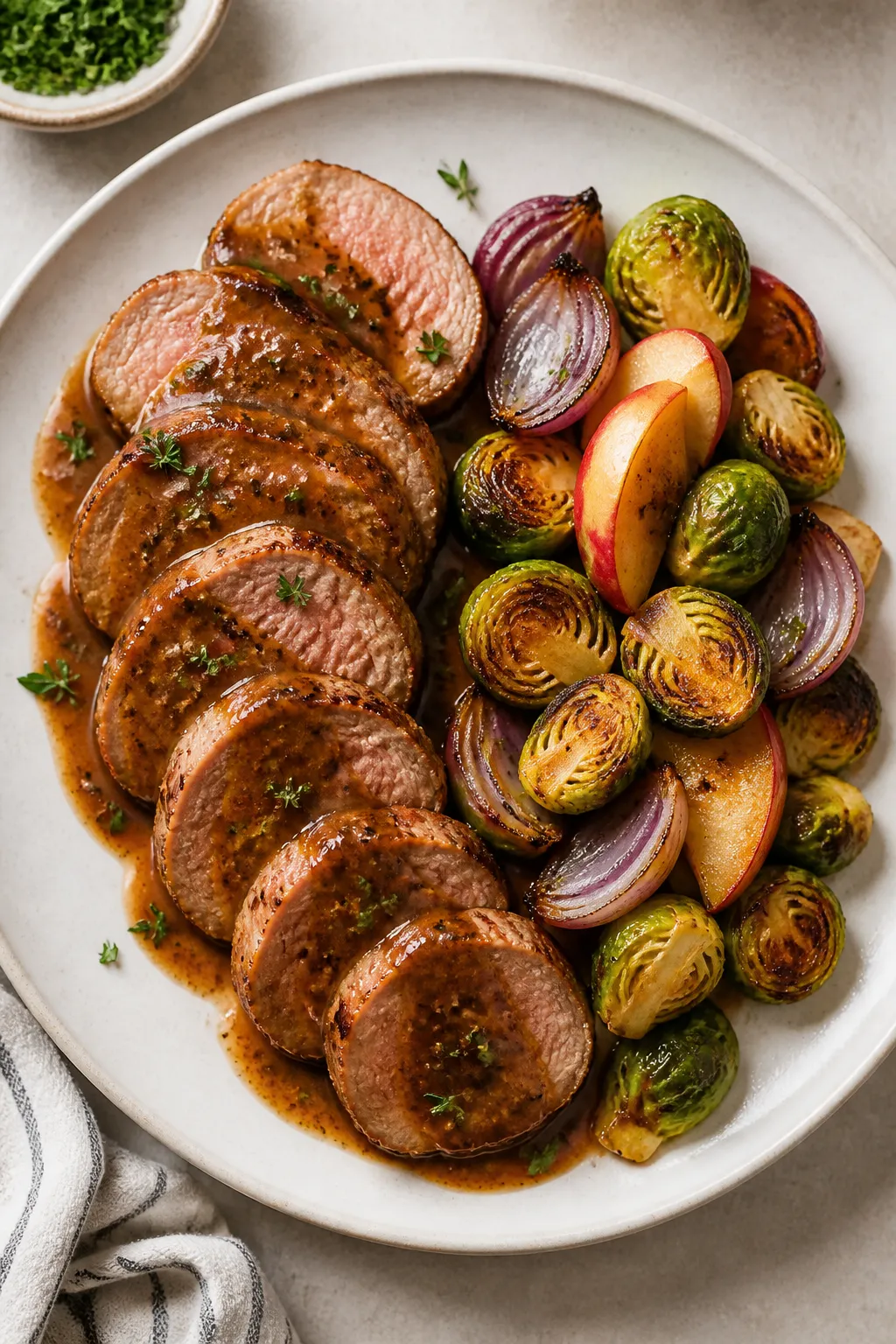
- Flexible pairing: Works with roasted vegetables, mashed potatoes, rice, or a crisp salad.
- Great for guests: Easy to scale up for a crowd and slices beautifully for serving.
What Not to Do
- Don’t overcook. Taking pork past 150°F will dry it out fast.
Use a thermometer and trust it.
- Don’t skip the rest. Resting lets juices redistribute, keeping each slice moist and tender.
- Don’t start with wet meat. Moisture prevents browning. Always pat the pork dry before seasoning.
- Don’t overcrowd the pan. If cooking two tenderloins, sear one at a time for a proper crust.
- Don’t forget to season evenly. Sparse seasoning means flat flavor. Coat all sides.
Alternatives
- Spice swap: Try cumin, coriander, and chili powder for a smoky-southwest twist, or fennel seed and rosemary for an Italian vibe.
- Glaze options: Brush with a mix of soy sauce, brown sugar, and grated ginger during the last 5 minutes of roasting for a glossy finish.
- Herb crust: Roll the seasoned pork in finely chopped fresh herbs and a touch of olive oil before searing.
- Grill method: Sear over direct heat for 2–3 minutes per side, then move to indirect heat and cover until 135–140°F.
Rest before slicing.
- Sheet-pan dinner: After searing, roast on a sheet pan with halved Brussels sprouts, red onions, and apple wedges for a one-pan meal.
FAQ
Can I use pork loin instead of tenderloin?
Pork loin is larger and cooks differently. If you swap it in, you’ll need more time in the oven and a lower temperature to avoid drying out. For this recipe’s timing and texture, stick with pork tenderloin.
Never wonder what's for dinner again.
Get 7 healthy, family-friendly dinners complete with recipes, grocery lists, and simple meal plans delivered straight to your inbox.
How do I know when it’s done without overcooking?
Use an instant-read thermometer.
Pull the pork from the oven at 135–140°F, rest for 10 minutes, and you’ll land right around 145°F—juicy and safe.
Do I have to use a cast iron skillet?
Any heavy, oven-safe skillet works. If you don’t have one, sear in a regular pan, transfer the pork to a preheated baking sheet, and continue roasting. Make the sauce in the pan you used for searing.
What if my tenderloin has a thick end and a thin end?
Tuck the thin tail under itself and secure with kitchen twine or a toothpick.
This evens out the thickness so it cooks more uniformly.
Why is my pork tough?
It’s usually from overcooking or skipping the rest. Keep a close eye on temperature and give the meat time to relax before slicing.
Can I marinate instead of using a rub?
Yes. A simple marinade with olive oil, Dijon, garlic, and herbs works well.
Pat the pork dry before searing so it browns properly.
Is the slight pink color safe?
Yes. Pork is safe to eat at 145°F with a 3-minute rest. A faint pink center indicates it’s moist and not overdone.
How thick should I slice it?
Aim for 1/2-inch medallions.
Thicker slices stay juicy and are easier to sauce and serve.
Can I make it dairy-free or gluten-free?
It’s naturally gluten-free as written. To keep it dairy-free, skip the butter in the sauce or use a dairy-free alternative.
What sides go best with this?
Try roasted potatoes, garlicky green beans, sautéed mushrooms, creamy polenta, or a bright arugula salad with lemon vinaigrette.
Wrapping Up
This melt-in-your-mouth pork tenderloin is all about smart technique and simple flavors. A quick sear, a gentle roast, and a short rest turn a lean cut into something plush and satisfying.
Keep a thermometer handy, make that easy pan sauce, and you’ll have a go-to dinner that never disappoints. Serve it on a busy weeknight or for company—you’ll get clean plates either way.
Printable Recipe Card
Want just the essential recipe details without scrolling through the article? Get our printable recipe card with just the ingredients and instructions.
Loved This Recipe?
If you're looking for more simple, healthy dinners your family will actually eat, grab my FREE 7-Day Easy Dinner Reset. You'll get 7 easy dinner recipes, simple grocery lists, and a done-for-you plan that takes the stress out of mealtime.