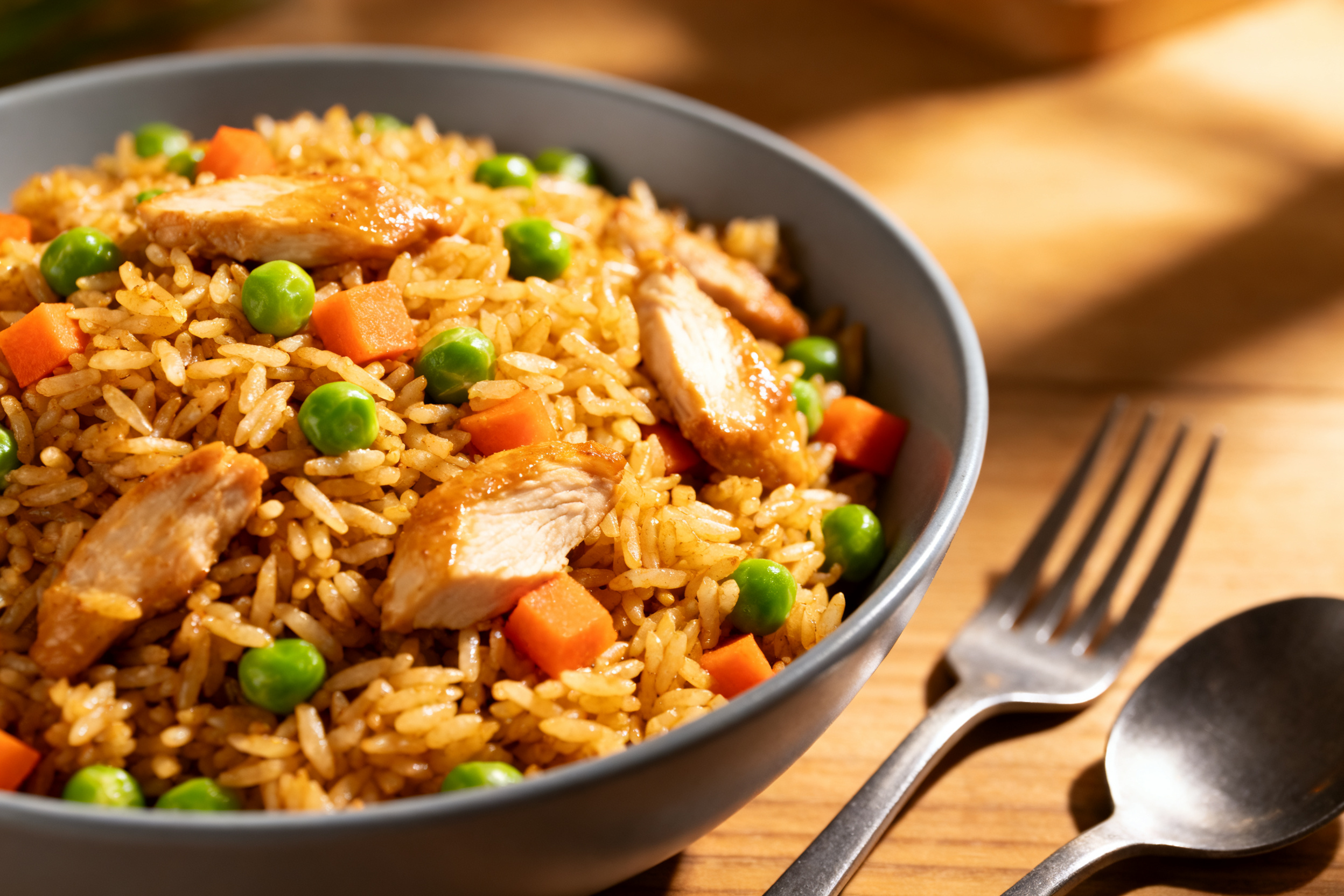
High Protein Chicken Fried Rice – A Simple, Satisfying Weeknight Favorite
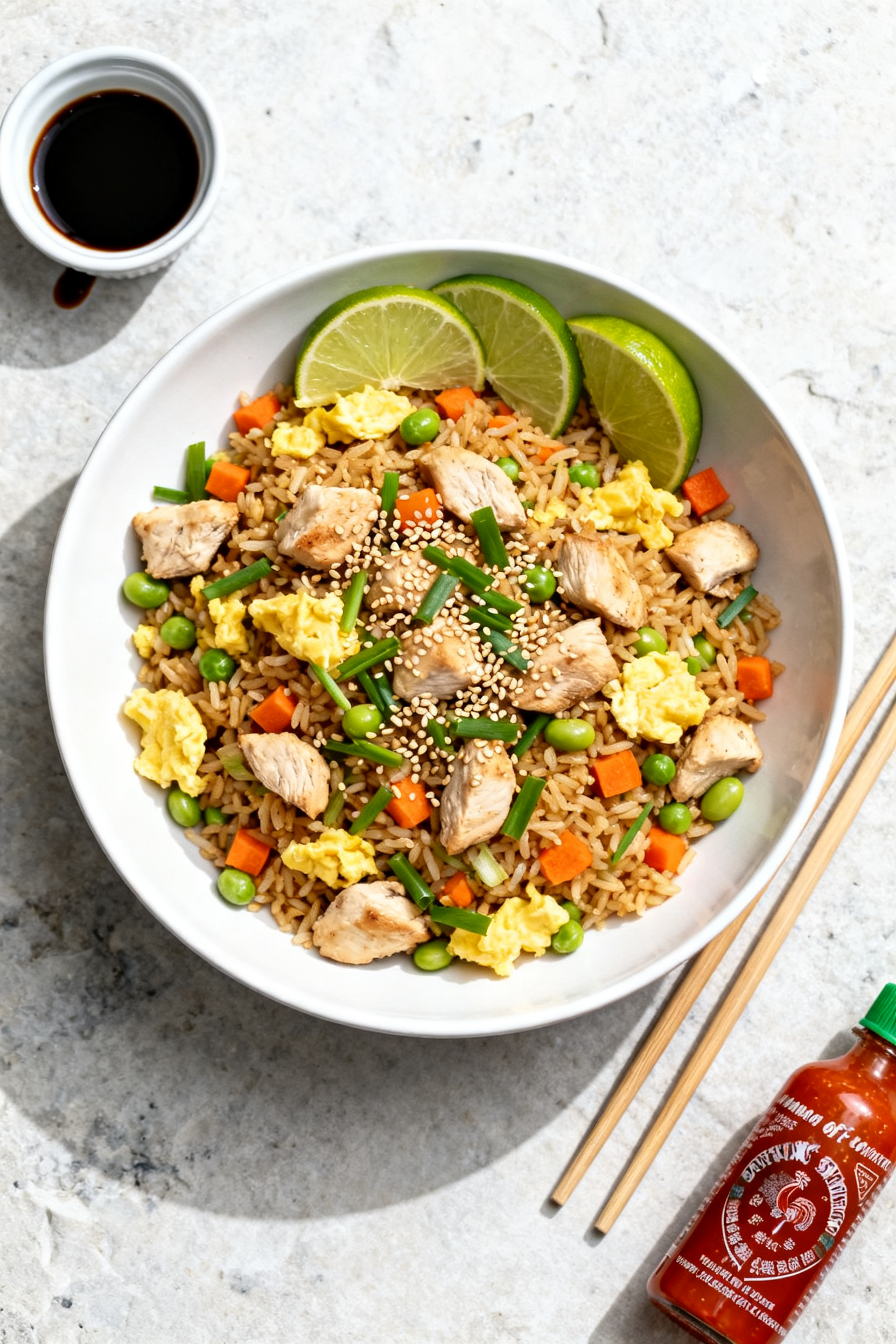
This high protein chicken fried rice hits the sweet spot between comfort food and smart eating. It’s quick, flavorful, and packs plenty of lean protein without skimping on taste. You’ll get tender chicken, fluffy eggs, chewy rice, and crisp veggies in every bite.
Need More Easy Dinner Ideas?
Get my FREE 7-Day Easy Dinner Reset and enjoy a full week of healthy dinners without the meal-planning stress.
Even better, it all comes together in one pan with pantry staples. If you want a filling meal that helps you stay on track, this is a reliable go-to.
Ingredients
Method
- Prep the rice right. If you can, cook your rice the day before and chill it uncovered for the first hour to dry slightly. If using fresh rice, spread it on a tray and chill for at least 30 minutes to reduce moisture.
- Make the sauce. In a small bowl, mix soy sauce, oyster sauce, sesame oil, white pepper, and a pinch of sugar. Set aside.
- Heat the pan. Use a large wok or wide skillet over medium-high heat. Add 1 tbsp oil and swirl to coat.
- Cook the eggs. Pour in whisked eggs, scramble gently until just set, then transfer to a plate. Don’t overcook; they’ll go back in later.
- Cook the chicken. Add another 1/2–1 tbsp oil to the hot pan. Season chicken lightly with salt and pepper. Stir-fry until cooked through and lightly browned, about 4–6 minutes. Transfer to the plate with eggs.
- Sauté aromatics. In the same pan, add onion and a small splash of oil if needed. Cook 2 minutes. Add garlic and ginger; cook 30–60 seconds until fragrant.
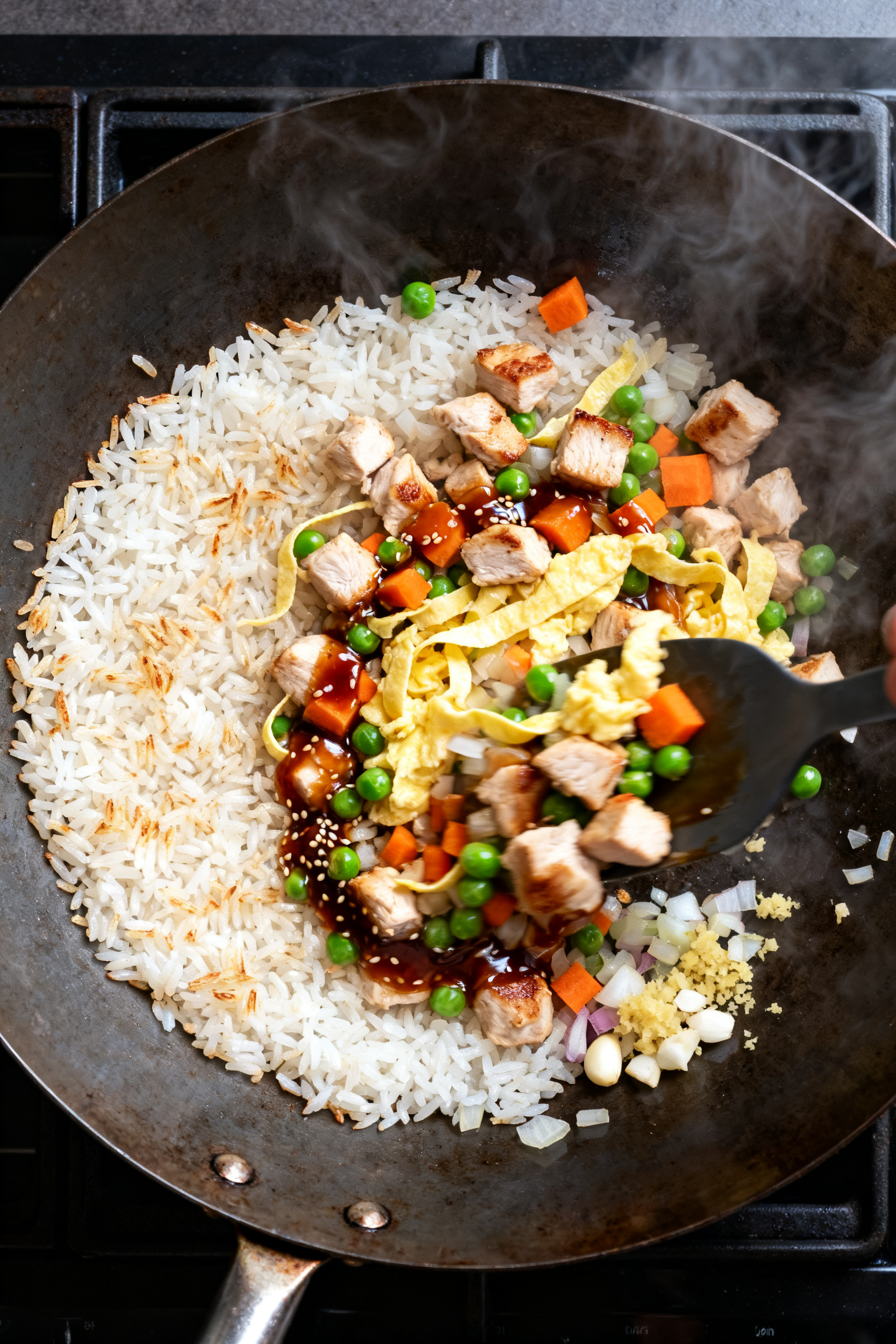
- Fry the rice. Add the chilled rice. Break up clumps with a spatula. Spread it out and let it sit for 30 seconds at a time to toast lightly. Stir and repeat for 2–3 minutes until steamy and a bit dry on the surface.
- Add veggies. Stir in peas and carrots (or edamame). Cook 1–2 minutes until hot.
- Bring it together. Return chicken and eggs to the pan. Pour in the sauce and toss well, coating everything evenly. Taste and adjust with more soy sauce, pepper, or a touch of sriracha for heat.
- Finish and serve. Stir in green onions. Turn off the heat. Garnish with sesame seeds and a squeeze of lime if you like. Serve hot.
What Makes This Special
This version focuses on protein while keeping the prep simple. The combo of chicken breast, eggs, and edamame or peas boosts the protein count without adding fuss.
Using day-old rice keeps the texture spot on—light, a little chewy, and never gummy. A balanced sauce gives salty, savory, and just a touch of sweetness. It’s the kind of fried rice that tastes like takeout, but it’s better for you and ready faster than delivery.
Ingredients
- 2 cups cooked, chilled jasmine or long-grain rice (preferably day-old)
- 12–14 oz boneless, skinless chicken breast, diced small
- 2 large eggs, whisked
- 1 cup frozen peas and carrots (or edamame for extra protein), thawed
- 1 small onion, finely diced
- 3 cloves garlic, minced
- 1-inch piece fresh ginger, grated (or 1/2 tsp ground ginger)
- 3 tbsp low-sodium soy sauce (or tamari for gluten-free)
- 1 tbsp oyster sauce (optional but recommended)
- 1 tsp sesame oil
- 1–2 tbsp neutral oil (avocado, canola, or peanut oil) for stir-frying
- 2–3 green onions, sliced
- 1/2 tsp white pepper (or black pepper)
- Red pepper flakes or sriracha, to taste (optional)
- Pinch of sugar (optional, balances the sauce)
- Salt, to taste
- Lime wedges and sesame seeds, for serving (optional)
Instructions
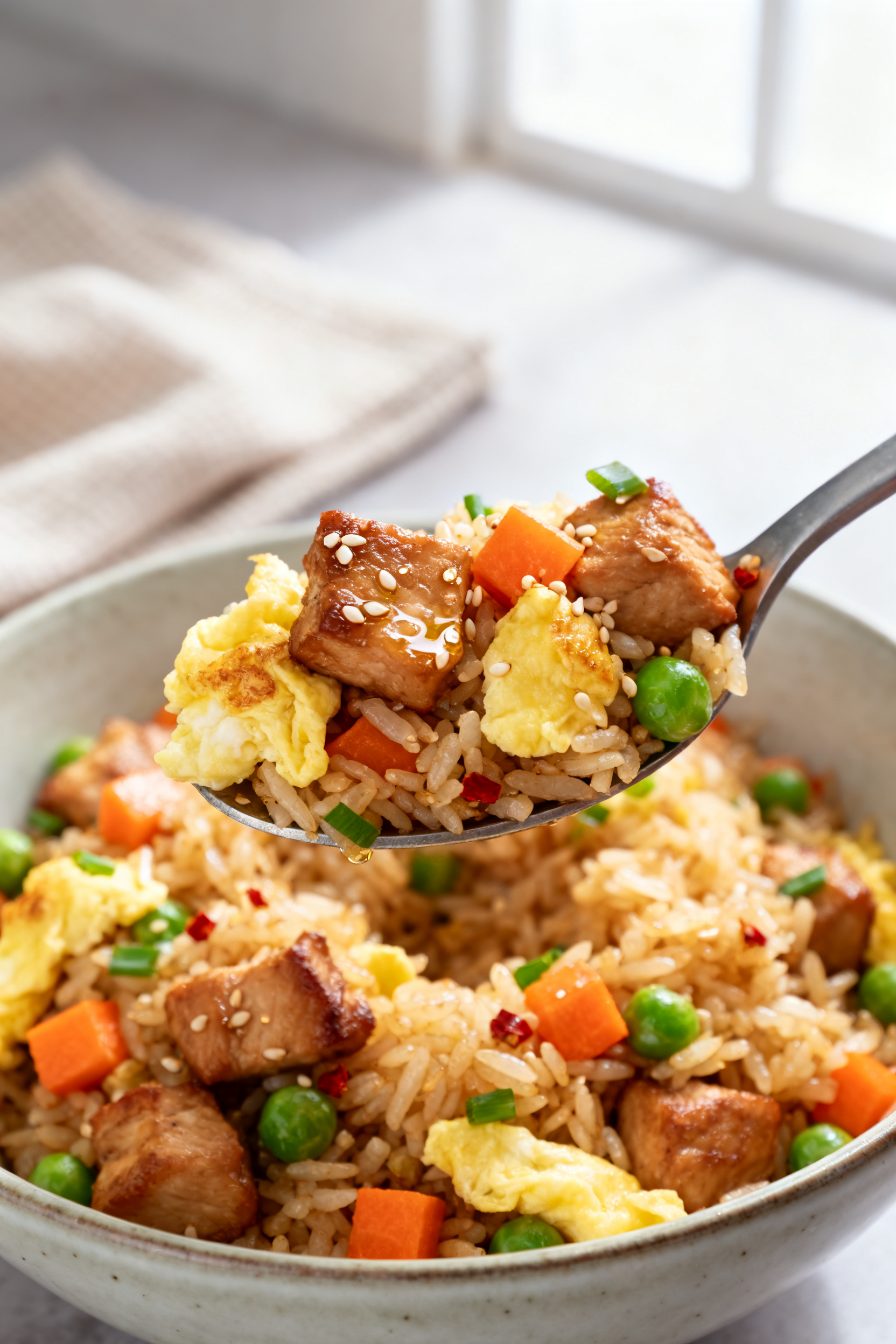
- Prep the rice right. If you can, cook your rice the day before and chill it uncovered for the first hour to dry slightly.
If using fresh rice, spread it on a tray and chill for at least 30 minutes to reduce moisture.
- Make the sauce. In a small bowl, mix soy sauce, oyster sauce, sesame oil, white pepper, and a pinch of sugar. Set aside.
- Heat the pan. Use a large wok or wide skillet over medium-high heat. Add 1 tbsp oil and swirl to coat.
- Cook the eggs. Pour in whisked eggs, scramble gently until just set, then transfer to a plate.
Don’t overcook; they’ll go back in later.
- Cook the chicken. Add another 1/2–1 tbsp oil to the hot pan. Season chicken lightly with salt and pepper. Stir-fry until cooked through and lightly browned, about 4–6 minutes.
Transfer to the plate with eggs.
- Sauté aromatics. In the same pan, add onion and a small splash of oil if needed. Cook 2 minutes. Add garlic and ginger; cook 30–60 seconds until fragrant.
- Fry the rice. Add the chilled rice.
Break up clumps with a spatula. Spread it out and let it sit for 30 seconds at a time to toast lightly. Stir and repeat for 2–3 minutes until steamy and a bit dry on the surface.
- Add veggies. Stir in peas and carrots (or edamame).
Cook 1–2 minutes until hot.
- Bring it together. Return chicken and eggs to the pan. Pour in the sauce and toss well, coating everything evenly. Taste and adjust with more soy sauce, pepper, or a touch of sriracha for heat.
- Finish and serve. Stir in green onions.
Turn off the heat. Garnish with sesame seeds and a squeeze of lime if you like. Serve hot.
Storage Instructions
- Refrigerate: Cool completely, then store in an airtight container for up to 4 days.
- Freeze: Portion into freezer-safe containers or bags.
Freeze up to 2 months. Thaw overnight in the fridge for best texture.
- Reheat: Use a hot skillet with a splash of water or broth to steam and revive the rice. Microwave in a vented container, stirring halfway.
Add a drizzle of soy sauce or sesame oil if it seems dry.
Health Benefits
- High-quality protein: Chicken breast and eggs provide complete protein to support muscle repair and keep you full longer.
- Balanced macros: You get a smart mix of protein, carbs, and some healthy fats. This balance helps steady energy and curb cravings.
- Fiber and micronutrients: Peas, carrots, onions, and green onions add fiber, vitamin A, vitamin C, and potassium.
- Lower sodium option: Using low-sodium soy sauce and adjusting to taste keeps salt in check without losing flavor.
- Portion-friendly: Each scoop is satisfying, so it’s easier to control portions without feeling deprived.
What Not to Do
- Don’t use hot, freshly cooked rice. It turns mushy. Chilled, dry rice is key.
- Don’t overcrowd the pan. Too much at once steams instead of fries.
Work in batches if needed.
- Don’t skip preheating. A hot pan gives you that slightly toasty, restaurant-style texture.
- Don’t drown it in sauce. Too much liquid makes soggy rice. Start with the recipe amount and adjust lightly.
- Don’t overcook the eggs. Overcooked eggs turn rubbery. Soft scramble them and finish in the pan at the end.
Recipe Variations
- Extra protein boost: Add 1/2 cup shelled edamame or toss in diced tofu with the chicken.
- Brown rice or quinoa: Swap the white rice for cooked, chilled brown rice or quinoa for more fiber.
Keep the pan hot to avoid sticking.
- Low-carb twist: Use half rice and half riced cauliflower to cut carbs while keeping volume and texture.
- Spicy version: Add chili crisp, gochujang, or extra sriracha to the sauce. Top with sliced fresh chilies.
- Vegetable-packed: Stir in bell peppers, shredded cabbage, or broccoli florets (pre-steamed) for more crunch and nutrients.
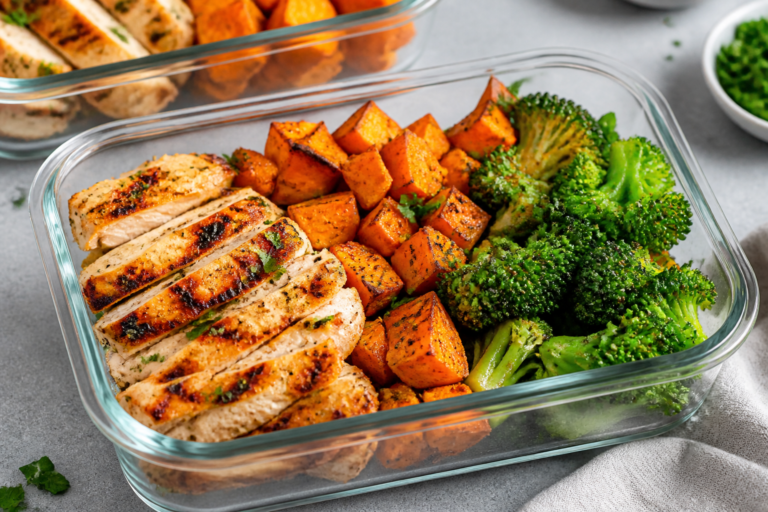
- Meal prep bowls: Portion into containers with a side of steamed greens. Reheat with a splash of broth to keep it moist.
- Gluten-free: Use tamari instead of soy sauce and check your oyster sauce label or skip it.
- Garlic-herb: Finish with a pat of garlic butter and a sprinkle of chopped cilantro or parsley for a fresh twist.
FAQ
Can I use rotisserie chicken?
Yes.
Shred the chicken and add it during the “bring it together” step. Since it’s already cooked, you just need to heat it through so it doesn’t dry out.
What kind of rice works best?
Never wonder what's for dinner again.
Get 7 healthy, family-friendly dinners complete with recipes, grocery lists, and simple meal plans delivered straight to your inbox.
Day-old jasmine or long-grain white rice is ideal. It stays separate and slightly chewy.
If you use brown rice, make sure it’s thoroughly chilled and a bit dry for the best stir-fry texture.
How do I keep fried rice from getting soggy?
Use chilled rice, a hot pan, and avoid too much sauce. Spread the rice out in the pan and let it sit briefly to toast before stirring. Also, don’t overcrowd—work in batches if your pan is small.
Is oyster sauce necessary?
No, but it adds a deep, savory note.
If you skip it, add a little more soy sauce and a pinch of sugar, or try a splash of fish sauce for umami.
How much protein is in a serving?
It varies with portions, but a typical serving with chicken breast, eggs, and peas or edamame lands around 28–35 grams of protein. Add edamame or extra egg whites to push it higher.
Can I make it without eggs?
Absolutely. Skip the eggs and add more chicken or edamame.
A bit of silken tofu crumbled in can mimic the soft texture eggs provide.
What oil should I use?
Choose a high-heat neutral oil like avocado, canola, peanut, or grapeseed. Sesame oil is for finishing, not frying, because it can burn easily.
Do I need a wok?
No. A large, heavy skillet works fine.
The key is high heat, enough room for the rice to move, and not crowding the pan.
Can I add more veggies?
Yes. Just keep pieces small so they cook quickly. If using watery veggies like zucchini, sauté them first and drain any excess moisture.
How do I meal prep this?
Cook a big batch, chill quickly, and portion into airtight containers.
Reheat in a hot pan with a splash of water or broth. Add fresh green onions or a squeeze of lime right before eating to brighten it up.
In Conclusion
High protein chicken fried rice is the kind of recipe you’ll reach for on busy nights and lazy Sundays alike. It’s straightforward, flexible, and reliably tasty.
With a few smart steps—chilled rice, hot pan, and a balanced sauce—you’ll get takeout-level results at home. Keep this in your rotation and make it your own with the variations that fit your week.
Printable Recipe Card
Want just the essential recipe details without scrolling through the article? Get our printable recipe card with just the ingredients and instructions.
Loved This Recipe?
If you're looking for more simple, healthy dinners your family will actually eat, grab my FREE 7-Day Easy Dinner Reset. You'll get 7 easy dinner recipes, simple grocery lists, and a done-for-you plan that takes the stress out of mealtime.