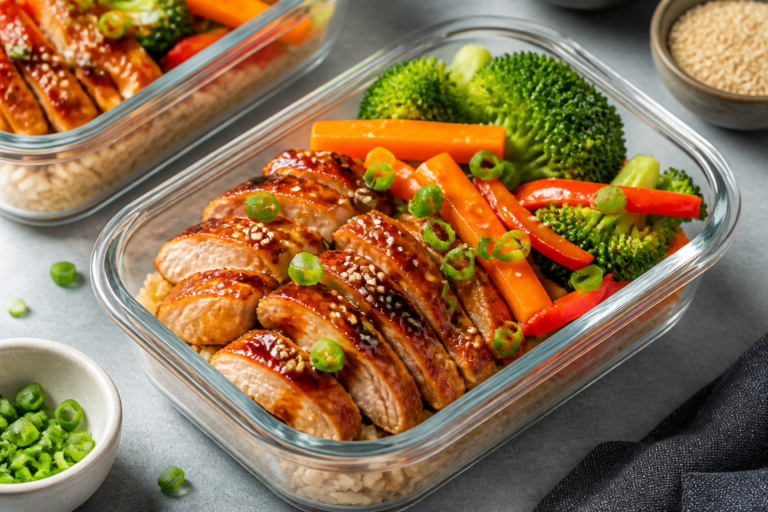
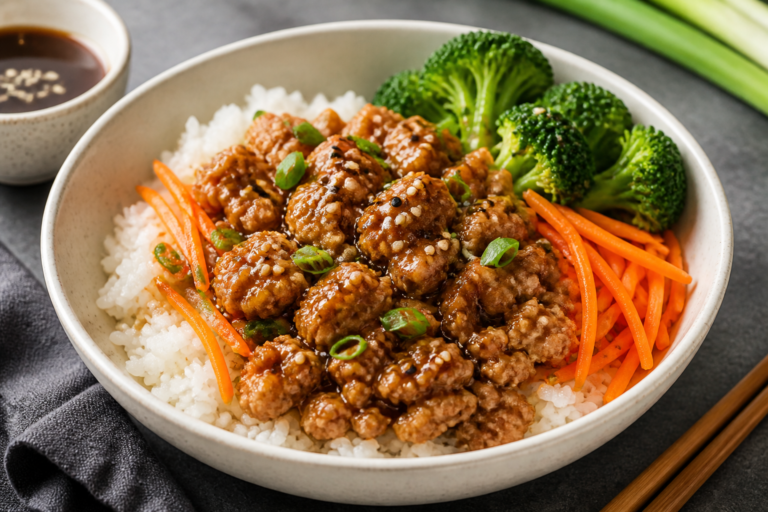
High Protein Chicken Stir Fry Meal Prep – Simple, Balanced, and Ready for the Week
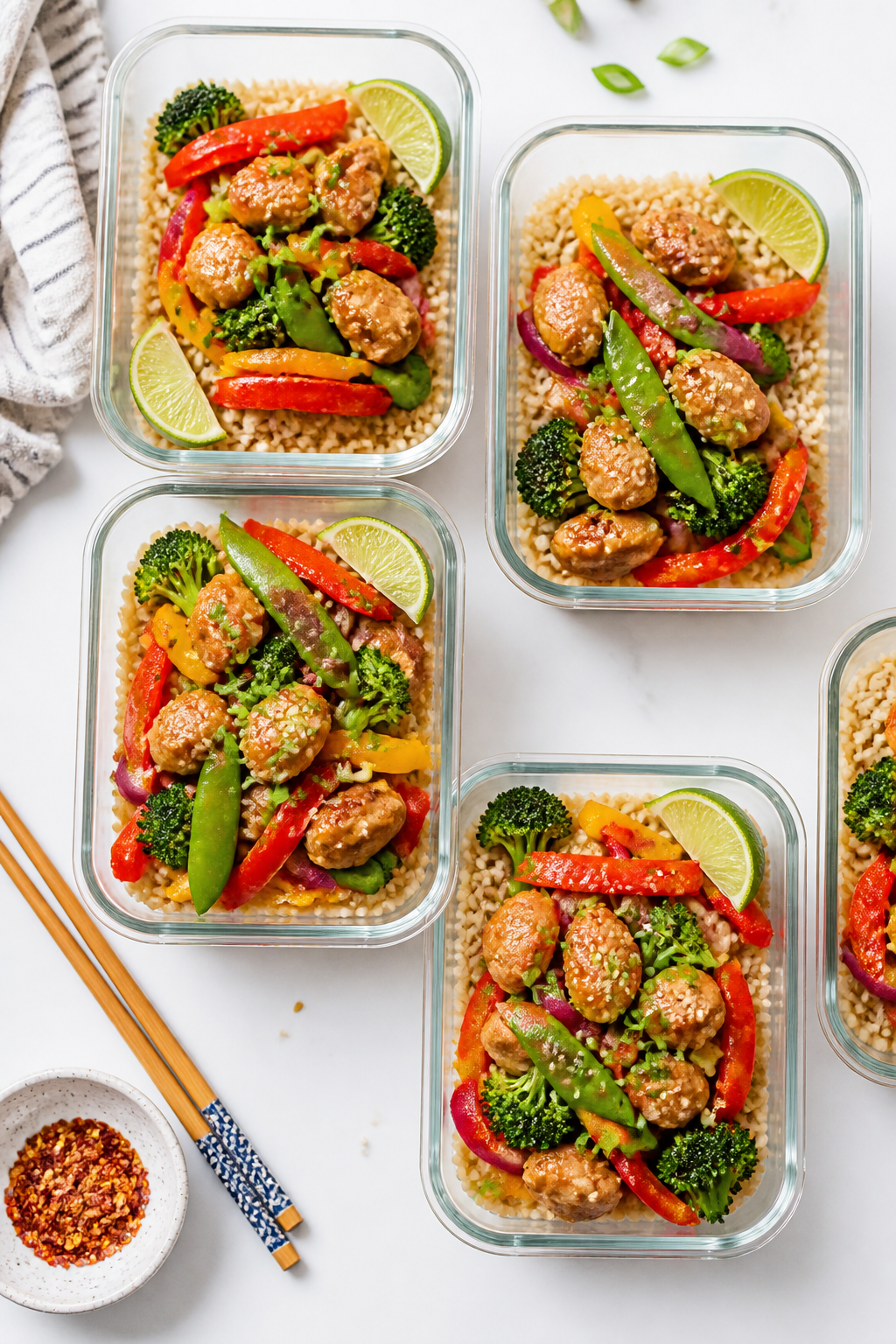
This high protein chicken stir fry meal prep is the kind of recipe you’ll actually stick with. It’s fast, flavorful, and built around pantry staples you probably already have. The protein is front and center, the veggies stay crisp-tender, and the sauce is light but satisfying.
Need More Easy Dinner Ideas?
Get my FREE 7-Day Easy Dinner Reset and enjoy a full week of healthy dinners without the meal-planning stress.
You’ll have a full week of lunches done in under an hour, without feeling like you’re eating the same bland thing every day.
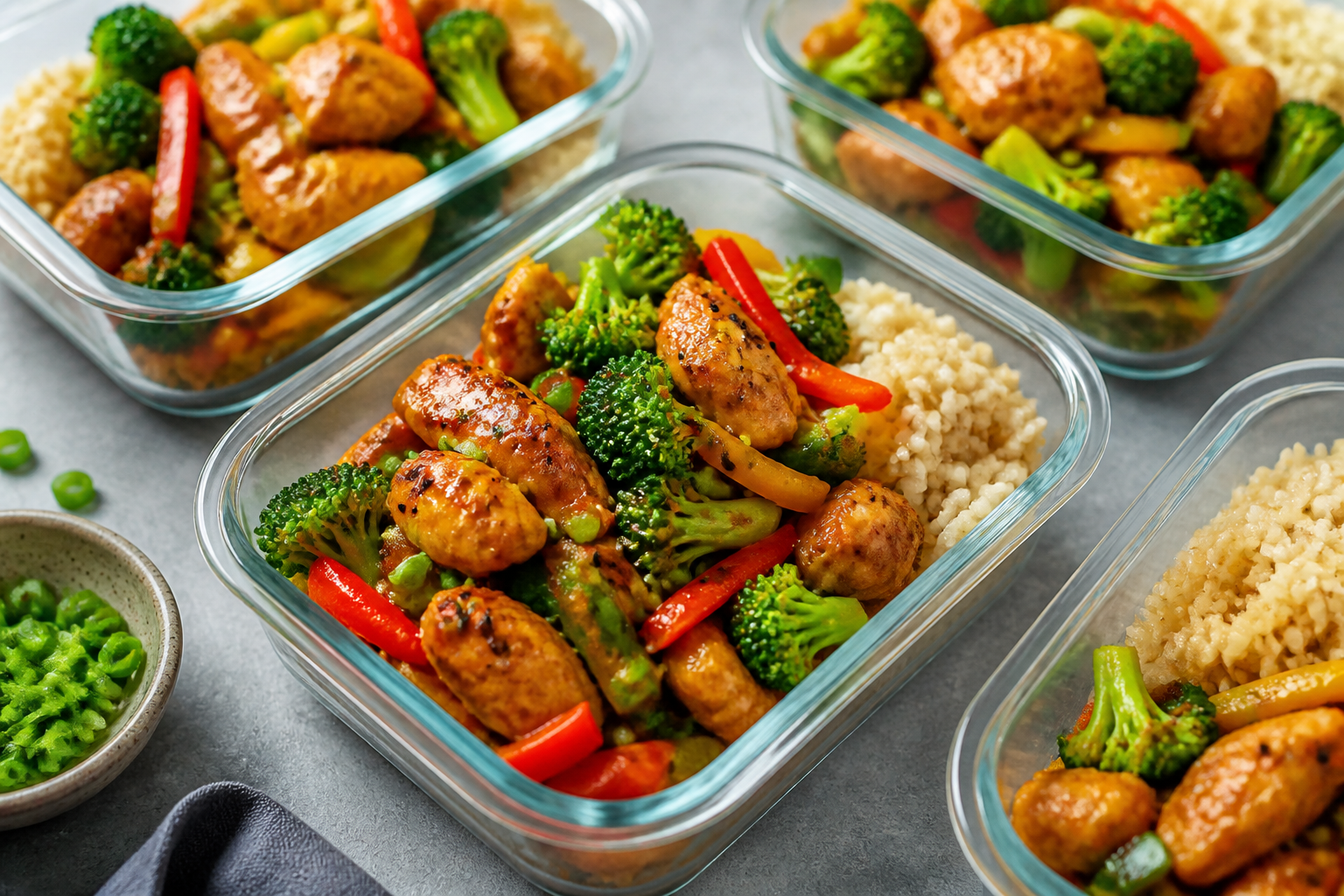
High Protein Chicken Stir Fry Meal Prep - Simple, Balanced, and Ready for the Week
Ingredients
Method
- Prep the chicken: Pat the chicken dry and slice it thinly against the grain. Season lightly with salt and pepper. This helps it brown fast and stay tender.
- Mix the sauce: In a bowl, whisk soy sauce, oyster sauce, rice vinegar, honey, cornstarch, broth, sesame oil, and red pepper flakes. Set aside. The cornstarch will slightly thicken the sauce so it clings to the chicken and vegetables.
- Heat the pan: Place a large skillet or wok over medium-high heat. Add 1 tablespoon oil and swirl to coat. The pan should be hot before the chicken hits it.
- Cook the chicken in batches: Add half the chicken in a single layer. Sear 2–3 minutes, flip, and cook another 1–2 minutes until just cooked through. Transfer to a plate and repeat with remaining chicken, adding more oil if needed.
- Stir fry the aromatics: Add a small splash of oil if the pan looks dry. Toss in garlic and ginger. Stir for 20–30 seconds until fragrant, being careful not to burn.
- Cook the vegetables: Add broccoli, carrots, and red onion. Stir fry 2–3 minutes. Add bell peppers and snow peas. Cook another 2–3 minutes until crisp-tender. Season with a pinch of salt.
- Combine and sauce: Return the chicken and any juices to the pan. Whisk the sauce again, then pour it in. Toss everything for 1–2 minutes until the sauce thickens and coats the stir fry.
- Taste and finish: Adjust salt, pepper, or heat. Add a squeeze of lime for brightness if you like. Remove from heat.
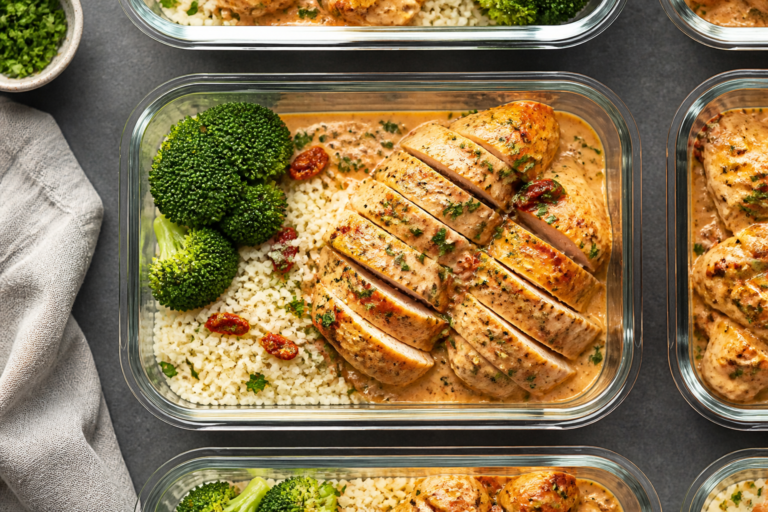
- Assemble meal prep: Divide cooked rice (or cauliflower rice) among 4–5 airtight containers. Top with equal portions of stir fry. Garnish with sesame seeds and green onions.
- Cool before sealing: Let containers cool for 15–20 minutes before sealing and refrigerating. This prevents condensation and soggy rice.
Why This Recipe Works
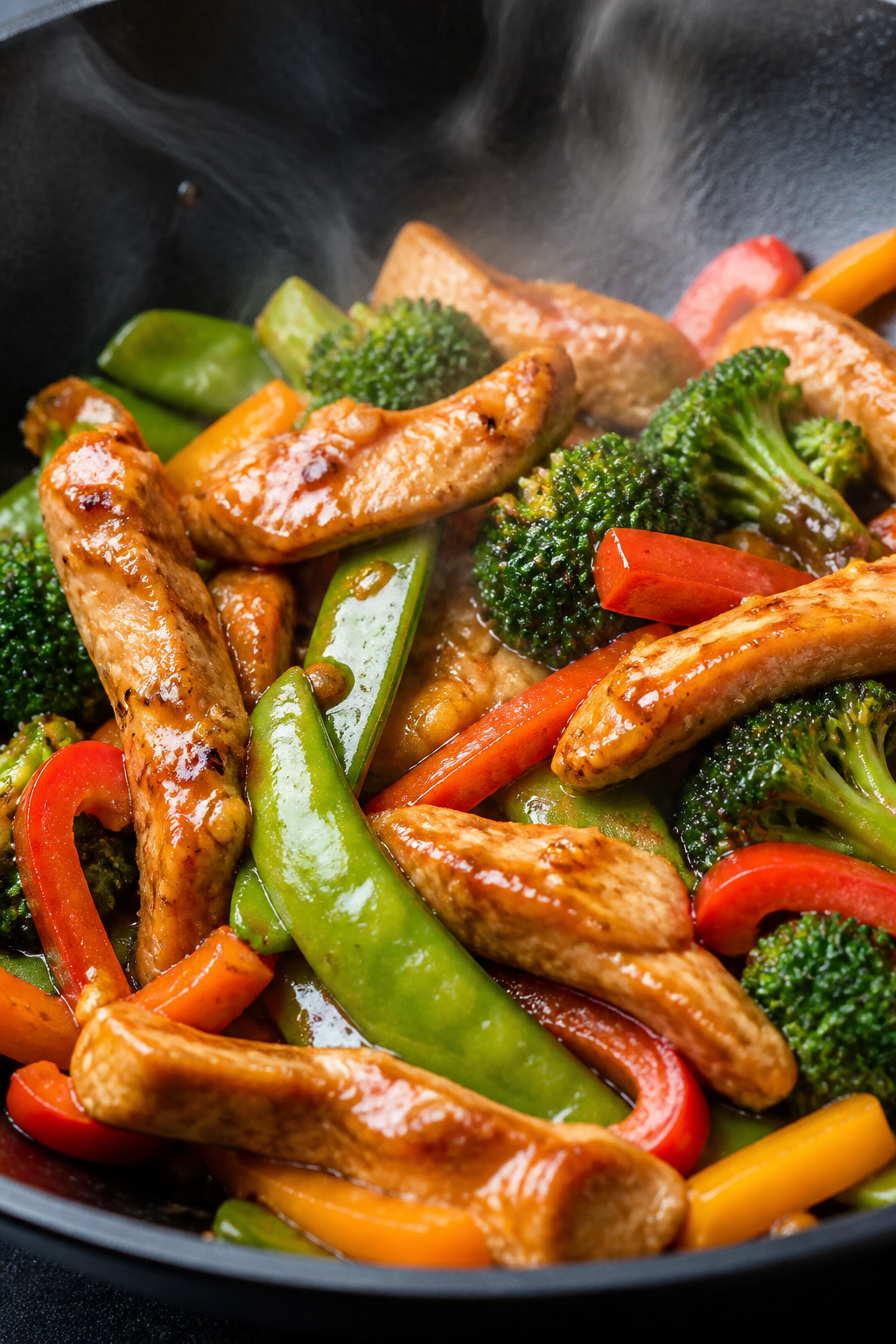
- High protein, low fuss: Lean chicken breast packs in protein without extra fat, and the stir fry method cooks it quickly to stay juicy.
- Balanced and customizable: A simple mix of vegetables and a clean sauce keeps flavors fresh, while add-ins like chili, ginger, or sesame let you tweak it to your taste.
- Great for meal prep: The veggies hold up well, the sauce doesn’t separate, and everything reheats quickly. No soggy mess by Thursday.
- Budget-friendly: Everyday ingredients, minimal prep, and no specialty tools required.
Ingredients
- Chicken: 2 pounds boneless, skinless chicken breasts, thinly sliced
- Vegetables:
- 2 cups broccoli florets
- 1 red bell pepper, thinly sliced
- 1 yellow bell pepper, thinly sliced
- 1 medium carrot, peeled and sliced on a bias
- 1 small red onion, thin wedges
- 2 cups snow peas or sugar snap peas, trimmed
- 3 cloves garlic, minced
- 1 tablespoon fresh ginger, grated (optional but recommended)
- For the sauce:
- 1/3 cup low-sodium soy sauce or tamari
- 2 tablespoons oyster sauce (or hoisin for sweeter flavor)
- 1 tablespoon rice vinegar
- 1 tablespoon honey or maple syrup
- 1 tablespoon cornstarch
- 1/2 cup low-sodium chicken broth or water
- 1 teaspoon toasted sesame oil
- 1/2 teaspoon crushed red pepper flakes (optional)
- For cooking: 1–2 tablespoons avocado or canola oil
- For serving (optional): 3–4 cups cooked brown rice, jasmine rice, or cauliflower rice; sesame seeds; sliced green onions; lime wedges
- Seasoning: Salt and black pepper to taste
Instructions
- Prep the chicken: Pat the chicken dry and slice it thinly against the grain. Season lightly with salt and pepper.
This helps it brown fast and stay tender.
- Mix the sauce: In a bowl, whisk soy sauce, oyster sauce, rice vinegar, honey, cornstarch, broth, sesame oil, and red pepper flakes. Set aside. The cornstarch will slightly thicken the sauce so it clings to the chicken and vegetables.
- Heat the pan: Place a large skillet or wok over medium-high heat.
Add 1 tablespoon oil and swirl to coat. The pan should be hot before the chicken hits it.
- Cook the chicken in batches: Add half the chicken in a single layer. Sear 2–3 minutes, flip, and cook another 1–2 minutes until just cooked through.
Transfer to a plate and repeat with remaining chicken, adding more oil if needed.
- Stir fry the aromatics: Add a small splash of oil if the pan looks dry. Toss in garlic and ginger. Stir for 20–30 seconds until fragrant, being careful not to burn.
- Cook the vegetables: Add broccoli, carrots, and red onion.
Stir fry 2–3 minutes. Add bell peppers and snow peas. Cook another 2–3 minutes until crisp-tender.
Season with a pinch of salt.
- Combine and sauce: Return the chicken and any juices to the pan. Whisk the sauce again, then pour it in. Toss everything for 1–2 minutes until the sauce thickens and coats the stir fry.
- Taste and finish: Adjust salt, pepper, or heat.
Add a squeeze of lime for brightness if you like. Remove from heat.
- Assemble meal prep: Divide cooked rice (or cauliflower rice) among 4–5 airtight containers. Top with equal portions of stir fry.
Garnish with sesame seeds and green onions.
- Cool before sealing: Let containers cool for 15–20 minutes before sealing and refrigerating. This prevents condensation and soggy rice.
Storage Instructions
- Refrigerator: Store in airtight containers for up to 4 days.
- Freezer: Freeze portions for up to 2 months. Leave a little headspace to allow for expansion.
- Reheating: Microwave 1–2 minutes, stirring halfway.
For stovetop, reheat over medium with a splash of water to loosen the sauce.
- Food safety tip: Cool to room temp quickly, then move to the fridge within 2 hours of cooking.
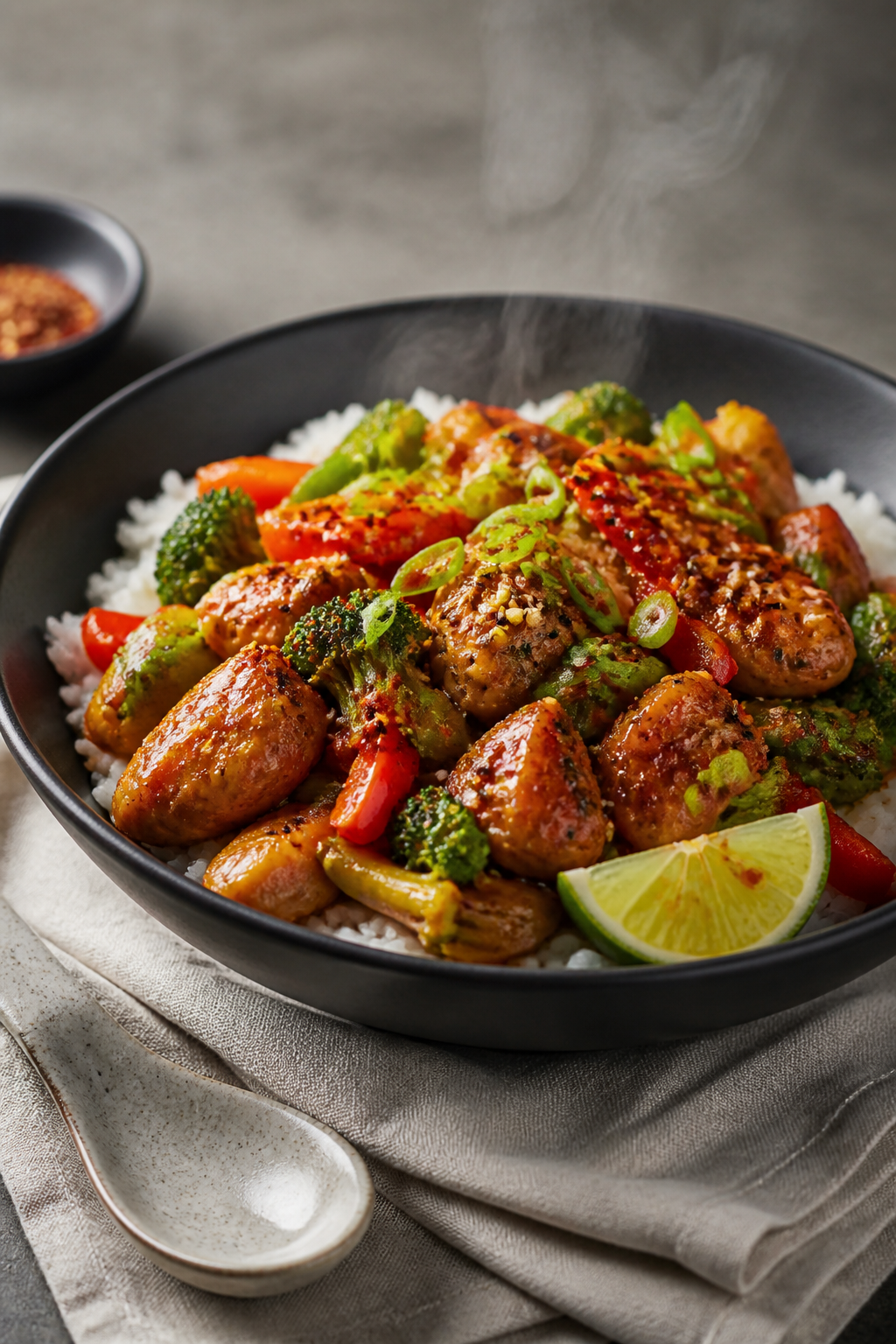
Why This is Good for You
- High-quality protein: Lean chicken supports muscle repair and satiety, helping you stay full between meals.
- Fiber and micronutrients: Broccoli, peppers, and peas bring fiber, vitamin C, vitamin A, and antioxidants that support immune health and energy.
- Balanced macros: Pairing protein with complex carbs like brown rice keeps blood sugar steadier and energy more even.
- Lower sodium and sugar: Using low-sodium soy sauce and a measured amount of honey keeps the sauce lighter than takeout versions.
Common Mistakes to Avoid
- Overcrowding the pan: This steams the chicken and veggies. Cook in batches so everything sears properly.
- Skipping the cornstarch: Without it, the sauce can be watery and won’t cling to the ingredients.
- Overcooking vegetables: Pull them while they’re still bright and crisp-tender. They’ll soften slightly when reheated.
- Not drying the chicken: Moisture prevents browning and leads to rubbery texture.
- Adding sesame oil too early: Sesame oil can burn.
Add it to the sauce or at the end for flavor.
Recipe Variations
- Extra-lean boost: Swap half the chicken for firm tofu or edamame for a mix of animal and plant protein.
- Low-carb: Serve over cauliflower rice or sautéed cabbage instead of grains.
- Spicy garlic: Add 1–2 teaspoons chili-garlic sauce or sambal to the sauce and an extra clove of garlic.
- Citrus-ginger: Add 1 teaspoon orange zest and a splash of orange juice to the sauce, plus extra ginger.
- Teriyaki style: Increase honey to 2 tablespoons and add 1 tablespoon mirin. Simmer briefly to thicken.
- Veg swap: Use green beans, baby corn, mushrooms, or zucchini. Keep total veggie volume similar for balance.
- Gluten-free: Use tamari instead of soy sauce and confirm oyster/hoisin are gluten-free or skip them and add more tamari with a touch of fish sauce.
- Peanut crunch: Stir in 2 tablespoons peanut butter to the sauce and sprinkle chopped peanuts on top.
FAQ
How much protein is in each serving?
With 2 pounds of chicken spread across 5 portions, you’ll get roughly 35–40 grams of protein per serving, depending on exact portion size and any add-ins.
Never wonder what's for dinner again.
Get 7 healthy, family-friendly dinners complete with recipes, grocery lists, and simple meal plans delivered straight to your inbox.
Can I use chicken thighs instead of breasts?
Yes.
Boneless, skinless thighs stay juicy and are harder to overcook. Trim excess fat and slice thinly. You may need an extra minute of cook time.
Do I need a wok for this recipe?
No.
A large, heavy skillet works well. The key is high heat, enough room in the pan, and cooking in batches.
How can I prevent the chicken from turning tough?
Slice it thinly, cook over high heat, and avoid overcooking. Pull it as soon as it’s opaque and just cooked through, then finish in the sauce briefly.
What can I use instead of cornstarch?
Arrowroot starch works 1:1.
If you use tapioca, go light (about 2 teaspoons) as it can get gummy.
Is this recipe good for weight loss?
It can be. It’s high in protein and fiber and can be paired with lighter carb options like cauliflower rice. Portion control and total daily intake still matter.
Can I make it vegetarian?
Yes.
Use extra-firm tofu, pressed and cubed, or tempeh. Swap chicken broth for vegetable broth and use tamari for a fully vegetarian and gluten-free option.
Will the veggies get soggy by the end of the week?
If cooked to crisp-tender and cooled properly before storing, they hold up well for 3–4 days. Reheat gently and avoid overcooking on day one.
Can I double the recipe?
You can, but cook in multiple batches to maintain high heat and good sear.
Overcrowding will give you steamed results.
How do I add more flavor without extra calories?
Use fresh aromatics (garlic, ginger), acid (lime or rice vinegar), heat (chili flakes), and herbs like cilantro or green onions. These add punch without much energy.
Wrapping Up
This high protein chicken stir fry meal prep hits that sweet spot between simple and satisfying. It’s quick to cook, easy to customize, and built to reheat well.
Prep a batch on Sunday, and you’ll have balanced, flavorful meals ready to go whenever hunger hits. Keep it flexible, keep it fresh, and enjoy the kind of meal prep that actually tastes good all week.
Printable Recipe Card
Want just the essential recipe details without scrolling through the article? Get our printable recipe card with just the ingredients and instructions.
Loved This Recipe?
If you're looking for more simple, healthy dinners your family will actually eat, grab my FREE 7-Day Easy Dinner Reset. You'll get 7 easy dinner recipes, simple grocery lists, and a done-for-you plan that takes the stress out of mealtime.