Healthy Korean Beef Rice Bowls – Simple, Flavorful, and Satisfying
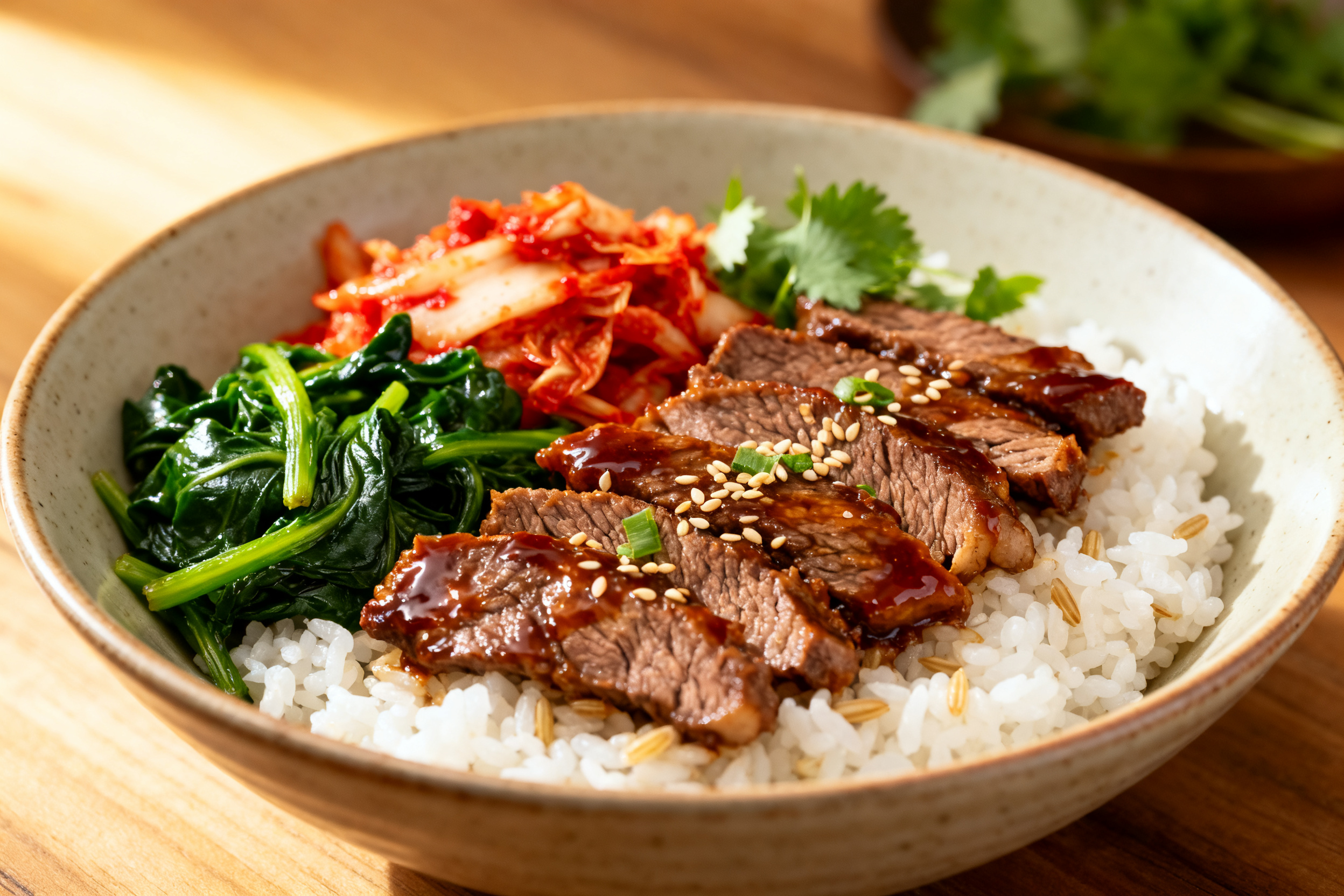
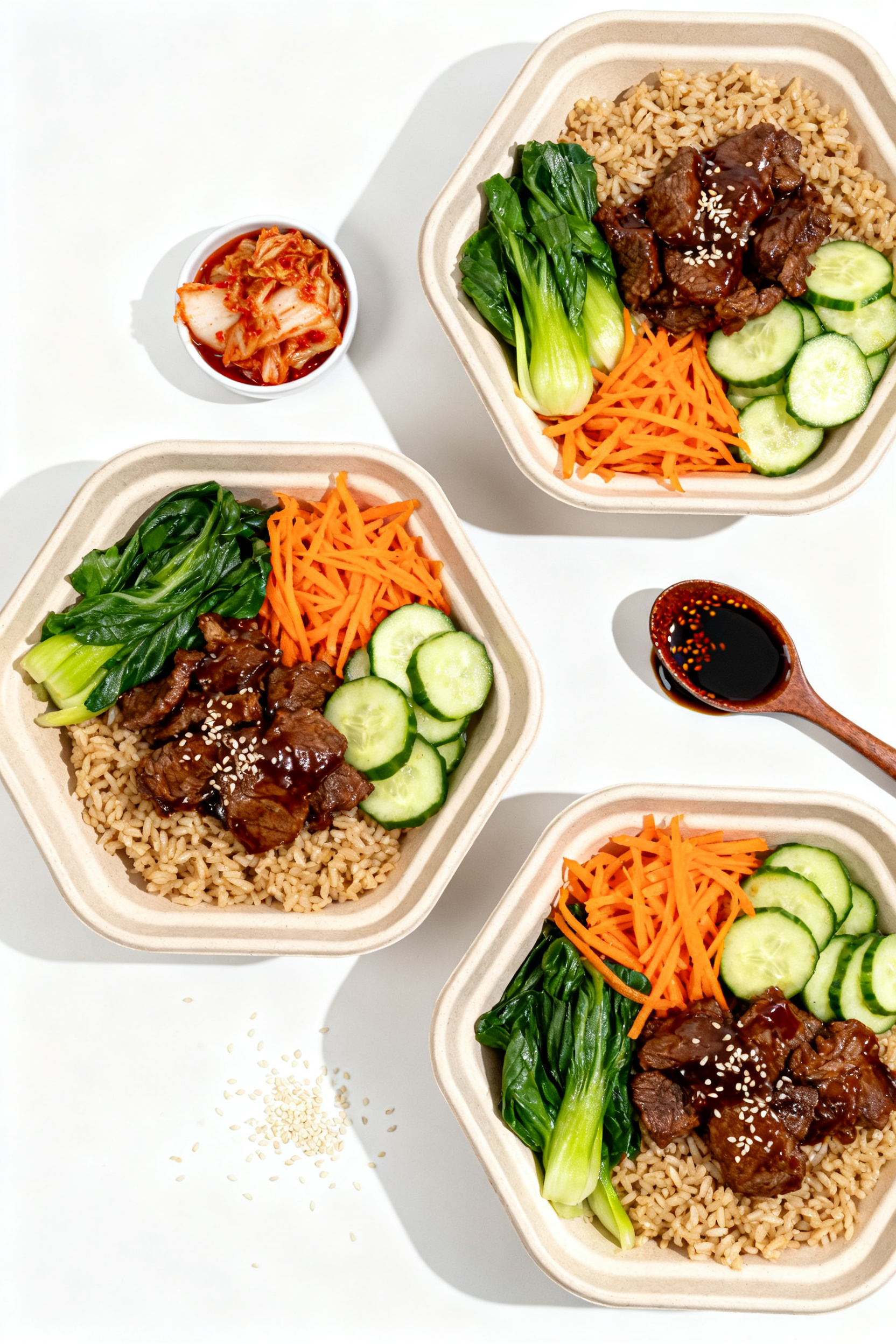
If you’re craving bold flavor without the heavy feeling, these Healthy Korean Beef Rice Bowls are a smart, weeknight-friendly choice. They’re fast to make, easy to customize, and full of bright, savory notes that keep every bite interesting. You get tender seasoned beef, warm rice, and crisp veggies finished with a punchy sauce.
Need More Easy Dinner Ideas?
Get my FREE 7-Day Easy Dinner Reset and enjoy a full week of healthy dinners without the meal-planning stress.
It’s the kind of meal that feels comforting yet light, and it comes together in one pan. Perfect for busy nights, meal prep, or anyone who wants a balanced bowl that tastes like takeout but feels better.
Ingredients
Method
- Cook your base. Make your rice ahead or use leftover rice. For a lighter option, steam cauliflower rice until tender but not mushy.
- Whisk the sauce. In a small bowl, combine soy sauce, sesame oil, honey, gochujang, rice vinegar, and water. Taste and adjust heat and sweetness.
- Sauté aromatics. Heat a large skillet over medium-high. Add a light drizzle of oil, then cook onion for 2–3 minutes until softened. Add garlic and ginger; cook 30 seconds until fragrant.
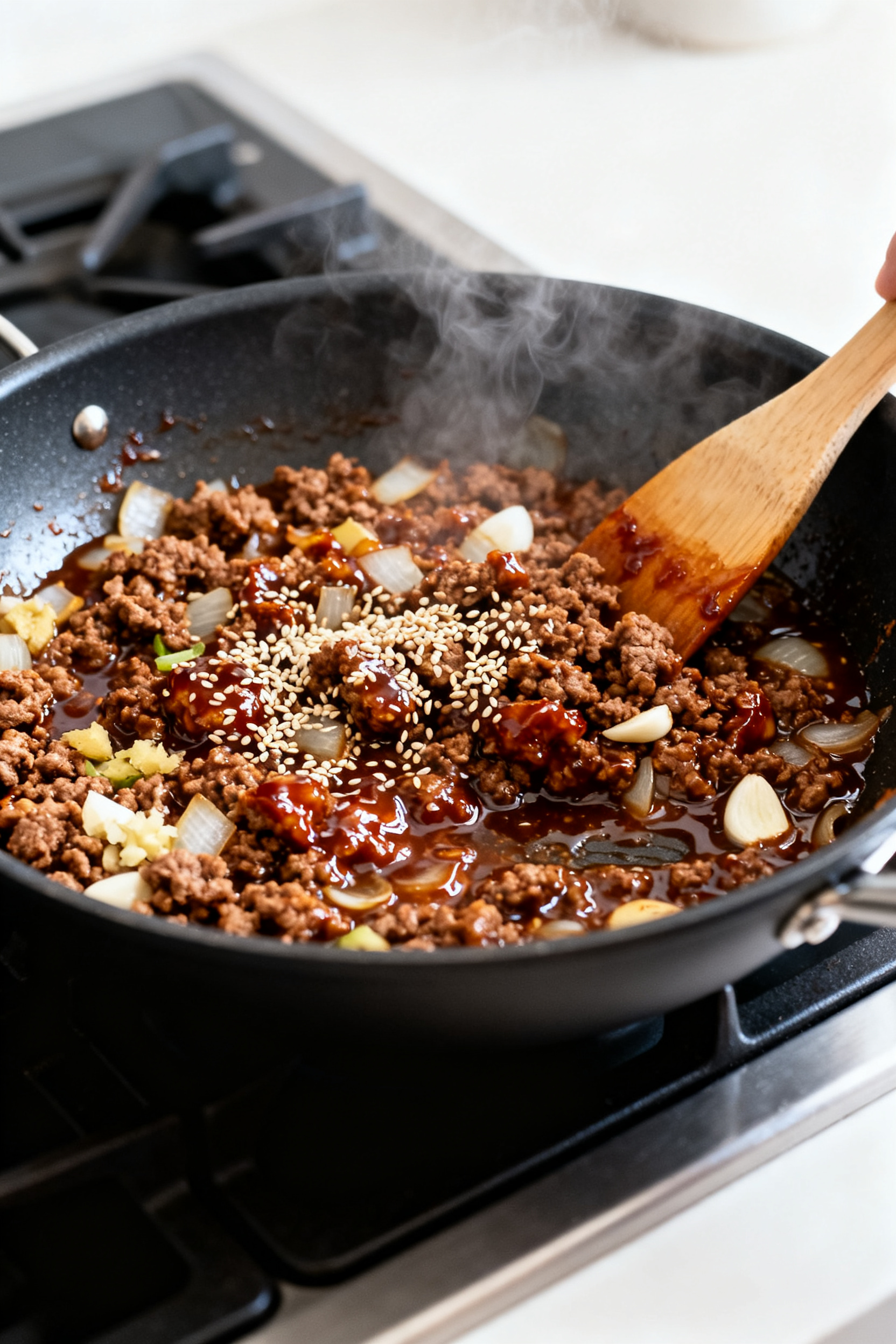
- Brown the beef. Add ground beef and break it up with a spatula. Cook until browned with no pink remaining, about 5–7 minutes. Drain excess fat if needed.
- Glaze the beef. Pour in the sauce and stir. Let it bubble for 2–3 minutes until slightly thickened and glossy. Season with pepper. Add a small pinch of salt only if needed.
- Prep your veggies. While the beef simmers, slice cucumbers, shred carrots, and steam greens. Keep veggies crisp for contrast.
- Assemble bowls. Divide rice among bowls. Top with a scoop of beef, cucumbers, carrots, and greens. Add scallions and sesame seeds. Finish with a squeeze of citrus if you like. Add an egg or kimchi for extra protein and tang.
- Serve. Enjoy hot. Drizzle with a little extra sesame oil or a touch more gochujang if you want more heat.
What Makes This Special
- Balanced flavors: Sweet, salty, garlicky, and a little spicy—classic Korean-inspired taste in a lighter format.
- Fast cooking: Ground beef cooks in minutes, and the sauce reduces quickly for a glossy, flavorful finish.
- Veggie-forward: Fresh cucumbers, carrots, and scallions add crunch and color without extra fuss.
- Better-for-you swaps: Use lean beef, brown rice or cauliflower rice, and low-sodium sauces for a wholesome bowl.
- Great for meal prep: Packs well, reheats nicely, and stays tasty for days.
Ingredients
- For the beef:
- 1 pound (450 g) lean ground beef (90% or leaner)
- 1 small yellow onion, finely diced
- 4 cloves garlic, minced
- 1 teaspoon fresh ginger, grated (or 1/2 teaspoon ground ginger)
- Sauce:
- 3 tablespoons low-sodium soy sauce (or tamari for gluten-free)
- 1 tablespoon toasted sesame oil
- 1–2 tablespoons honey or maple syrup (to taste)
- 1–2 teaspoons gochujang (Korean chili paste) or 1/2 teaspoon red pepper flakes
- 1 tablespoon rice vinegar
- 2 tablespoons water
- For the bowls:
- 3 cups cooked brown rice (or white rice, quinoa, or cauliflower rice)
- 1 cup cucumbers, thinly sliced
- 1 cup carrots, julienned or shredded
- 1 cup steamed or sautéed greens (spinach, bok choy, or kale)
- 2–3 scallions, thinly sliced
- 1 tablespoon toasted sesame seeds
- Optional: 2 fried or soft-boiled eggs
- Optional: Kimchi, for serving
- Seasoning to finish:
- Freshly ground black pepper
- Pinch of salt, if needed
- Lime or lemon wedges (not traditional, but brightens the bowl)
How to Make It
- Cook your base. Make your rice ahead or use leftover rice. For a lighter option, steam cauliflower rice until tender but not mushy.
- Whisk the sauce. In a small bowl, combine soy sauce, sesame oil, honey, gochujang, rice vinegar, and water.
Taste and adjust heat and sweetness.
- Sauté aromatics. Heat a large skillet over medium-high. Add a light drizzle of oil, then cook onion for 2–3 minutes until softened. Add garlic and ginger; cook 30 seconds until fragrant.
- Brown the beef. Add ground beef and break it up with a spatula.
Cook until browned with no pink remaining, about 5–7 minutes. Drain excess fat if needed.
- Glaze the beef. Pour in the sauce and stir. Let it bubble for 2–3 minutes until slightly thickened and glossy.
Season with pepper. Add a small pinch of salt only if needed.
- Prep your veggies. While the beef simmers, slice cucumbers, shred carrots, and steam greens. Keep veggies crisp for contrast.
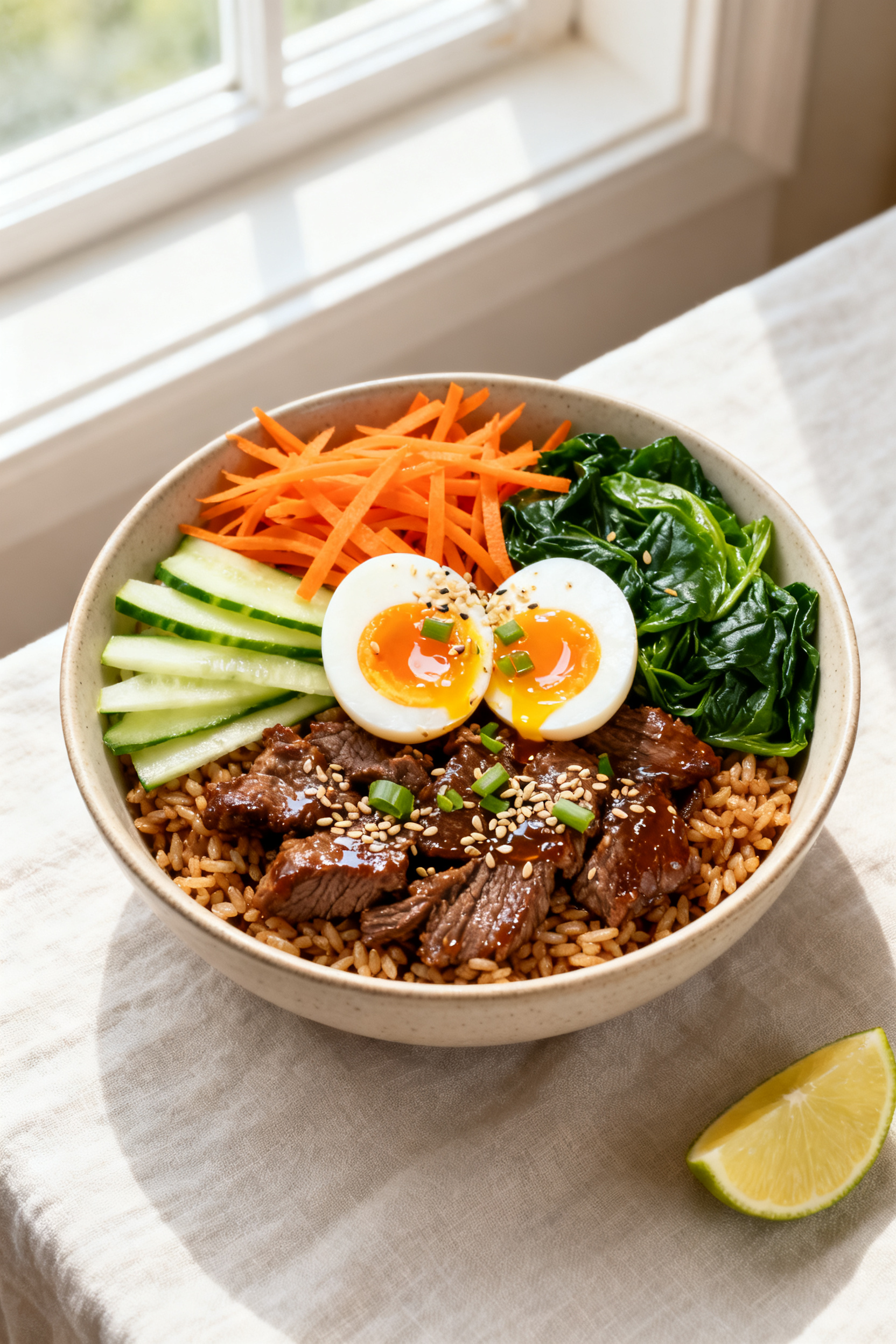
- Assemble bowls. Divide rice among bowls.
Top with a scoop of beef, cucumbers, carrots, and greens. Add scallions and sesame seeds. Finish with a squeeze of citrus if you like.
Add an egg or kimchi for extra protein and tang.
- Serve. Enjoy hot. Drizzle with a little extra sesame oil or a touch more gochujang if you want more heat.
Keeping It Fresh
- Storage: Keep beef and rice in one container and raw veggies in another. Refrigerate for up to 4 days.
- Reheating: Warm beef and rice gently on the stove or in the microwave with a splash of water to keep it moist.
Add fresh veggies after heating.
- Freezing: Freeze cooked beef (without fresh veggies) for up to 2 months. Thaw in the fridge overnight and reheat before assembling.
- Meal prep tip: Pack citrus wedges or an extra spoon of sauce separately to brighten leftovers.
Benefits of This Recipe
- High in protein: Lean beef supports satiety and muscle health.
- Fiber-rich: Brown rice and veggies help digestion and keep you full longer.
- Better balance: A mix of complex carbs, quality protein, and healthy fats from sesame oil.
- Customizable: Easy to tailor for gluten-free, low-carb, or dairy-free needs.
- Budget-friendly: Uses pantry staples and affordable produce.
What Not to Do
- Don’t over-sweeten the sauce. Aim for balance; too much sweetness can mask the savory depth.
- Don’t skip draining excess fat. Removing it keeps the bowl lighter and the flavors cleaner.
- Don’t overcook the greens. They should be bright and tender, not dull and mushy.
- Don’t overcrowd the pan. If your skillet is small, brown beef in two batches to get good color.
- Don’t add all the salt at once. Soy sauce is salty; taste before seasoning.
Variations You Can Try
- Turkey or chicken: Swap in ground turkey or chicken for an even leaner bowl. Add a splash of extra sesame oil for richness.
- Veggie version: Use crumbled extra-firm tofu or tempeh.
Brown well and add a touch more gochujang for oomph.
- Low-carb: Serve over cauliflower rice or lightly sautéed cabbage ribbons.
- Extra veggies: Add sautéed mushrooms, bell peppers, or snap peas for more volume and fiber.
- No-heat option: Replace gochujang with a bit more honey and a dash of black pepper for a mild, family-friendly bowl.
- Herb twist: Toss cucumbers with rice vinegar and a pinch of sugar for a quick pickle, or add cilantro for freshness.
Never wonder what's for dinner again.
Get 7 healthy, family-friendly dinners complete with recipes, grocery lists, and simple meal plans delivered straight to your inbox.
FAQ
Is gochujang necessary?
It adds signature heat and a subtle fermented sweetness, but you can substitute with red pepper flakes and a tiny bit of miso or tomato paste for body. Start small and adjust to taste.
Can I make this gluten-free?
Yes. Use tamari or coconut aminos instead of soy sauce and confirm your gochujang is gluten-free.
Serve over rice or cauliflower rice.
How do I keep the beef tender?
Don’t overcook it after adding the sauce. Let it simmer briefly until glossy. Using lean, not extra-lean, beef also helps keep some juiciness.
What rice works best?
Brown rice brings more fiber and a nutty taste.
White jasmine rice gives a softer, more classic feel. Cauliflower rice is great if you want fewer carbs.
Can I pack this for lunch?
Absolutely. Keep the beef and rice separate from raw veggies.
Reheat the warm components, then add the fresh toppings right before eating.
How spicy is it?
It’s mild to medium by default. For mild bowls, use 1 teaspoon gochujang. For extra heat, add more gochujang or a drizzle of gochugaru oil.
What if I don’t have sesame oil?
Use a neutral oil for cooking and add a few toasted sesame seeds for flavor.
The taste won’t be identical, but it will still be delicious.
Can I add an egg?
Yes. A fried or soft-boiled egg adds protein and a creamy yolk that blends into the sauce. It’s a simple upgrade that feels special.
Final Thoughts
These Healthy Korean Beef Rice Bowls hit that sweet spot between quick and nourishing.
With a short ingredient list and plenty of room to riff, they fit almost any routine. Keep the flavors balanced, the veggies crisp, and the sauce glossy, and you’ll have a go-to meal you’ll make on repeat. Enjoy it hot tonight and just as happily for lunch tomorrow.
Printable Recipe Card
Want just the essential recipe details without scrolling through the article? Get our printable recipe card with just the ingredients and instructions.
Loved This Recipe?
If you're looking for more simple, healthy dinners your family will actually eat, grab my FREE 7-Day Easy Dinner Reset. You'll get 7 easy dinner recipes, simple grocery lists, and a done-for-you plan that takes the stress out of mealtime.